Viral Hooks
Trending short videosExplaining sports finance strategy logic
T

@thealexbranford

Instagram · Speaker address
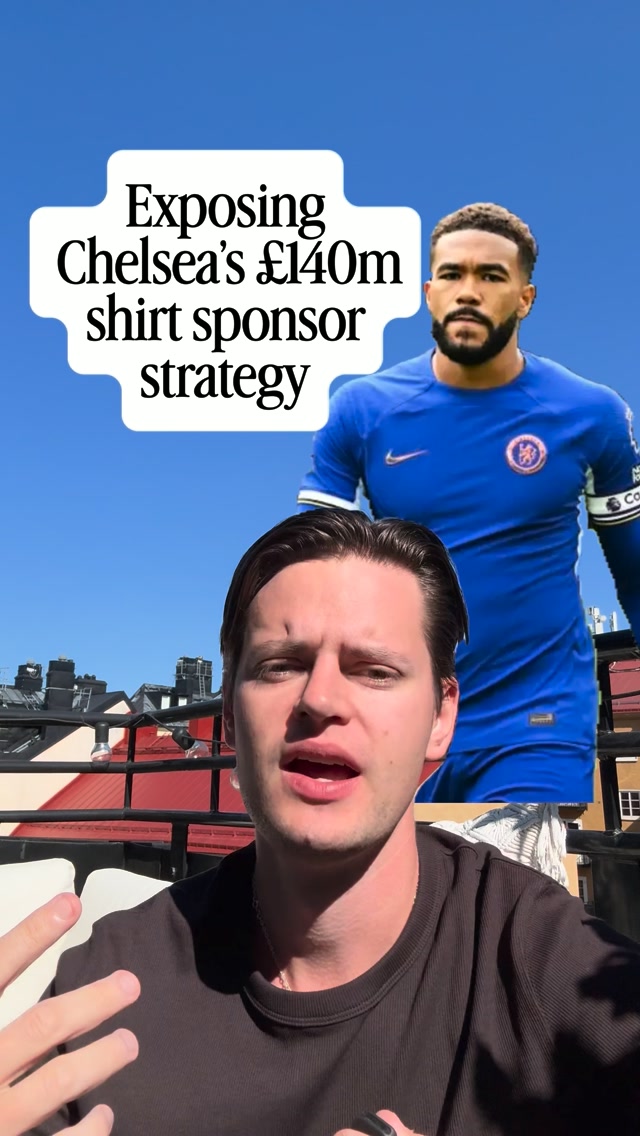
@thealexbranford Chelsea leaving the front of their shirt unsponsored looks like commercial incompetence. But there’s a private equity logic to it. If Chelsea believe their front-of-shirt sponsorship is worth £60m a year, accepting a long-term deal at £40m doesn’t just cost them £20m of annual revenue. It potentially establishes £40m as the market price of the asset. And when football clubs can be valued at multiples of revenue, that distinction becomes considerably more important. An additional £20m of sustainable commercial revenue, capitalised at 6–7x, could theoretically represent £120–140m of enterprise value. That changes the calculation. Clearlake may therefore be willing to sacrifice sponsorship revenue today rather than lock Chelsea FC into a long-term contract below the value they believe they can eventually achieve. The problem is that this strategy has a clock. Every season without a major shirt sponsor means real cash foregone. Eventually Chelsea have to prove that the £60m valuation actually exists — or the strategy starts destroying rather than preserving value. It’s a fascinating example of the difference between maximising cash flow today and maximising the eventual value of an asset. And it also explains why the incentives of Chelsea’s owners and Chelsea supporters may not always be perfectly aligned. #ChelseaFC #investing #sportsfinance #privateequity #finance

View original on Instagram

The edit1 shot · 6 text
Shots Text

Performance

Views
355.5K
Likes
8.5K
Comments
204
Engagement
2.5%
Outlier
180.1×

Video #39267 · Speaker address

Explaining sports finance strategy logicfrom @thealexbranford

[01]

Overview

The creator explains the financial strategy behind Chelsea FC not having a shirt sponsor. He reframes the situation from one of commercial incompetence to a calculated private equity move by the club's owners, Clearlake Capital, focused on maximizing the club's long-term asset value rather than short-term income. He breaks down how accepting a lower-than-desired sponsorship deal would set a lower market price, negatively impacting the club's overall valuation by a revenue multiple, and uses screenshots of financial models and articles to illustrate how this could represent a £140m difference in enterprise value.

[02]

Simple outline

  1. 1Challenge a common belief
  2. 2Reframe the problem's context
  3. 3Explain the long-term consequence
  4. 4Reveal the magnified impact

[03]

Related videos

[04]

Classification

Concepts
BreakdownOpportunity Explainer
Elements
Side-by-Side Visual AidImage OverlayTitle Text Hook

[05]

Hook analysis

What stops the scroll in the first 3 seconds

Title hook · 45%

Exposing Chelsea's £140m shirt sponsor strategy

Verbal hook · 50%

Everybody thinks that Chelsea not having shirt sponsors is commercially incompetent, but...

Visual hook · 5%

A composite shot featuring the speaker in the foreground with a large, high-quality image of a Chelsea football player layered behind him, creating immediate visual context and a professional look.

[06]

Hook template

Steal this for your own video

Everybody thinks [common belief about topic] is [negative judgment], but...

  • — Everybody thinks renting instead of buying a home is financially irresponsible, but...
  • — Everybody thinks posting less on social media kills your algorithm reach, but...
  • — Everybody thinks keeping a car for over ten years is a waste of money, but...

[07]

Hook and payoff

The promise the opener makes, and how the video pays it back

Hook

State a widely held, seemingly obvious belief about a situation and then immediately propose a contrarian explanation, creating an instant knowledge gap.

Payoff

Reveal a hidden financial mechanic (like a revenue multiple) that exponentially magnifies the financial difference between the two values, delivering the 'aha' moment and justifying the entire contrarian strategy.

[08]

Narrative framework

The structural pattern this video runs on

Framework

The Asset Value Reframe

Exposing the counter-intuitive, long-term financial strategy behind a decision that appears foolish or incompetent on the surface. The narrative shifts the viewer's perspective from short-term gains to long-term asset valuation.

  1. 1

    The Contrarian Premise

    Assert that the seemingly incompetent action is actually a deliberate, logical strategy, promising a hidden explanation.

  2. 2

    The Power Player Reveal

    Identify the true decision-maker and their fundamental motivation (e.g., investor vs. operator), which differs from the public's assumed motivation.

  3. 3

    The Perspective Reframe

    Instruct the audience to abandon a conventional metric (e.g., immediate income) and adopt the decision-maker's core metric (e.g., long-term asset value).

  4. 4

    The Value Gap

    Quantify the conflict by presenting two concrete values: the decision-maker's internal target value versus the currently available market value.

  5. 5

    The Precedent Trap

    Explain the core argument: accepting the lower market value doesn't just represent a short-term loss, it permanently establishes a lower 'market price' for the asset itself.

  6. 6

    The Future-Proofing Scenario

    Project the consequences of this decision into a future, high-stakes event (like a sale or valuation) to demonstrate the long-term impact.

Themes

  • Asset Valuation
  • Private Equity Strategy
  • Sports Business
  • Long-term vs Short-term thinking

Techniques

  • Direct Address
  • Visual Aids
  • Financial Analysis

Trends

  • Finance Explainers
  • Business Case Studies

Post caption

Chelsea leaving the front of their shirt unsponsored looks like commercial incompetence. But there’s a private equity logic to it. If Chelsea believe their front-of-shirt sponsorship is worth £60m a year, accepting a long-term deal at £40m doesn’t just cost them £20m of annual revenue. It potentially establishes £40m as the market price of the asset. And when football clubs can be valued at multiples of revenue, that distinction becomes considerably more important. An additional £20m of sustainable commercial revenue, capitalised at 6–7x, could theoretically represent £120–140m of enterprise value. That changes the calculation. Clearlake may therefore be willing to sacrifice sponsorship revenue today rather than lock Chelsea FC into a long-term contract below the value they believe they can eventually achieve. The problem is that this strategy has a clock. Every season without a major shirt sponsor means real cash foregone. Eventually Chelsea have to prove that the £60m valuation actually exists — or the strategy starts destroying rather than preserving value. It’s a fascinating example of the difference between maximising cash flow today and maximising the eventual value of an asset. And it also explains why the incentives of Chelsea’s owners and Chelsea supporters may not always be perfectly aligned. #ChelseaFC #investing #sportsfinance #privateequity #finance
Text overlays

  • title · beginning

    Exposing Chelsea's £140m shirt sponsor strategy

  • contextual · beginning

    from their sponsor for years

  • informational · middle

    BlueCo target: £60m per year

  • informational · middle

    Actual market: £40m per year

  • informational · middle

    gap: £20m per annum

  • informational · end

    Football club valuation relies heavily on revenue multiples (Enterprise Value to Revenue, or EV/Revenue), with top global teams trading at an average multiple of roughly 5.6x revenue. European elite clubs typically see revenue multipliers range between 4x and 8x depending on brand and league, while smaller clubs are not valued at one times revenue

Transcript

Everybody thinks that Chelsea not having shirt sponsors is commercially incompetent, but it's why Chelsea could keep having zero income from their sponsor for years, and it still makes sense for them to do this. Now you've got to remember who owns Chelsea Football Club. It's owned by Clear Lake, which is an investment firm. And what do best do? Well, they buy assets that appreciate, and that's the framing to think about this. Don't think about the income. Think about the asset value. They think that Chelsea with tier front of year's shirt sponsor, I rank, is in the realm of £60,000,000. But according to reports, the best deal they can find is around 40,000,000. Everyone with a non finance mindset is thinking, oh, well, they're leaving, you know, all this money on the table. But you've got to think about it from Clear Lake's perspective. Because what you do when you sign that contract £40,000,000 is you set a market price. Clear Lake will sell Chelsea eventually because they're gonna build a financial model, and in that financial model, they will say front of shirt sponsorship £60,000,000. And a buyer will rank, why? You best got a massive problem because you've signed a five year contract proving that somebody's only willing to pay you 40,000,000. And the most important part of this is football clubs are not valued at one tier revenue.

Explaining sports finance strategy logic | Viral Hooks