Viral Hooks
Trending short videosWhy talking to strangers is valuable
H

@harnidhk

Instagram · Yap

@harnidhk In Mistakenly Seeking Solitude, Nicholas Epley and Juliana Schroeder had commuters either connect with a stranger, remain disconnected, or commute normally. People expected solitude to be more pleasant. The people who actually talked to someone reported a more positive experience than they expected. (PubMed⁠) I’m not saying talk to everyone. Sometimes you absolutely want to be left alone. But maybe we’ve gotten a little too good at assuming the interaction will be awkward before it’s even happened. Sometimes you talk to someone for two minutes, laugh about something stupid, and the day is just a little nicer because of it. Research: Epley, N. & Schroeder, J. (2014). “Mistakenly Seeking Solitude.” Journal of Experimental Psychology: General, 143(5), 1980–1999. DOI: 10.1037/a0037323. (PubMed⁠) [talking to strangers, social connection, human connection, loneliness, psychology research, commuting, strangers, everyday interactions, social psychology, happiness, small moments, community, connection, behavioural science]

View original on Instagram

The edit1 shot · 24 text
Shots Text1:53

Performance

Views
247.2K
Likes
2K
Comments
7
Engagement
0.8%
Outlier
36.6×
Length · 20 Aug 2026
1:53

Video #39764 · Yap

Why talking to strangers is valuablefrom @harnidhk

[01]

Overview

The creator discusses a psychological study where commuters who talked to strangers reported a more positive experience than expected. She contrasts this with modern habits of social avoidance, shares personal anecdotes of positive, fleeting interactions with strangers, and concludes by advocating for the value of these small, low-stakes connections.

[02]

Simple outline

  1. 1Cite a counterintuitive finding
  2. 2Frame a relatable social problem
  3. 3Provide emotional, positive examples
  4. 4Conclude with a mindset shift

[03]

Related videos

[04]

Classification

Format
Concepts
Anecdotal PhilosophyVulnerable Monologue
Elements
Jump Cut

[05]

Hook analysis

What stops the scroll in the first 3 seconds

Title hook · 55%

There was a study

Verbal hook · 40%

There was a study conducted where commuters were asked to either talk to a stranger or just keep to themselves.

Visual hook · 5%

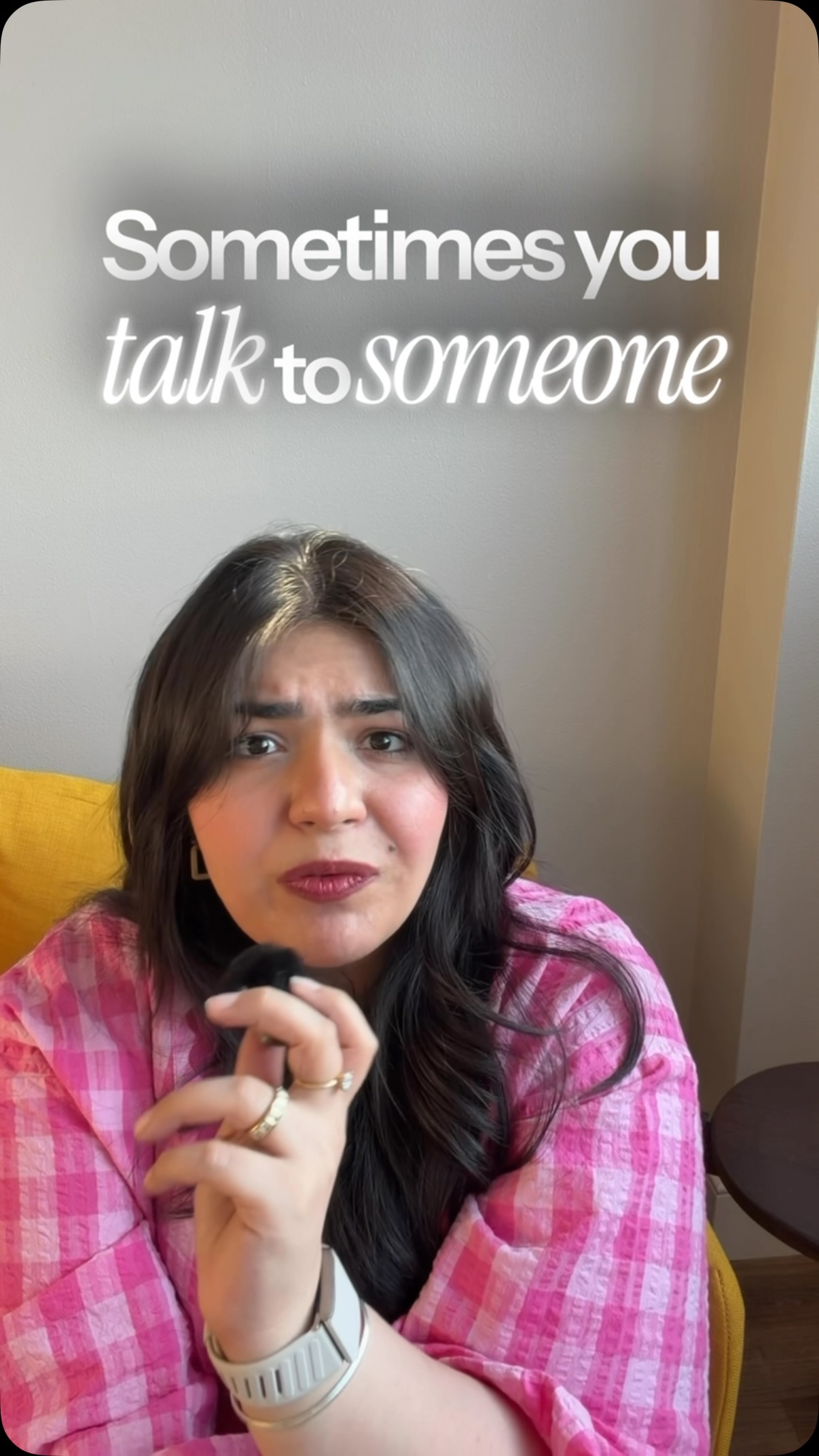
A medium close-up of the speaker addressing the camera directly, holding a small microphone and using expressive hand gestures.

[06]

Hook template

Steal this for your own video

There was a study on [social behavior or habit]

  • — There was a study on talking to strangers
  • — There was a study on skipping breakfast
  • — There was a study on scrolling before bed

[07]

Hook and payoff

The promise the opener makes, and how the video pays it back

Hook

An intellectual hook that presents a formal study, creating immediate credibility and curiosity about the results.

Payoff

A concluding mindset shift where the creator articulates their new personal resolution. This serves as a gentle, inspiring call-to-action for the viewer to adopt the same perspective.

[08]

Narrative framework

The structural pattern this video runs on

Framework

The Counterintuitive Truth

To challenge a widely-held belief by presenting a surprising scientific finding, illustrating the problem with relatable examples, and then using emotional anecdotes to prove the counterintuitive truth, ultimately inspiring a shift in the viewer's perspective.

  1. 1

    The Relatable Bias

    States the common, expected outcome or belief that the audience likely holds, creating a shared starting point.

  2. 2

    The Surprising Reversal

    Reveals the study's actual, counterintuitive findings, subverting the audience's expectations and creating a knowledge gap they want filled.

  3. 3

    The Universal Diagnosis

    Broadens the scope from the specific study to a general, modern-day problem, using highly relatable scenarios to make the viewer feel personally implicated.

  4. 4

    The Personal Confession

    The creator shares a personal anecdote that demonstrates their own participation in the diagnosed problem, building vulnerability and rapport.

  5. 5

    The 'But What If' Pivot

    Transitions from the problem to the solution by introducing a counter-argument, framing it as a collection of positive personal experiences.

  6. 6

    The Emotional Proof Montage

    Delivers a rapid-fire series of short, vivid, and emotionally resonant examples that support the new thesis, building momentum through feeling rather than logic.

  7. 7

    The Low-Stakes Advantage

    Highlights the unique, pressure-free benefit of the proposed behavior, addressing a potential audience objection and making the idea more attractive.

  8. 8

    The Reasonable Caveat

    Provides a brief disclaimer that acknowledges exceptions to the rule, which builds trust and shows the creator is not naive or absolutist.

Themes

  • human connection
  • loneliness
  • social anxiety
  • kindness

Techniques

  • direct address
  • storytelling

Trends

  • vulnerable storytelling

Post caption

In Mistakenly Seeking Solitude, Nicholas Epley and Juliana Schroeder had commuters either connect with a stranger, remain disconnected, or commute normally. People expected solitude to be more pleasant. The people who actually talked to someone reported a more positive experience than they expected. (PubMed⁠) I’m not saying talk to everyone. Sometimes you absolutely want to be left alone. But maybe we’ve gotten a little too good at assuming the interaction will be awkward before it’s even happened. Sometimes you talk to someone for two minutes, laugh about something stupid, and the day is just a little nicer because of it. Research: Epley, N. & Schroeder, J. (2014). “Mistakenly Seeking Solitude.” Journal of Experimental Psychology: General, 143(5), 1980–1999. DOI: 10.1037/a0037323. (PubMed⁠) [talking to strangers, social connection, human connection, loneliness, psychology research, commuting, strangers, everyday interactions, social psychology, happiness, small moments, community, connection, behavioural science]

Text overlays

  • title · beginning

    There was a study

  • contextual · beginning

    conducted where commuters were asked

  • contextual · beginning

    to talk to a stranger or just keep to themselves.

  • contextual · beginning

    And before they did it, most people assumed that keeping to themselves would be nicer,

  • contextual · beginning

    I also get on put on my headphones, and hope nobody decides today is the day we become friends.

  • contextual · beginning

    But the people who were actually asked to talk to someone ended up enjoying the commute more than they expected to.

  • contextual · beginning

    We are so good at avoiding each other now.

  • contextual · beginning

    You get into a lift and everybody, like, looks at their phones.

  • contextual · middle

    You sit next to someone on a train for 40 minutes and never say a word.

  • contextual · middle

    You can spend an entire day surrounded by people and not interact with anyone you didn't already know.

  • contextual · middle

    I was recently on a 20-hour flight and the only person I spoke to was my sister.

  • contextual · middle

    But then I think about the fact that some of my favorite interactions are with complete strangers.

  • contextual · middle

    A woman in the bathroom tells you that you look amazing and for the next three minutes you're like

  • contextual · middle

    An auntie on a flight asks you where you're from and somehow 10 minutes later she knows what you do, whether you're married, and what your parents do.

  • contextual · middle

    You look slightly lost at a station and some nice person decides that getting you on the right train is now their problem.

  • contextual · middle

    All of that is so wonderful.

  • contextual · middle

    And the interesting thing is that's it. You never see each other again.

  • contextual · middle

    There isn't any relationship to maintain. Nobody has to text the next day.

  • contextual · end

    You just had a nice tiny interaction with another person, and then both of you carried on with your lives.

  • contextual · end

    I'm obviously not saying that you need to start talking to everyone you sit next to.

  • contextual · end

    Sometimes people very clearly want to be left alone, and I am often one of those people.

  • contextual · end

    But I do think I've gotten so used to assuming that talking to a stranger will be awkward or annoying that I forget that it can also just be nice.

  • contextual · end

    Sometimes you talk to someone for two minutes, laugh about something stupid, and then spend the rest of the day in a slightly better mood.

  • contextual · end

    I think that's quite nice. That's actually quite a good return on those two minutes, and I want to start making that investment a little more often.

Transcript

There was a study conducted where commuters were asked to either talk to a stranger or just keep to themselves. And before they did it, most people assumed that keeping to themselves would be nicer, which failed. I also get on a train, put on my headphones, and hope nobody decides today is the daily conference. But tier people who were actually asked to talk to someone ended up enjoying the commute more than they expected to. We are so good at avoiding each other now. You get into a lift and everybody kinda like looks at their phones. You sit next to someone on a train for forty minutes and never say a word. You can spend an entire day surrounded by people and not interact with anyone you didn't already know. I was recently on a twenty hour flight and the only person I spoke to was my sister. But then I think about the fact that some of my favorite little interactions are with complete strangers. A woman in the bathroom tells you that you look amazing and for the next three minutes you're like An auntie on a flight asks you where you're from and somehow ten minutes later she knows what you do, whether you're married and what your parents do. You look slightly lost at a station and some nice person decides that getting you on the right train is now their problem. All of that is so wonderful. And the interesting thing is that's it. You better see each other again. There isn't any relationship to maintain. Nobody is to text the next day. You just had a nice tier interaction with another person and then both of you carried on with your lives. I'm obviously not saying that you need to start talking to everyone you sit next to me. Sometimes people very clearly want to be left alone and I am often one of those people. But I do think I've gotten so used to assuming that talking to a stranger will be awkward or annoying that I forget that it can also just be nice. Sometimes you talk to someone for two minutes, laugh about something stupid, and then spend the rest of the day in a slightly better mood. I think that's quite nice. That's actually quite a good return on those two minutes, and I want to start making that investment a little more often.

Why talking to strangers is valuable | Viral Hooks