Viral Hooks
Trending short videosExplaining the 'fun recession' trend
A

@ashi.branding

Instagram · Talking Head Edit

@ashi.branding Have you noticed that “fun” is now positioned as the enemy of progress? Steven Bartlett talked about how going out and having three glasses of wine ruined his entire week. So not only does fun have a social cost today, it’s also more expensive and physically harder to access: prices of concert tickets are up 42% in five years. Young people say they have no idea what people used to do after work, apart from going home. It’s not a coincidence that Gen Z are investing in wellness more than any generation before them: these have become shared rituals that create a sense of belonging and community.  Today, fun is an increasingly scarce resource and here’s what it means for brands.

View original on Instagram

The edit1 shot · 8 text
Shots Text1:12

Performance

Views
94.6K
Likes
2.9K
Comments
129
Engagement
3.2%
Outlier
17.1×
Length · 2 Sept 2026
1:12

Video #41290 · Talking Head Edit

Explaining the 'fun recession' trendfrom @ashi.branding

[01]

Overview

The creator analyzes the concept of a 'fun recession,' using examples and statistics to argue that traditional fun is becoming culturally devalued, less accessible, and more expensive. She connects this trend to Gen Z's increased investment in wellness as a new form of community, and concludes by outlining the marketing opportunity for brands to provide guilt-free pleasure and enjoyment to consumers, showcasing examples from beauty and fashion companies.

[02]

Simple outline

  1. 1State provocative cultural trend
  2. 2Provide data and anecdotes
  3. 3Identify the cultural replacement
  4. 4Show market-in-action examples
  5. 5Deliver strategic business insight

[03]

Related videos

[04]

Classification

Concepts
BreakdownHeadlines
Elements
B-Roll CutawayText OverlayImage Overlay

[05]

Hook analysis

What stops the scroll in the first 3 seconds

Title hook · 55%

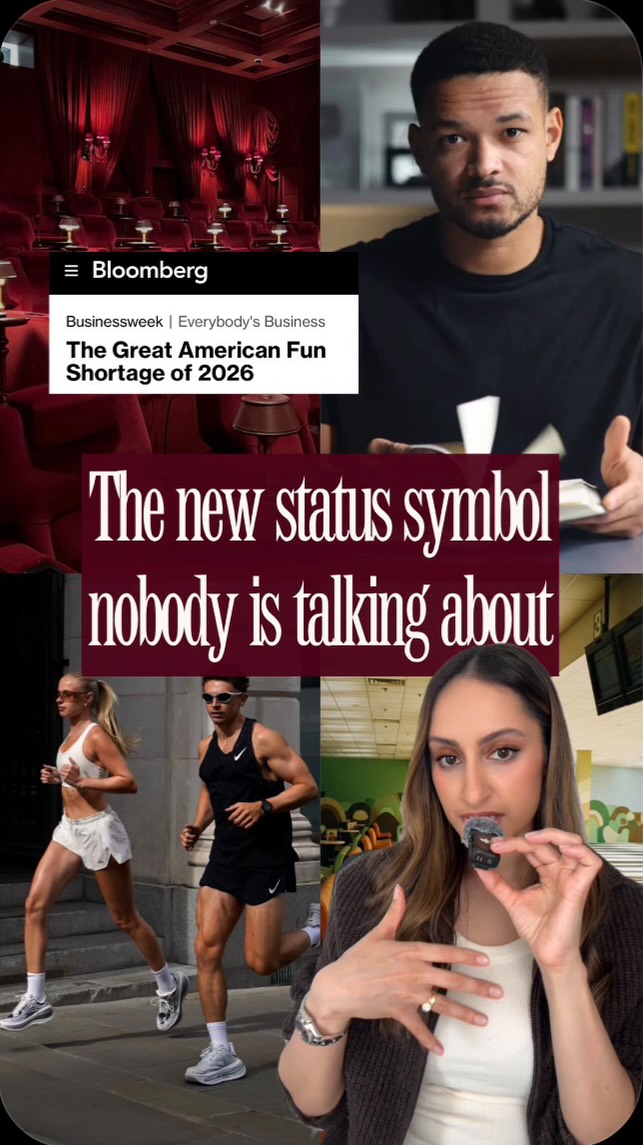
The new status symbol nobody is talking about

Verbal hook · 40%

We're officially in a fun recession.

Visual hook · 5%

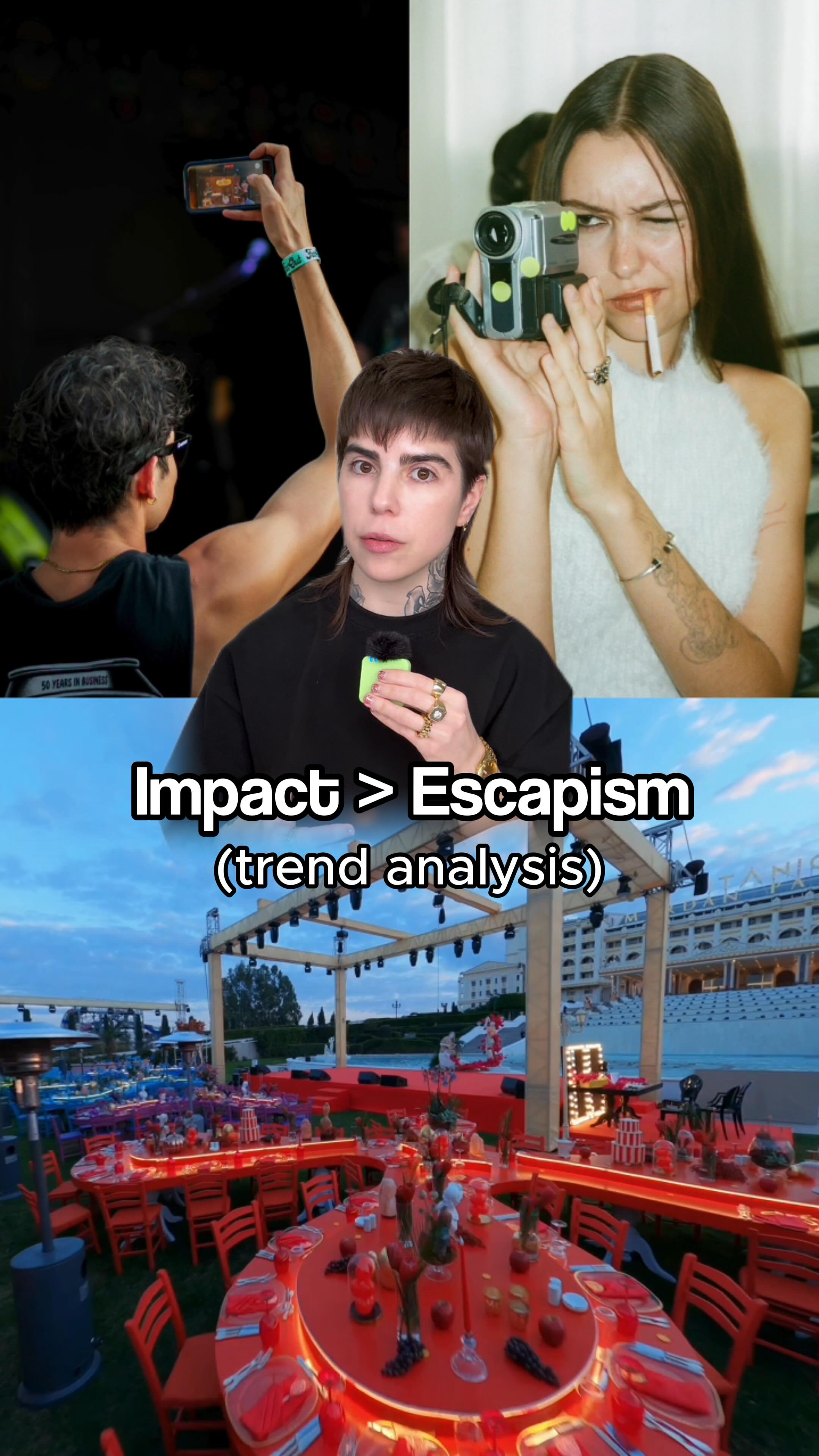
A dynamic opening collage of four distinct images: a lavish red theater, a pensive man, two people running, and the speaker, creating immediate visual density and intrigue.

[06]

Hook template

Steal this for your own video

The new [identity/value shift] nobody is talking about

  • — The new status symbol nobody is talking about
  • — The new career flex nobody is talking about
  • — The new relationship green flag nobody is talking about

[07]

Hook and payoff

The promise the opener makes, and how the video pays it back

Hook

A bold, counter-intuitive declaration about a cultural trend, immediately framing it as an important, overlooked phenomenon.

Payoff

The delivery of a high-level strategic insight that reframes the entire narrative as a valuable business or marketing opportunity, answering the 'so what?' question for the viewer.

[08]

Narrative framework

The structural pattern this video runs on

Framework

The Cultural Thesis Unpacked

To identify a counter-intuitive cultural shift, prove its existence with a mix of anecdotal and data-driven evidence, explain its consequences, and reframe it as a strategic opportunity for a specific audience (e.g., brands, creators).

  1. 1

    The Provocative Proclamation

    State the core thesis in a shocking or intriguing way to grab immediate attention.

  2. 2

    The Influencer Anecdote

    Ground the abstract thesis in a relatable story featuring a recognizable figure or archetype to create an initial connection.

  3. 3

    The Grand Thesis

    Broaden the initial anecdote into a sweeping statement about a cultural shift, defining the video's core argument.

  4. 4

    The Data-Driven Substantiation

    Present hard data, statistics, or news headlines to lend credibility and scale to the thesis, moving from opinion to fact.

  5. 5

    The Generational Proof Point

    Demonstrate the trend's impact on a key demographic to make it feel current, relevant, and urgent.

  6. 6

    The Consequence & Replacement

    Explain what new behavior, value, or trend is emerging to fill the void created by the initial shift, showing the 'what's next'.

  7. 7

    The Scarcity Declaration & Value Proposition

    Reframe the declining trend as a scarce and therefore valuable resource, pivoting the narrative towards a commercial angle.

  8. 8

    The Market in Action

    Showcase real-world examples of entities (brands, companies, individuals) successfully capitalizing on this new landscape.

  9. 9

    The Strategic Payoff

    Conclude with a clear, actionable insight or opportunity for the video's target audience, providing a satisfying resolution.

Themes

  • Cultural shifts
  • Consumer behavior
  • Wellness culture
  • Marketing opportunities

Techniques

  • Visual essay
  • Data-driven argument
  • Trend analysis

Trends

  • Fun recession
  • Sober curious
  • Wellness as a status symbol

Post caption

Have you noticed that “fun” is now positioned as the enemy of progress? Steven Bartlett talked about how going out and having three glasses of wine ruined his entire week. So not only does fun have a social cost today, it’s also more expensive and physically harder to access: prices of concert tickets are up 42% in five years. Young people say they have no idea what people used to do after work, apart from going home. It’s not a coincidence that Gen Z are investing in wellness more than any generation before them: these have become shared rituals that create a sense of belonging and community.  Today, fun is an increasingly scarce resource and here’s what it means for brands.

Text overlays

  • title · beginning

    The new status symbol nobody is talking about

  • informational · beginning

    The Great American Fun Shortage of 2026

  • informational · beginning

    Steven Bartlett says a few glasses of wine ruined the next 3 days of his life

  • informational · middle

    The price of a ticket to one of the top 100 concert tours in North America trade publication PollStar estimates, a 42% increase from 2019.

  • informational · middle

    the U.S. has lost a fifth of its movie theaters and nearly a third of its bowling alleys since 2001.

  • informational · middle

    Young People Have No Idea What We Used to Do After Work. Let Me...

  • informational · middle

    Gen Z is investing in exercise as preventive care more than any older generation

  • contextual · end

    Stop optimizing. With the death of fun,

Transcript

We're officially in a fun recession. In his recent podcast, Stephen Bartlett talked about how going out and having three glasses of wine ruined his entire week. And it made me realize that fun is now culturally positioned as the enemy of self actualization and self awareness. So not only does fun carry a social cost today, it's also more expensive and physically harder to access. Concert tickets are up 42% in five years, and The US has lost a fifth of its movie theaters in the last twenty. And young people are saying they have no idea what people used to do after work apart from going home. It's not a coincidence that Gen Z are investing in wellness more than any other generation before them. Sleep hygiene, recovery routines, these have become shared rituals that that create a sense of belonging and community. And today, fun is an increasingly scarce resource. The ability to gather the right people and conditions for pleasure is becoming valuable. Beauty retailer Mecca is investing in layered product storytelling. Laura Mercier handpicked cultural tastemakers to co worst events. Proc shoe charms give people the permission to add whimsy, stop optimizing. With the death of fun, brands have the rare opportunity to give their customer permission to enjoy themselves without guilt or justification.

Explaining the 'fun recession' trend | Viral Hooks