@bimmawilliams
Instagram · Split screen
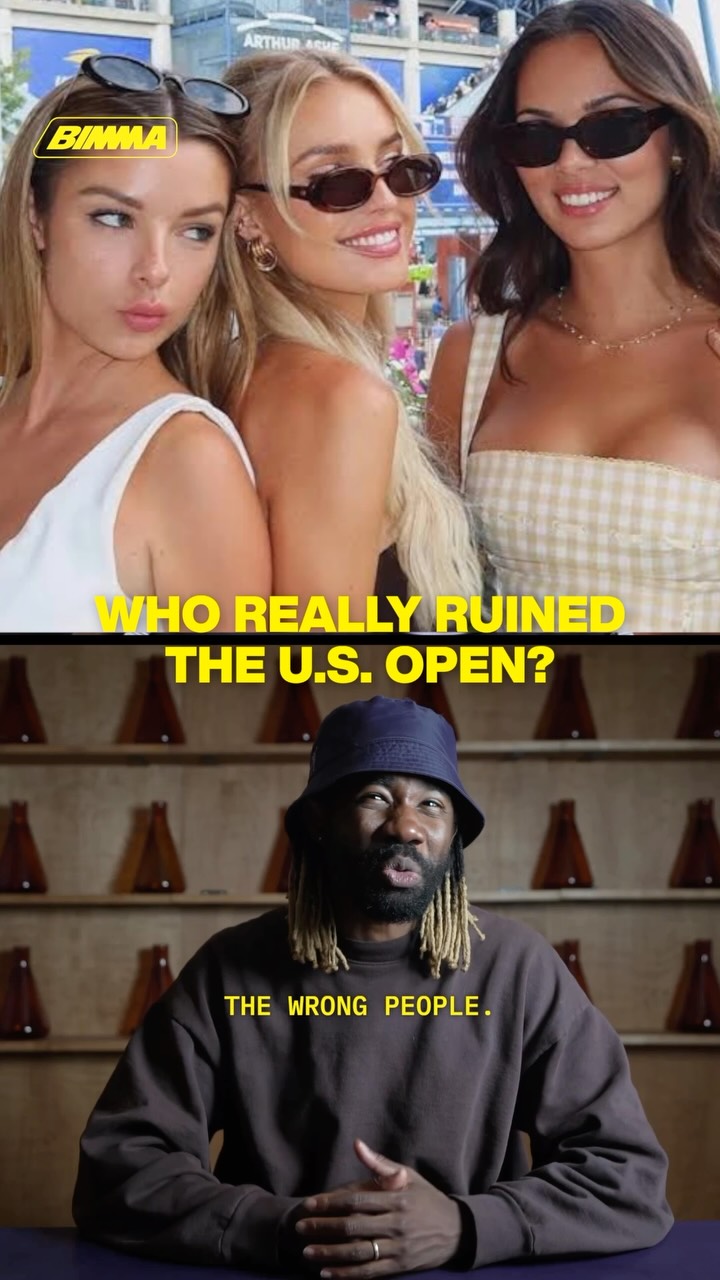
@bimmawilliams Collab Cousins, who’s more responsible here: the creators or the USTA?

@bimmawilliams
Instagram · Split screen
@bimmawilliams Collab Cousins, who’s more responsible here: the creators or the USTA?
Performance
Video #41352 · Split screen
[01]
The speaker presents a critical analysis of the U.S. Open's influencer marketing strategy, arguing that the event organizer (USTA) is responsible for any negative impact, not the creators themselves. He deconstructs the problem—giving broad access without clear guidelines—and proposes a solution involving tiered access based on the creator's specific assignment. He uses B-roll footage of influencers and the event to illustrate his points and concludes by asking the audience to decide who is ultimately at fault.
[02]
[03]
 183.2K7.4×Analyzing OpenAI influencer trip backlash@var.aunevik · Breakdown
 202.7K54×Critiquing influencer social media lies@theoparisi__ · Hot Take
 5.1M1.7×Creator critiques out-of-touch influencer video@daadisnacks · Reaction
 261.5K61.6×Analyzing new influencer ad trend@mirandadoesbrands · Breakdown
 2M1.4×Guest rants about influencer culture@subwaytakes · Hot Take
 1.3M1.5×Creator rants about influencer culture and the TikTok ban@bradley.thor · Vulnerable Monologue
 5.3M1.7×Reaction to entitled influencer video@daadisnacks · Reaction
 1.2M22.9×Podcast clip discussing creator obligations@shamelesspodcast · Breakdown
 294.1K58.2×Explaining new influencer marketing trend@mirandadoesbrands · Breakdown
 487.8KCreator argues curation is replacing mass content creation@samogborn · Explainer
 440.7K31.8×Breaks down streaming industry report@brian_blum · Breakdown
 1.7MCreator exposes influencer restaurant scam@daadisnacks · Headlines
[04]
[05]
What stops the scroll in the first 3 seconds
Title hook · 45%
WHO REALLY RUINED THE U.S. OPEN?
Verbal hook · 50%
If you're blaming influencers for ruining the US Open, I think you're mad at the wrong people.
Visual hook · 5%
A split screen with a visually engaging photo of three influencers at the top and the speaker at the bottom, immediately establishing the video's central conflict.
[06]
Steal this for your own video
If you're blaming for ruining , I think you're mad at the wrong people.
[07]
The promise the opener makes, and how the video pays it back
Hook
A provocative statement that invalidates a common belief and promises a more insightful perspective, immediately creating an information gap the viewer wants filled.
Payoff
The viewer feels intellectually satisfied by the well-structured argument and empowered by being asked to cast the final vote in the comments, driving high engagement.
[08]
The structural pattern this video runs on
Framework
The Contrarian Consultant
The video establishes authority by challenging a common narrative, identifying a hidden root cause for a well-known problem, and then presenting a clear, actionable solution, positioning the narrator as an expert.
The Contrarian Reframe
Directly tells the audience that their current understanding or blame is misplaced, immediately establishing a contrarian viewpoint.
The Accusation Pivot
Shifts the focus from the popular scapegoat to the 'real' but less obvious culprit, providing the central thesis of the argument.
The Root Cause Analysis
Explains the specific, critical error made by the newly identified culprit, providing the 'why' behind the problem and substantiating the accusation.
The Strategic Alternative
Outlines a high-level, alternative approach that would have prevented the problem, establishing the narrator's problem-solving credentials.
The Tactical Blueprint
Breaks down the alternative strategy into concrete, actionable steps (e.g., segmenting access, setting clear rules), demonstrating expertise and providing value.
The Principle Declaration
Frames the specific error as a violation of a broader, more fundamental principle, adding weight and authority to the argument.
The Consequence Visualization
Connects the abstract problem to a tangible, often emotional, negative outcome for a key stakeholder, raising the stakes of the issue.
The Final Verdict & Audience Poll
Delivers a concise, powerful concluding judgment on the situation and then immediately transfers the final decision to the audience with a direct, often binary, question to maximize engagement.
Collab Cousins, who’s more responsible here: the creators or the USTA?
branding · throughout
BIMMA
title · beginning
WHO REALLY RUINED THE U.S. OPEN?
contextual · middle
WHATPEOPLEAREWEARING
contextual · middle
ALAN SWEET TENNIS
contextual · middle
FOOD NETWORK
contextual · middle
LIYA DAVIDOV
contextual · middle
KATIE FEENEY
contextual · middle
NELLA ROSE
contextual · middle
AI ANIMATION
contextual · middle
NOT YOUR LAWYER
contextual · middle
DROP OUT GOLF
contextual · middle
JUSTN
contextual · end
CINDY TENNIS
contextual · end
MO MATCHA
contextual · end
PAVVY G
If you're blaming influencers for ruining the US Open, I think you're mad at the wrong people. It's the USTA that gave more creators access to the US Open without being clear about what that access was actually for. So what I do differently is figure out why the hell you invited them in the first place. If somebody is there to shoot fits or food or lifestyle content, cool. They do not need the same access as somebody that's there to actually cover tennis. And why not build the access around the assignment, then tell people where the line is before they actually cross it? Where can they shoot? Or when can they shoot? Or what happens once the match tier? That should not be some sort of mystery. And let's stop treating access like a good bag. Just because somebody got invited does not mean they need access to every seat and suite in the building. If the content needs lights and cameras and a whole production, give them a specific place to do that. But Naomi Osaka should not be waiting for you to get your shot off. It's okay to bring new people into tennis, and you should. It is a beautiful sport. But if the people you're chasing start getting in the way of the thing that people already love, you worst the plot, son. So collab cousins, who's more responsible tier? The creators or the USTA?