Viral Hooks
Trending short videosExplaining sustainable sports infrastructure.
D

@dominyckb

Instagram · Talking Head Edit

@dominyckb Tennis might not literally save the planet. But the newest ideas around court design point to something much bigger than tennis. Penn architecture students just won a national USTA design competition with a concept that turns a tennis facility into climate infrastructure. Rainwater capture. Permeable surfaces. Shade. Solar. Cooling systems. Landscape designed to manage heat and stormwater. The interesting part is what this says about the future of public space. For a long time, we designed things to do one job. A tennis court hosted tennis. A storm drain handled water. A power system generated energy. A park provided recreation. But in a hotter, denser, more expensive world, every acre may have to do more. A court can host a match and manage water. A park can cool a neighborhood. A roof can generate power. A sports facility can become part of the climate system. That’s a much bigger idea than “sustainable tennis.” Maybe the future of public infrastructure is simply this: stop asking what one space is for, and start asking how many problems it can solve. The tennis court of the future might still have a net in the middle. It just might have a job too. #tennis #tenniscourt #realestate #sportsbusiness #sportds

View original on Instagram

The edit1 shot · 1 text
Shots Text1:05

Performance

Views
142.8K
Likes
7.1K
Comments
118
Engagement
5.1%
Outlier
15.8×
Length · 15 Sept 2026
1:05

Video #42619 · Talking Head Edit

Explaining sustainable sports infrastructure.from @dominyckb

[01]

Overview

The creator explains a new concept for sustainable tennis courts, using a winning student design competition as a case study. He breaks down the architectural features like water capture and solar power, then expands the idea to argue that all future public sports infrastructure must be multi-functional to solve climate and urban problems, before ending with a call to action for viewers to connect and share.

[02]

Simple outline

  1. 1Pose a surprising claim
  2. 2Ground claim with evidence
  3. 3Reveal the bigger picture
  4. 4Summarize the future vision
  5. 5Direct audience engagement

[03]

Related videos

[04]

Classification

Concepts
Opportunity ExplainerBreakdown
Elements
B-Roll CutawayTitle Text HookEngagement CTAShare CTA

[05]

Hook analysis

What stops the scroll in the first 3 seconds

Title hook · 38%

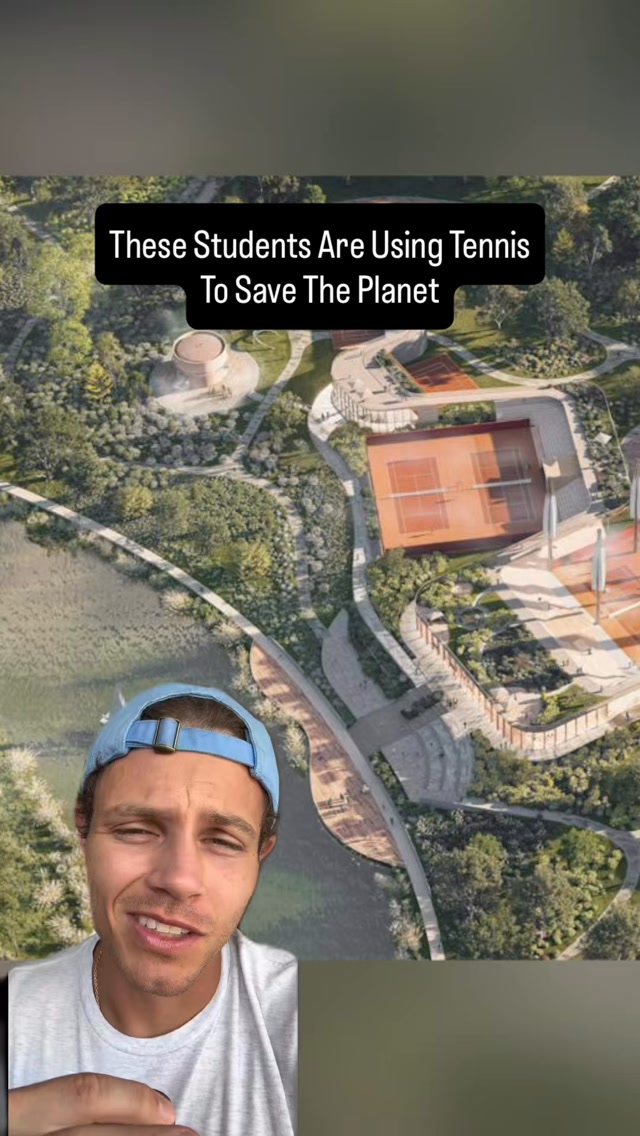
These Students Are Using Tennis To Save The Planet

Verbal hook · 42%

This is probably gonna make a lot of people upset, but tennis might save the planet.

Visual hook · 20%

A sweeping, bird's-eye view of a detailed architectural rendering showing a lush, green tennis facility integrated into a park-like landscape.

[06]

Hook template

Steal this for your own video

This is probably gonna make a lot of people upset, but [unexpected solution] might solve [big problem].

  • — This is probably gonna make a lot of people upset, but tennis might solve climate change.
  • — This is probably gonna make a lot of people upset, but homework might solve the education gap.
  • — This is probably gonna make a lot of people upset, but video games might solve loneliness.

[07]

Hook and payoff

The promise the opener makes, and how the video pays it back

Hook

A provocative, counter-intuitive claim is made to generate immediate curiosity. This is quickly followed by a self-deprecating or ironic statement that lowers viewer skepticism and builds rapport.

Payoff

The core idea is summarized in a memorable, forward-looking statement that inspires the viewer, immediately followed by a direct command for a specific engagement action.

[08]

Narrative framework

The structural pattern this video runs on

Framework

The Micro-to-Macro Reveal

To introduce a large, complex idea by first presenting a small, tangible, and surprising example, and then using that example to 'zoom out' and explain the broader principle it represents.

  1. 1

    The Grounding Case Study

    A singular, concrete piece of evidence or a specific, real-world example is presented to validate the initial, abstract claim.

  2. 2

    The Mechanical Breakdown

    The key functional components of the evidence are enumerated, explaining *how* it works and providing the logical foundation for the argument.

  3. 3

    The Thematic Escalation

    The narrative pivots, explicitly stating that the initial example is merely a symptom of a much larger, more significant underlying trend or idea.

  4. 4

    The Systemic Justification

    The macro-level drivers (e.g., economic, social, environmental) behind the larger trend are explained, giving the concept weight and a sense of inevitability.

Themes

  • Sustainability
  • Innovation
  • Urban Planning
  • Climate Change Solutions

Techniques

  • Direct-to-camera address
  • Visual storytelling
  • Case study explanation

Trends

  • Green Infrastructure
  • Multi-use Public Spaces

Post caption

Tennis might not literally save the planet. But the newest ideas around court design point to something much bigger than tennis. Penn architecture students just won a national USTA design competition with a concept that turns a tennis facility into climate infrastructure. Rainwater capture. Permeable surfaces. Shade. Solar. Cooling systems. Landscape designed to manage heat and stormwater. The interesting part is what this says about the future of public space. For a long time, we designed things to do one job. A tennis court hosted tennis. A storm drain handled water. A power system generated energy. A park provided recreation. But in a hotter, denser, more expensive world, every acre may have to do more. A court can host a match and manage water. A park can cool a neighborhood. A roof can generate power. A sports facility can become part of the climate system. That’s a much bigger idea than “sustainable tennis.” Maybe the future of public infrastructure is simply this: stop asking what one space is for, and start asking how many problems it can solve. The tennis court of the future might still have a net in the middle. It just might have a job too. #tennis #tenniscourt #realestate #sportsbusiness #sportds

Text overlays

  • title · beginning

    These Students Are Using Tennis To Save The Planet

Transcript

Is probably gonna make a lot of people upset, but tennis might save the planet, which is a lot of responsibility for a sport whose biggest environmental innovation to this point has been changing the color of the towel bin. Regardless, UTSA just held a competition challenging architecture students to design courts for a hotter, wetter future. And Penn's winning idea takes a court and turns it into climate infrastructure. And in the project, they explained that a tennis court isn't just about hosting people anymore. It's about managing water with permeable surfaces, cooling public space with solar shades, and generating energy for the future data centers next good, which points to a much bigger idea here. Stadiums and sports infrastructure of the future will not be allowed to do just one job, and that's because public funding is gonna be tied more towards how does this acre solve multiple problems for us. And in the case of tennis, USTA does tell us that tennis is surging, but the demand for more and more paddle facilities is putting the pressure on these people to make sure that every acre counts. It's kind of sick though that courts of the future will take stormwater and transition it into the energy that cools the sidewalk in your neighborhood. But I'm still not putting my clubs down for a racket. Either way, if you're building in tennis right now, comment connect down below, and send this to a green friend.

Explaining sustainable sports infrastructure. | Viral Hooks