Viral Hooks
Trending short videosBrand decline case study analysis
T

@the.ryanexperience

Instagram · Talking Head Edit

@the.ryanexperience Tim Hortons is the best case study of what happens when the customer experience takes a back seat to profit. A beloved Canadian heritage brand sold, and Americanized, while extracting the relationship, nostalgia and quality that actually mattered. #hospitality #timhortons #canada🇨🇦 #toronto #canada

View original on Instagram

The edit1 shot · 7 text
Shots Text2:16

Performance

Views
205.3K
Likes
9.5K
Comments
1.6K
Engagement
5.4%
Outlier
18.2×
Length · 17 Sept 2026
2:16

Video #42838 · Talking Head Edit

Brand decline case study analysisfrom @the.ryanexperience

[01]

Overview

The creator presents a detailed case study on the decline of the Tim Hortons brand, starting with its nostalgic past as a community hub. He then methodically breaks down the key factors in its fall from grace, including the switch to frozen donuts, menu bloat that complicated operations, and controversial labor practices. The creator uses B-roll, article screenshots, and direct commentary to argue that the company sacrificed its core Canadian identity and customer relationship for profit, concluding with a call for the brand to return to its foundational values.

[02]

Simple outline

  1. 1State controversial thesis
  2. 2Contrast past vs. present
  3. 3Detail systematic failures
  4. 4Offer expert solution
  5. 5Prompt audience debate

[03]

Related videos

[04]

Classification

Concepts
Case Study BreakdownBreakdown
Elements
B-Roll CutawayText OverlayPicture-in-Picture

[05]

Hook analysis

What stops the scroll in the first 3 seconds

Title hook · 45%

The Fall of Tim Hortons

Verbal hook · 50%

Tim Hortons is the best case study in how to ruin a beloved brand.

Visual hook · 5%

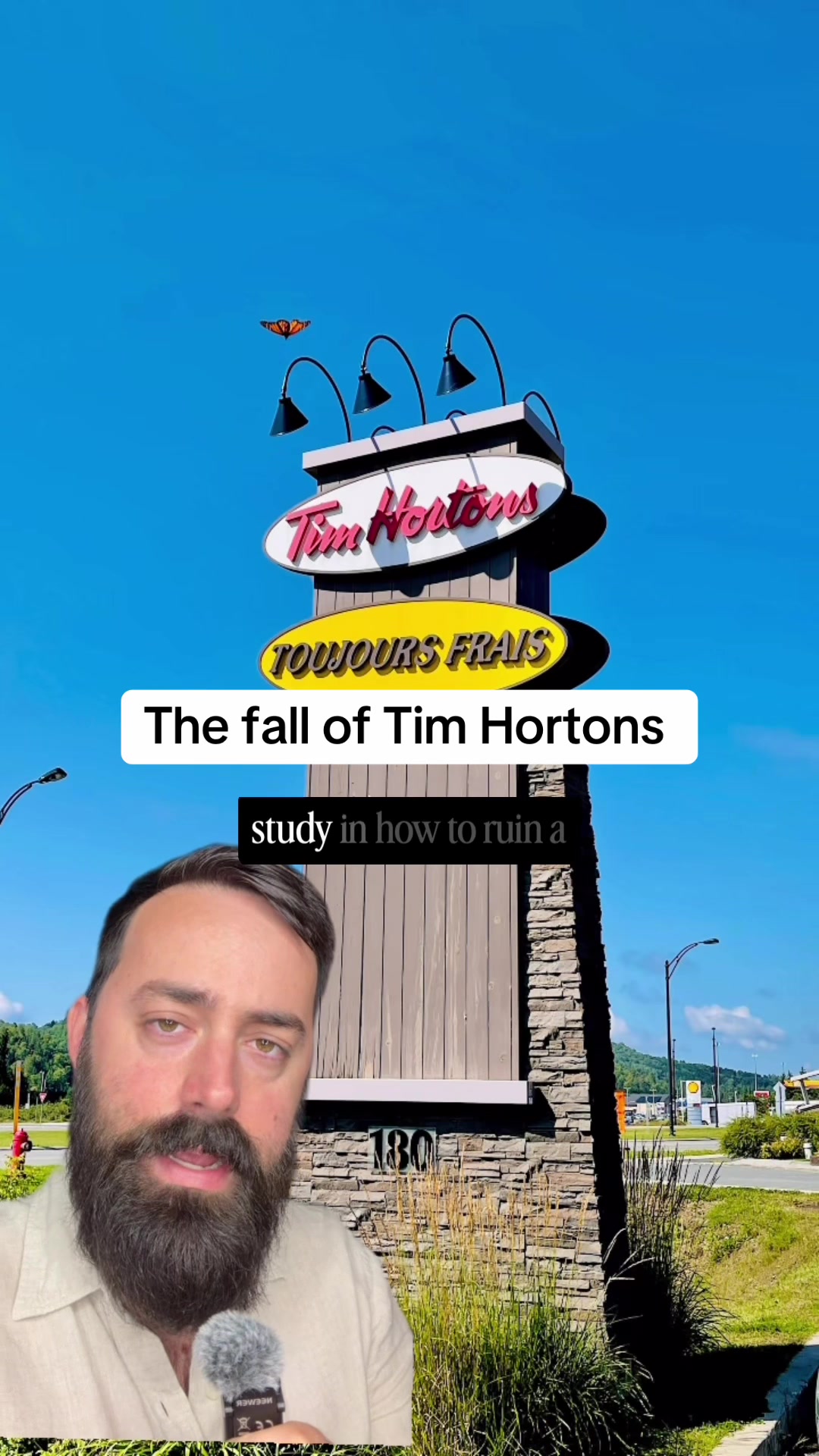
A visually striking shot of a retro-style Tim Hortons sign against a clear blue sky, with the creator's face in a small overlay.

[06]

Hook template

Steal this for your own video

[brand] is the best case study in how to ruin a beloved [brand category].

  • — BlackBerry is the best case study in how to ruin a beloved tech brand.
  • — Toys "R" Us is the best case study in how to ruin a beloved retail brand.
  • — WeWork is the best case study in how to ruin a beloved workplace brand.

[07]

Hook and payoff

The promise the opener makes, and how the video pays it back

Hook

A bold, declarative statement that frames a well-known subject in a negative or controversial light, immediately establishing the video's core argument and hooking viewers who have a strong opinion on the topic.

Payoff

The Expert Prescription & Engagement Hook: Concludes by restating the core failure and offering a clear path to redemption, positioning the creator as an authority. It then pivots to a direct call for audience opinion, designed to spark debate and drive comments.

[08]

Narrative framework

The structural pattern this video runs on

Framework

The Brand Autopsy

A forensic deconstruction of how a once-beloved entity (brand, institution, product) lost its way by contrasting a nostalgic, idealized past with a disappointing present to prove a central thesis of decline.

  1. 1

    The Nostalgic Setup

    Establishes an idealized 'before' state, defining the core emotional promise and positive attributes that have since been lost. This creates an emotional baseline and sense of shared history with the audience.

  2. 2

    The Turning Point & First Sin

    Pinpoints the specific moment or decision where the decline began and presents the first concrete piece of evidence (e.g., a change in product, policy, or philosophy) that supports the central thesis.

  3. 3

    The Downward Spiral

    Presents a series of subsequent negative changes or 'sins' that compounded the initial problem, demonstrating a pattern of decline and further eroding the original promise. Each point serves as another piece of evidence in the case against the subject.

  4. 4

    The Modern Failure

    Synthesizes all previous points into a description of the current, disappointing reality. This validates the audience's own negative experiences and shows the full, tangible consequence of the decline.

Themes

  • Brand decay
  • Corporate greed
  • Nostalgia
  • Customer experience

Techniques

  • Case study analysis
  • Historical comparison
  • Visual evidence

Post caption

Tim Hortons is the best case study of what happens when the customer experience takes a back seat to profit. A beloved Canadian heritage brand sold, and Americanized, while extracting the relationship, nostalgia and quality that actually mattered. #hospitality #timhortons #canada🇨🇦 #toronto #canada

Text overlays

  • title · beginning

    The Fall of Tim Hortons

  • contextual · beginning

    Tim Hortons is the best case study in how to ruin a beloved brand

  • contextual · middle

    in the early to mid 2000s, something changed

  • informational · middle

    Tim Hortons stopped making the donuts fresh in store

  • informational · middle

    the menu... kept expanding to become more Americanized

  • informational · middle

    their hiring model and their abuse of the temporary foreign worker's program

  • informational · end

    nostalgia can get your customers through the door, but the experience decides whether they come back again

Transcript

Tier Hortons is the best case study in how to ruin a beloved brand. Tim Hortons used to feel like Canada's neighborhood living room. Coffee, fresh donuts, and the people behind the counter actually knew your name. But as every Canadian will tell you, while the logo remains unchanged, the experience is a far cry from what it was. The Tim Hortons experience was built on something incredibly simple. It was that small town Canadian feel and dependability. The best way I could describe it is that it felt familiar. And then in the early to mid two thousands, something changed. To begin with, in the early two thousands, Tim Horton stopped making the donuts fresh in tier, and they started to make them frozen and shipped them to the stores. How and where food is prepared does contribute to the character of a tier, the smell of baking, the fresh ingredients, the taste. Worst part about companies lowering the quality of what they're selling is that they think the consumer is stupid and won't notice. And then the menu, and this is mostly post acquisition by RBI, kept expanding to become more Americanized. Pizzas, wraps, specialty drinks. Adding new product lines always sounds nice to the executives in charge of profit, but the frontline result is that employees have to be trained, more equipment, and more complex operations are introduced. And unless your brand standards are sky high, which if you visit any Tim Hortons, you'll know that is not true, the quality of your product will decrease. And then, of course, we have their hiring model and their abuse of the temporary for worse program. For a brand built on neighbors serving neighbors, local employment is part of the relationship. The average Tim Hortons experience nowadays is you pull up to the drive thru, they rank, what do you worst? You go to the counter, you pay, and they give you the coffee without even looking at you. And no, after a decade plus of abuse and outrage online, they've said, hold on. Hold on. We're gonna start hiring locally. But they ruined essentially what was the easiest thing to cultivate, that Canadian feel, the familiarity, and the sense of relationship. Tim Hortons really needs to audit their customer experience and ask themselves whether the brand still delivers on that familiarity and the dependability. Consistent coffee, food that doesn't make you have diarrhea, a correct order, clean stores and hygiene practices, and most importantly, local staff who are paid enough to care because nostalgia can get your customers through the door Best the experience decides whether they come back again, but as usual let me know where I'm right or brutally wrong in the comments below


Brand decline case study analysis | Viral Hooks