@theviewabc
Instagram · Clip
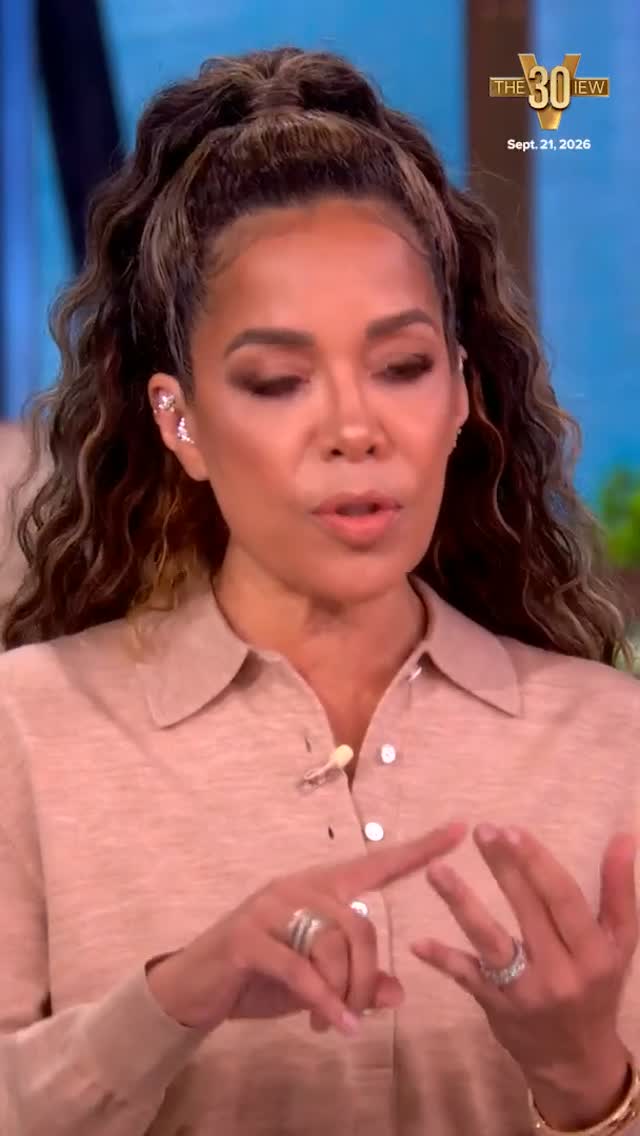
@theviewabc @Sunny Hostin weighs in after ‘The New York Times’ writer Nikole Hannah-Jones said she’s second-guessing her decision to send her daughter to a public school instead of a private one.

@theviewabc
Instagram · Clip
@theviewabc @Sunny Hostin weighs in after ‘The New York Times’ writer Nikole Hannah-Jones said she’s second-guessing her decision to send her daughter to a public school instead of a private one.
Performance
Video #42856 · Clip
[01]
The speaker, Sunny Hostin, begins by framing school choice as a uniquely difficult decision for Black parents. She then shares her personal story of sending her children to a predominantly white private school where they excelled academically but suffered from racism and psychological trauma. She pivots from her anecdote to the larger systemic problem, citing a statistic about the $23 billion funding gap between non-white and white school districts, and concludes by calling for an examination of how public schools are funded through property taxes.
[02]
[03]
 743.1K11.8×Host's passionate critique of patriotism@theviewabc · Hot Take
 926.7K17.3×Telling a funny childhood story@tasiaalexis · Storytime
 207.9K4.5×Personal monologue about social anxiety@livewellwithsophie · Vulnerable Monologue
 275.9K9.6×Man's racist rant over interview@womp_tomp · Reaction
 332K395.2×Direct commentary with name list@guacandpico · Trendjacking
 1.2MChanging views on having kids@callherdaddy · Vulnerable Monologue
 78.3K5×Expert reframes low GPA story@umichlaw · Q&A Response
 1.5M19×Podcast interview about cultural identity@reikoslivingroom · Vulnerable Monologue
 796.4K29.9×Michelle Obama on community pride@aspirewithemmagrede · Anecdotal Philosophy
 5M3.4×Personal story embracing Asian identity@kalitaku · Origin Story
 240.5K15.5×Recounting a political patient conversation@drkazarian · Storytime
 58.2K142.4×Explains issue and provides resources@theninaparker · Breakdown
[04]
[05]
What stops the scroll in the first 3 seconds
Title hook · 55%
Sunny Hostin: We need to look at the systemic problem... around public education
Verbal hook · 40%
I think that this is a decision broadly that all parents make when it comes to educating their kids.
Visual hook · 5%
A medium close-up shot of the speaker with a serious and concerned facial expression, filmed in a professional television studio setting.
[06]
Steal this for your own video
We need to look at the systemic problem around .
[07]
The promise the opener makes, and how the video pays it back
Hook
Present the video's core thesis as a text overlay while the speaker introduces a broad, relatable problem that affects a wide audience.
Payoff
The viewer is left with a powerful new framework for understanding a complex issue, feeling both emotionally connected through the personal story and intellectually convinced by the data and systemic analysis.
[08]
The structural pattern this video runs on
Framework
The Personal to Systemic Bridge
Using a vulnerable personal anecdote with a complex outcome to serve as emotional proof for a larger, data-backed systemic argument.
The Universal Premise
Begin by stating a problem or decision that is universally understood by the target audience to establish common ground.
The Specific Lens
Immediately narrow the focus to a specific demographic for whom this problem has higher stakes, adding weight and urgency.
The Personal Gambit
Share a personal story about a specific, often counter-intuitive, choice made to navigate this problem, building intimacy and intrigue.
The Double-Edged Sword
Detail the complex outcome of the personal choice, revealing that it solved one aspect of the problem while creating a new, often emotional or psychological, one.
The Emotional Proof
Provide vivid, concrete examples of the negative consequences, translating abstract pain into a visceral experience for the viewer.
The Narrative Bridge
Explicitly summarize the trade-off from the personal story, using it as a transition to zoom out from the individual to the systemic level.
The Data Bomb
Introduce a powerful, shocking statistic that validates the personal experience on a massive scale, proving it's not an isolated incident.
The Causal Mechanism
Briefly explain the underlying system or rule that causes the widespread problem, providing a moment of clarity for the viewer.
The Conclusive Mandate
End by restating the core thesis as a powerful call to action or a new way of understanding the problem, bringing the argument full circle.
@Sunny Hostin weighs in after ‘The New York Times’ writer Nikole Hannah-Jones said she’s second-guessing her decision to send her daughter to a public school instead of a private one.
title · beginning
Sunny Hostin: "We need to look at the systemic problem... around public education"
branding · throughout
THE 30 VIEW Sept. 21, 2026
I think that this is a decision broadly that all parents make when it comes to educating their kids. But black parents make a very, this is a very difficult decision for for for black parents in particular because, I made a very different decision. I sent my children to private schools, a predominantly white private school. And so while they didn't suffer academically, they excelled. It was a a well funded school, a private school, well well resourced school, they suffered a different type of pain. There was psychological trauma. There was racism that they experienced. They were bullied. There was there was, you know, trauma around their identity. My daughter wears a big Afro. Kids were trying to stick pencils in her hair. Men boys were calling her better face, meaning she looked good, but her face. And she's a beautiful girl. No so she struggle my kids struggled, in a predominantly white environment, but they did not struggle academically. So I think the real question here is nationally, schools in predominantly non white districts receive $23,000,000,000 less in annual funding than their white counterparts. Underfunded schools versus well funded schools. So public schools are funded from property taxes. So we need to look at the systemic problem that's happening in this country around public education.