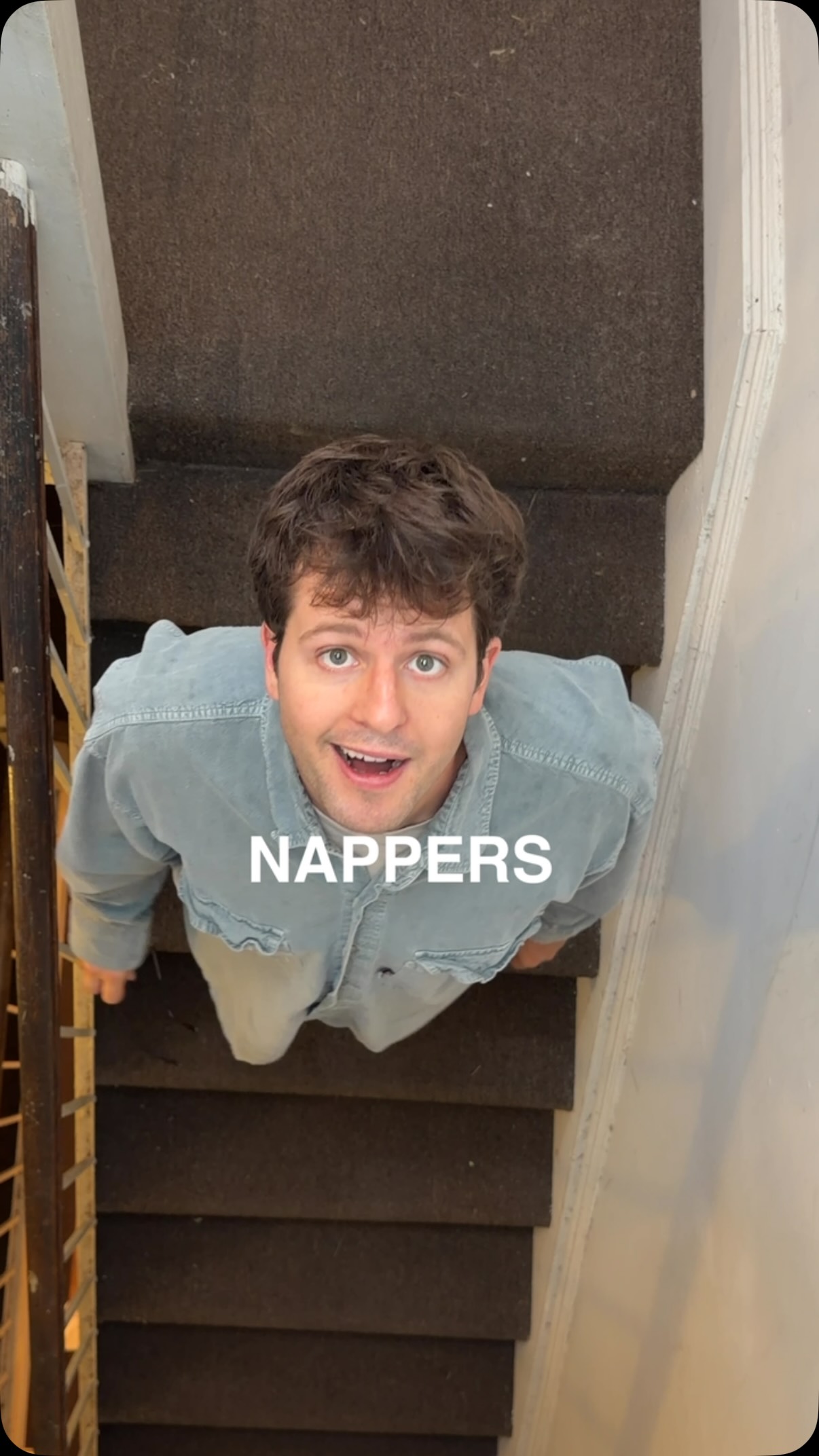
@nealkshah That guilty little afternoon nap may be doing something remarkable for your brain.
Link to Full Video: https://www.youtube.com/watch?v=Se-g0UI1GW8
In a study from University College London analyzing data from hundreds of thousands of adults, researchers found that people genetically wired to be regular nappers had larger total brain volume, a key marker of brain health, than non-nappers. The difference was striking: the equivalent of a brain roughly 2.6 to 6.5 years younger. Since the brain naturally shrinks as we age, and that shrinkage is linked to dementia, preserving volume is a big deal. A couple of honest notes so we stay accurate. The popular "7 years" figure rounds up the top of that range, and the study is really about protecting the brain from shrinking rather than literally reversing aging. Timing also matters, since research suggests short early-afternoon naps are the sweet spot, while long or morning naps may not help and can signal poor nighttime sleep. The golden rule stays the same: keep it short, about 15 to 30 minutes, and in the early afternoon, so it refreshes you without wrecking that night's sleep. So go ahead and rest. Your brain may thank you for decades. Follow for more brain-health science made simple, and share this with a fellow napper.
#BrainHealth #Napping #HealthyAging
The creator, a medical professional, introduces a groundbreaking study on the benefits of daytime napping. He explains that naps can reverse brain aging by up to 7 years and then outlines the four main points he will cover in a longer video, including how naps rewire brain cells, the evolutionary history of sleep, and cultural sleep practices.
New Brain Study: Afternoon Naps REVERSE 7 Years of Aging
Verbal hook · 45%
In a groundbreaking study of over 400,000 people, scientists discovered that taking regular daytime naps can literally make your brain younger...
Visual hook · 5%
The video opens with a split-screen format: the speaker is on the top half, and B-roll of scientists in a lab is on the bottom half. This dual-visual presentation immediately signals an expert-led, science-based topic.
[06]
Hook template
Steal this for your own video
New [credible source] Study: [everyday habit] REVERSES [specific number + unit] of [decline or negative condition]
— New Harvard Study: Daily Walks REVERSE 10 Years of Heart Aging
— New Sleep Lab Study: Cold Showers REVERSE 3 Months of Chronic Stress
— New Stanford Study: Reading Fiction REVERSES 5 Years of Memory Decline
[07]
Hook and payoff
The promise the opener makes, and how the video pays it back
Hook
The Authoritative Hook: Open with a specific, large-scale data point or study ('a groundbreaking study of over 400,000 people') to establish immediate credibility and gravitas.
Payoff
The Curiosity Cliffhanger: Introduce the next list item with an intriguing adjective ('the bizarre...') and then cut the video short, creating an unresolved tension loop designed to drive clicks to a longer-form piece of content.
[08]
Narrative framework
The structural pattern this video runs on
Framework
The Scientific Reveal
To present a compelling, counter-intuitive argument by first stating a shocking headline claim, then reframing a common misconception, and finally structuring the proof as an enumerated list of 'surprising discoveries' to create a sense of revealing secret knowledge.
1
The Big Promise
State the core thesis as a dramatic, quantifiable, and highly desirable outcome ('reverse 7 years of aging').
2
The Reframe
Address a common negative perception related to the topic (napping is lazy) and reposition it as a powerful, positive, and scientifically-proven tool, thus validating the audience.
3
The Content Roadmap
Explicitly state that the video will reveal a specific number of 'surprising' or 'secret' points, setting clear expectations and building anticipation for the list.
4
The List Unveiling
Begin delivering the promised list items, starting with the most practical or directly beneficial point first, followed by more esoteric or historical points to deepen intrigue.
Themes
Anti-aging
Health optimization
Scientific discovery
Wellness
Techniques
Expert commentary
Data citation
Visual storytelling
Post caption
That guilty little afternoon nap may be doing something remarkable for your brain.
Link to Full Video: https://www.youtube.com/watch?v=Se-g0UI1GW8
In a study from University College London analyzing data from hundreds of thousands of adults, researchers found that people genetically wired to be regular nappers had larger total brain volume, a key marker of brain health, than non-nappers. The difference was striking: the equivalent of a brain roughly 2.6 to 6.5 years younger. Since the brain naturally shrinks as we age, and that shrinkage is linked to dementia, preserving volume is a big deal. A couple of honest notes so we stay accurate. The popular "7 years" figure rounds up the top of that range, and the study is really about protecting the brain from shrinking rather than literally reversing aging. Timing also matters, since research suggests short early-afternoon naps are the sweet spot, while long or morning naps may not help and can signal poor nighttime sleep. The golden rule stays the same: keep it short, about 15 to 30 minutes, and in the early afternoon, so it refreshes you without wrecking that night's sleep. So go ahead and rest. Your brain may thank you for decades. Follow for more brain-health science made simple, and share this with a fellow napper.
#BrainHealth #Napping #HealthyAging
Text overlays
title · beginning
New Brain Study: Afternoon Naps REVERSE 7 Years of Aging
informational · beginning
IN A GROUNDBREAKING STUDY OF OVER 400,000 PEOPLE
informational · beginning
SCIENTISTS DISCOVERED THAT TAKING REGULAR DAYTIME NAPS
informational · beginning
CAN LITERALLY MAKE YOUR BRAIN YOUNGER
informational · middle
TO DELAY BIOLOGICAL BRAIN AGING BY UP TO 7 YEARS
informational · middle
MOST POWERFUL BIOLOGICALLY PROVEN SHIELDS THAT WE HAVE TO PROTECT OUR MINDS FROM COGNITIVE DECLINE
informational · middle
INTO THE 4 MOST SURPRISING DISCOVERIES THAT SCIENCE HAS UNLOCKED ABOUT DAYTIME NAPS AND REST
Transcript
A groundbreaking study of over 400,000 people, scientists discovered that taking regular daytime naps can literally make your brain younger, preserve enough healthy tissue to delay biological brain aging by up to seven years. It turns out that a quick afternoon nap is not a sign of laziness or a bad night's sleep, but one of the most powerful biologically proven shields that we have to protect our minds from cognitive decline. In this video, we're gonna dive deep into the four most surprising discoveries that science has unlocked about daytime naps and rest. First, how a short afternoon nap physically rewires your brain cells, wipes clean mental exhaustion, and best your brain's neuroplastic learning power by up to 80%. Second, the shocking evolutionary history of sleep and why humans were never meant to sleep for eight hours straight at night, including the forgotten European practice of segmented sleep and the Japanese tradition of sleeping during corporate boardroom meetings. Third, the bizarre