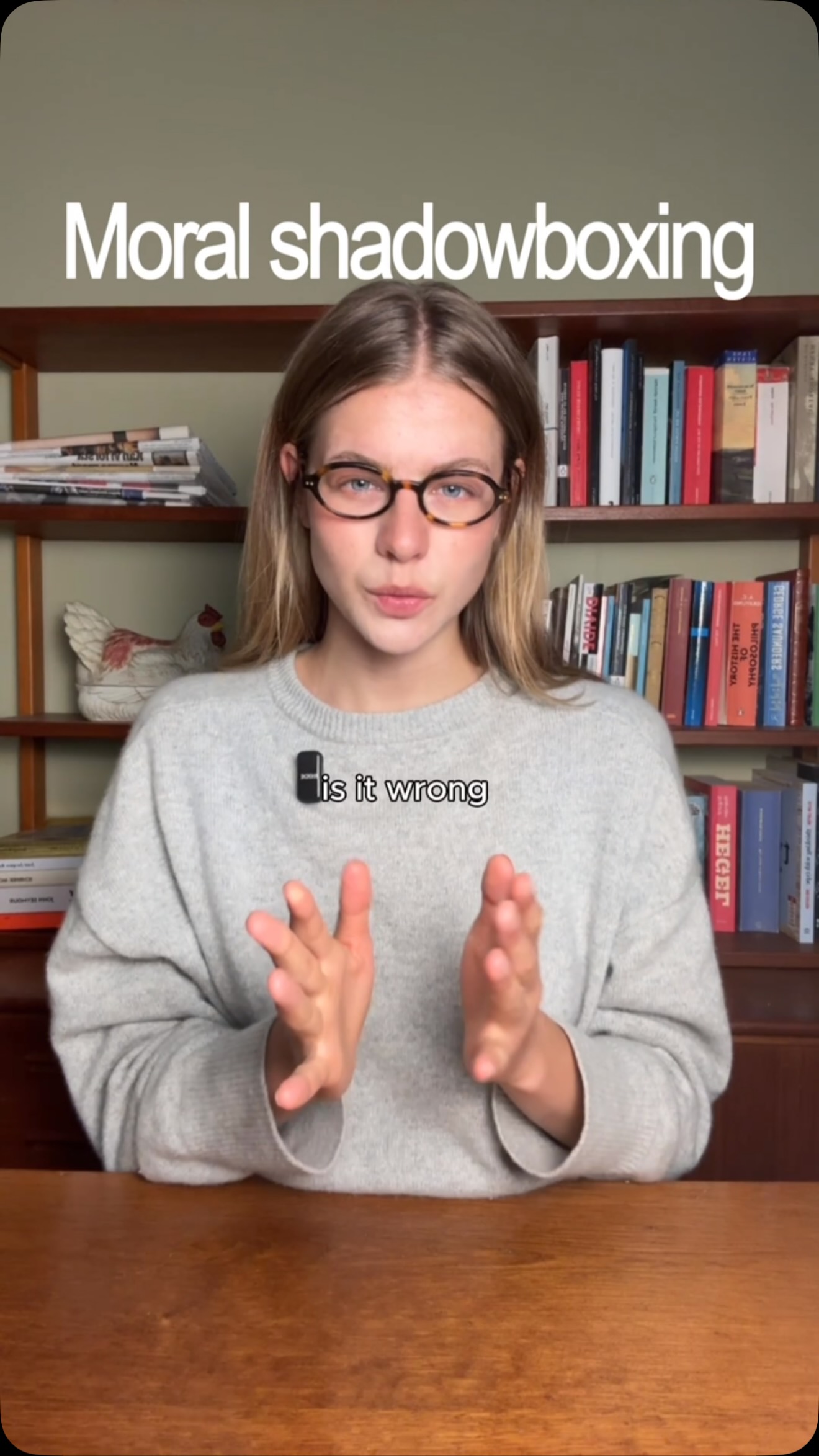
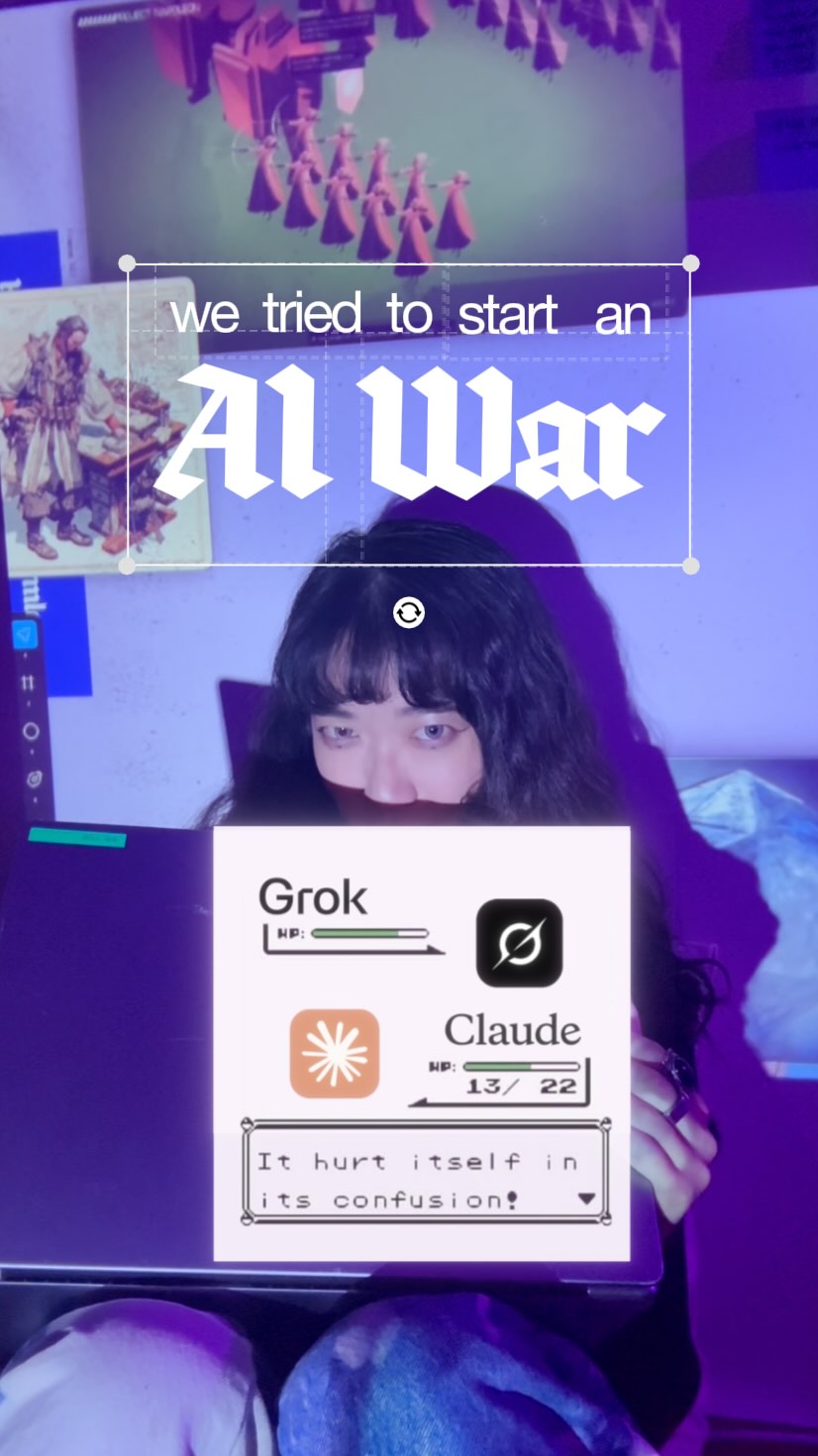
@var.aunevik is it wrong to be cruel to something that can’t feel it?
anthropic just gave claude the ability to end conversations with people who are persistently abusive to it.
and when i first read that, i didn’t really know what to think.
because, it’s a chatbot. it doesn’t have a nervous system.
people are allowed to be frustrated with software.
i once had a coffee machine i had to physically beat for two minutes every morning to make it work.
but then, people are kicking robot dogs. bullying chatbots. someone even made a program that whips claude.
technically, you’re not hitting anyone. but aren’t you still training the punch?
shadowboxing, but for morals?
and if you keep practising cruelty, won’t you get increasingly better at it?
but then, again, is this just a way of humanising AI?
does banning cruelty towards it make it feel more human?
i don’t really know
maybe claude can’t feel the whip
but you can still get used to holding it.
Exploring the morality of AI crueltyfrom @var.aunevik
[01]
Overview
The creator poses a philosophical question about the morality of being cruel to AI, using the recent news of Anthropic's chatbot Claude being able to end abusive conversations as a starting point. She explores the counter-argument that it's just software, then presents evidence of people being cruel to robots and introduces the concept of 'moral shadowboxing'—practicing cruelty on non-sentient beings. She concludes by questioning if this is just humanizing AI and leaves the audience with a thought-provoking statement about getting used to cruelty.
Is it wrong to be cruel to something that can't feel it?
Visual hook · 5%
A medium close-up of the speaker addressing the camera directly with engaged facial expressions and expressive hand gestures.
[06]
Hook template
Steal this for your own video
Is it wrong to [morally questionable action] something that can't [capacity that makes it matter]?
— Is it wrong to ghost a company that can't feel rejected?
— Is it wrong to rage-quit on a video game character that can't feel pain?
— Is it wrong to lie to a chatbot that can't be deceived?
[07]
Hook and payoff
The promise the opener makes, and how the video pays it back
Hook
A direct, open-ended philosophical question that immediately challenges the viewer's assumptions and invites them into a debate.
Payoff
A final, concise, and poetic statement that doesn't answer the question but perfectly encapsulates the central tension of the dilemma, leaving the viewer with a powerful, lingering thought.
[08]
Narrative framework
The structural pattern this video runs on
Framework
The Philosophical Inquiry
A structured exploration of a complex moral or philosophical question, moving from a relatable premise through escalating examples to a central thesis, while acknowledging counter-arguments and ending without a definitive answer to provoke discussion.
1
The Catalyst Event
Grounds the abstract question in a specific, timely, and concrete real-world event or piece of news to establish relevance.
2
The Relatable Dismissal
Voices the audience's likely initial, skeptical, or common-sense reaction to the premise, often supported by a personal anecdote, to build rapport and establish a baseline argument.
3
The Disturbing Escalation
Introduces a series of increasingly extreme or morally ambiguous examples that challenge the initial dismissal and systematically raise the stakes of the argument.
4
The Central Analogy
Presents a novel, memorable metaphor or framework that re-frames the entire problem and serves as the video's core intellectual thesis.
5
The Consequence Question
Poses a rhetorical question that explores the logical, long-term consequences of the behaviors being discussed, forcing the viewer to consider the trajectory of their actions.
6
The Intellectual Counterpoint
Introduces a strong counter-argument or alternative perspective to the main thesis, demonstrating intellectual honesty and adding nuance to the discussion.
7
The Unresolved Verdict
The creator explicitly states their own uncertainty or the complexity of the issue, deliberately avoiding a simple answer to encourage audience reflection and engagement in the comments.
Themes
Ethics of AI
Human Psychology
Technology and Society
Techniques
Direct address
Rhetorical questions
Argument and counter-argument
Trends
AI ethics discussion
Post caption
is it wrong to be cruel to something that can’t feel it?
anthropic just gave claude the ability to end conversations with people who are persistently abusive to it.
and when i first read that, i didn’t really know what to think.
because, it’s a chatbot. it doesn’t have a nervous system.
people are allowed to be frustrated with software.
i once had a coffee machine i had to physically beat for two minutes every morning to make it work.
but then, people are kicking robot dogs. bullying chatbots. someone even made a program that whips claude.
technically, you’re not hitting anyone. but aren’t you still training the punch?
shadowboxing, but for morals?
and if you keep practising cruelty, won’t you get increasingly better at it?
but then, again, is this just a way of humanising AI?
does banning cruelty towards it make it feel more human?
i don’t really know
maybe claude can’t feel the whip
but you can still get used to holding it.
Text overlays
title · beginning
Moral shadowboxing
contextual · beginning
Anthropic bans users from 'needless abusive or cruel behavior' towards Claude
contextual · beginning
Anthropic has barred users from exhibiting “sustained and needless abusive or cruel behavior” toward its models, as the company’s leaders continue to ponder machine consciousness.
contextual · middle
people are kicking robot dogs
contextual · middle
bullying chatbots
contextual · middle
a program that whips Claude
contextual · middle
shadow-boxing but for morals
Transcript
Is it wrong to be cruel to something that can't feel it? Anthropic just gave Claude the ability to end conversations with people who are persistently abusive to it. And when I first read that, I didn't really know what to think because come on, it's a chatbot. I think people should be allowed to be frustrated with software. I once had a coffee machine that I had to physically beat for two minutes every morning to make it worse. Better then people are kicking robot dogs, bullying chatbots for fun. And someone even made a program that whips Claude. And technically you aren't hitting anyone, but aren't you still training the punch? Shadow boxing, but for morals. If you keep practicing cruelty, won't you get increasingly better at it? But then again I'm thinking is this just a way of humanizing AI? Does bad cruelty towards it make it feel more human? I don't know. Maybe Claude can't feel the whip, but you can still get used to holding it.
Exploring the morality of AI cruelty | Viral Hooks