@itsbobbyfinn
Instagram · Skit
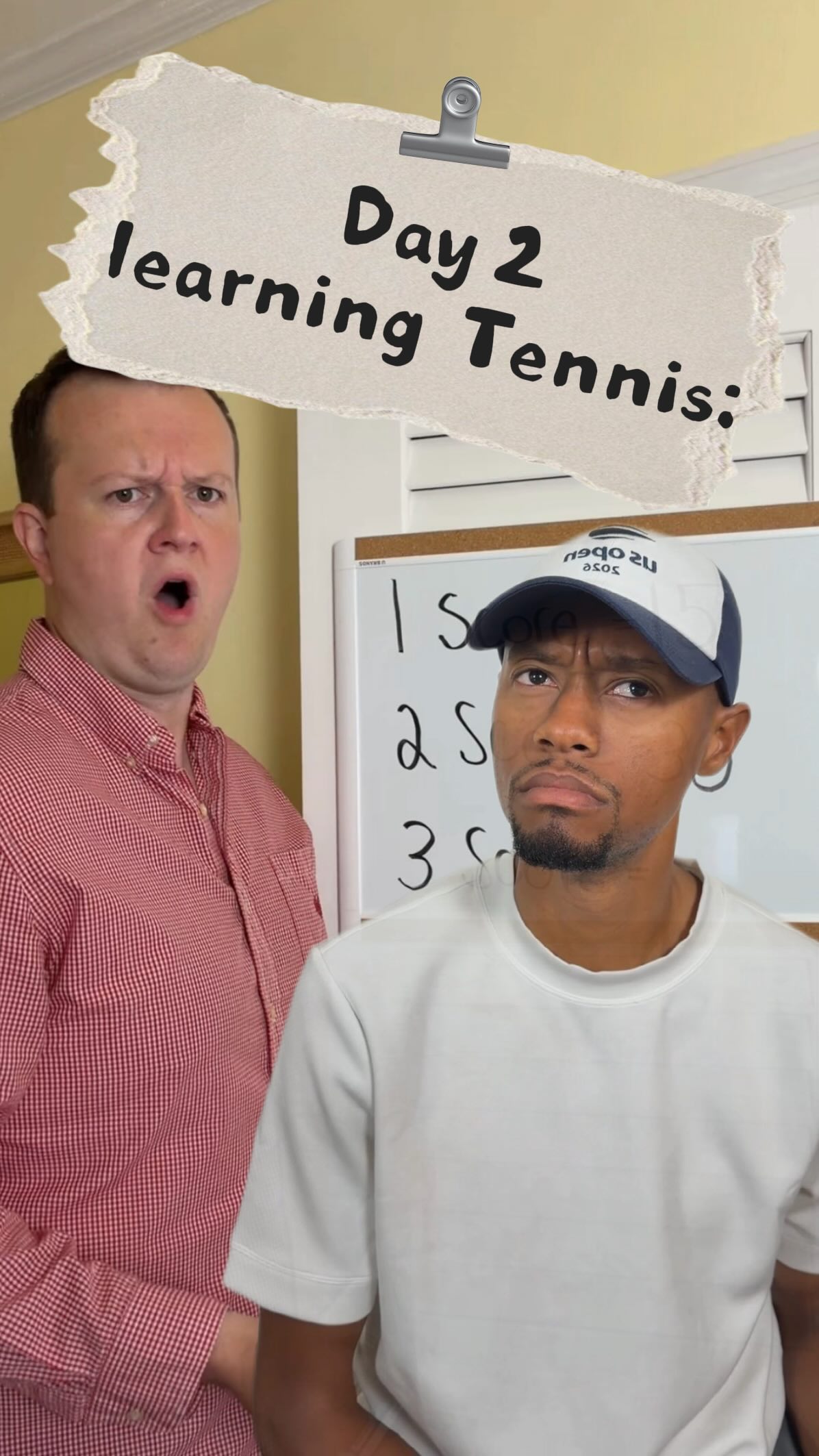
@itsbobbyfinn Tennis said it’s because that’s why #usopen

@itsbobbyfinn
Instagram · Skit
@itsbobbyfinn Tennis said it’s because that’s why #usopen
Performance
Video #46482 · Skit
[01]
A creator, playing the role of a tennis teacher, attempts to explain the game's scoring system to a student using a whiteboard. With each rule he introduces, the student makes a logical assumption, only for the teacher to negate it with a more complex and contradictory exception, escalating from winning by two games, to tiebreakers, to different scoring within tiebreakers, and finally to special rules for major tournaments, leaving the student utterly confused.
[02]
[03]
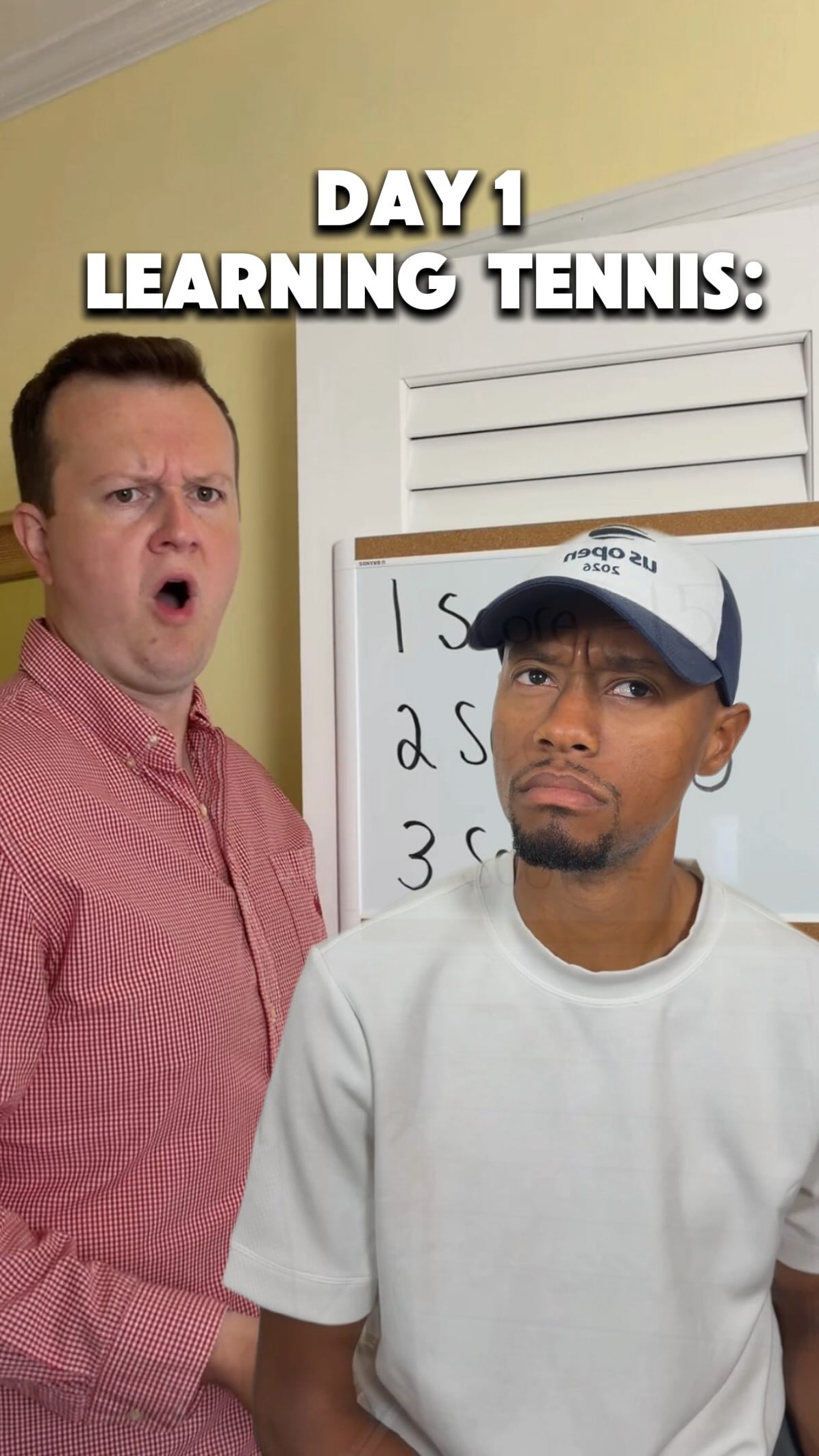 14.7M5.1×Comedic skit explaining tennis scoring@itsbobbyfinn · Skit
 1.3M339.6×Greenscreen sports business economy breakdown@maxxrosenblum · Breakdown
 1M39×Explaining rules for a golf game@manorsgolf · Tutorial / How To
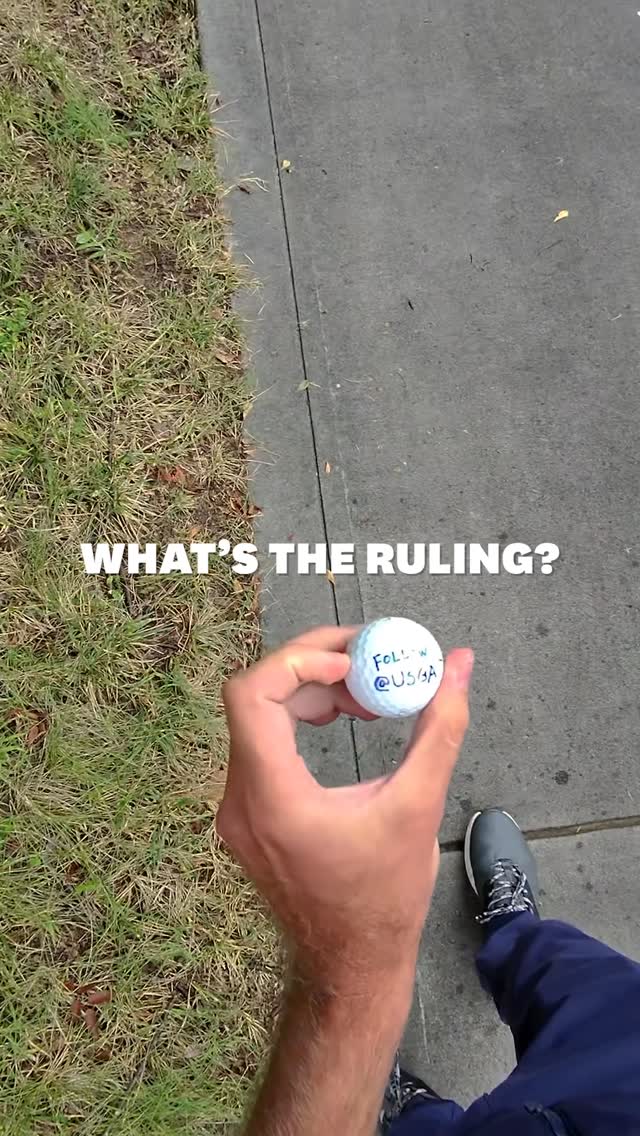 629.4K2.9×Golf rules explained for when you can't tell your ball from your provisional@usga · Explainer
 1.1M12×Explain specific golf rule scenario@usga · Breakdown
 890.6K41.6×Explaining a golf game's rules@manorsgolf · Tutorial / How To
 193.3K2.7×Creator gives opinion on golf rules@shaneohgolfs · Rapid Fire Listicle
 1.6M72.5×Playing different sports with bowling ball@pitviper · Rapid Fire Listicle
 74.4K3.3×Asking audience for business feedback@yohnmav · Audience-Sourced Decisions
 796.5K5.8×Creator reacts to relaxed golf rules.@shaneohgolfs · Rapid Fire Listicle
 607.1K13.4×Greenscreen report on PGA Tour changes@shaneohgolfs · Headlines
 2M14.1×Hot take on golf rules@officiallysonny · Hot Take
[04]
[05]
What stops the scroll in the first 3 seconds
Title hook
Day 2 learning tennis:
Verbal hook
So the first player to win six games wins the set,
Visual hook
A man stands next to a whiteboard displaying a tennis score of 'Teacher 5' and 'Student 6', immediately setting up a specific scenario and creating a question about the outcome.
[07]
The promise the opener makes, and how the video pays it back
Hook
A simple, foundational rule is stated, creating an expectation of clarity that will be immediately and repeatedly subverted.
Payoff
The expert provides a circular, non-sensical justification for the final rule, confirming the topic's absurdity. This is paired with the novice's physical act of frustration, providing a cathartic and comedic release for the audience.
[08]
The structural pattern this video runs on
Framework
The Rule of Escalating Exceptions
An 'expert' explains a topic to a 'novice' by presenting a simple rule, only to repeatedly contradict the novice's logical deductions with increasingly specific and absurd exceptions, creating comedic tension and highlighting the topic's inherent complexity.
The Foundational Rule
The expert establishes a basic, seemingly straightforward rule about the topic, setting the novice (and the audience) up with a false sense of understanding.
The Logical Fallacy
The novice applies simple, common-sense logic to the foundational rule to reach a conclusion, which the audience perceives as correct.
The First Contradiction
The expert aggressively negates the novice's logical conclusion, introducing the first layer of complexity or a common exception that invalidates the simple rule.
The Second Contradiction
The novice adapts their logic to incorporate the first exception, but is again negated by the expert, who introduces an entirely new mechanism or procedure (e.g., a 'tie-breaker') that overrides the previous rules under specific conditions.
The System-Within-a-System
The novice attempts to apply the logic of the original system to the new mechanism, but is corrected again, revealing that the new mechanism has its own unique, non-intuitive set of rules.
The Hyper-Specific Contradiction
Just as the novice seems to grasp the complex rules, the expert introduces an extremely niche, high-stakes scenario where all previously established rules are once again invalidated by a final, even more obscure rule.
Tennis said it’s because that’s why #usopen
title · beginning
Day 2 learning tennis:
So the first player to win six games wins the better, which means if you win six games... I win the set. No. What would you think? It's because the score is six to five, and you have to win by two games to win the best, which means if it's six games to six... The next player that wins by two games wins the set. No. We would go into a tie better. You no how... It's because we don't have all day for that. That's why. And if you're the first to score in the tie better, the score would be tier left. No. It would be one tier. You yes. It's because the scoring in the tie breaker is not the same because that's why. And the first person to score seven in the tie breaker and win by two wins the set. So if you have seven and I have five I'd win the set. Which means if you have seven and I have five in the fifth set tie better at the US Open I'd win the US Open. No. What would you think? This is the final set tie breaker at a major, which means you have to score 10, not seven. You no know, it's because that's why.