@biscaynewater
Instagram · Split screen
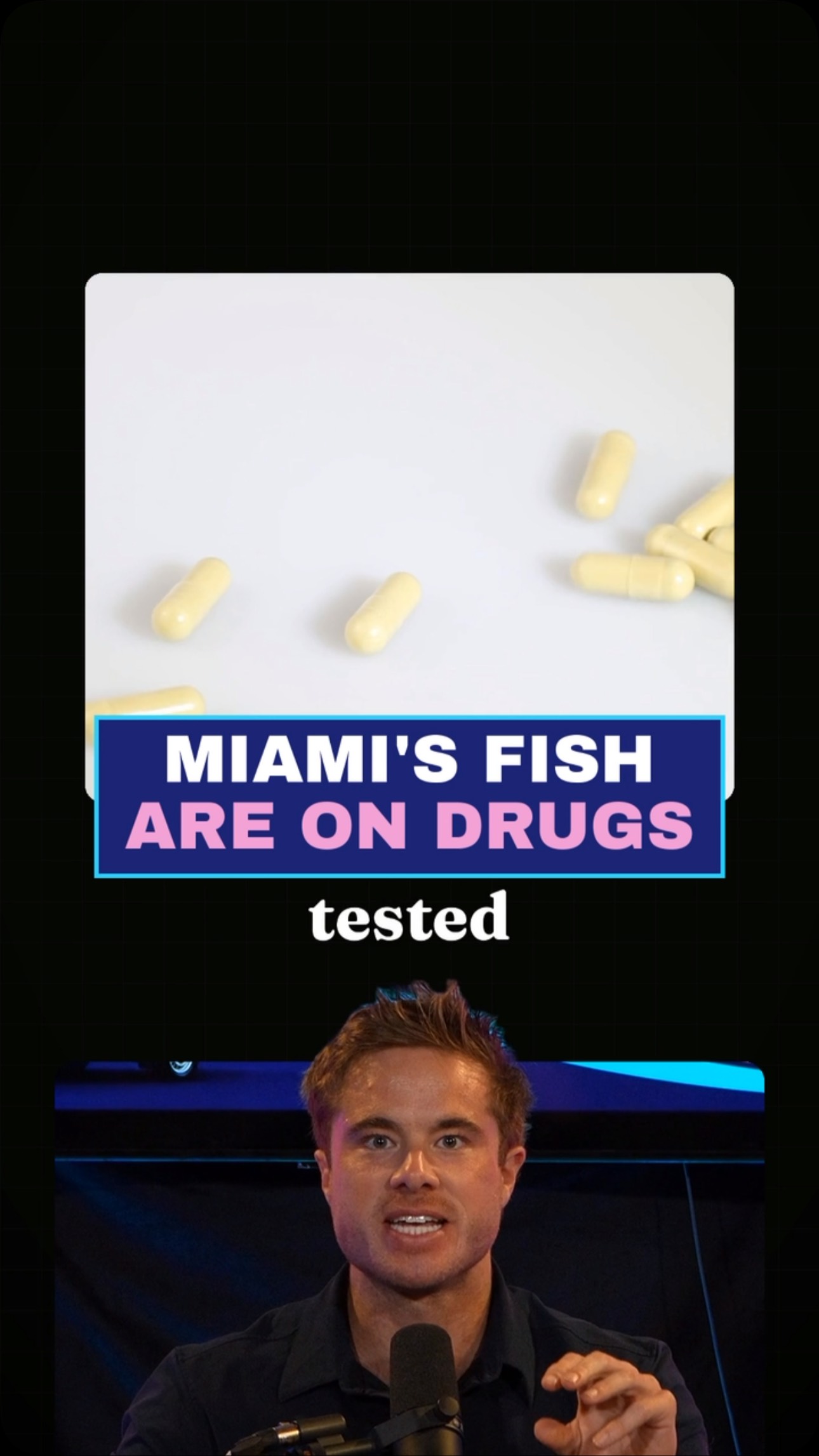
@biscaynewater Here we explore why the bonefish population is declining, and how prescription drugs could be the smoking gun

@biscaynewater
Instagram · Split screen
@biscaynewater Here we explore why the bonefish population is declining, and how prescription drugs could be the smoking gun
Performance
Video #47300 · Split screen
[01]
The creator explains a shocking scientific finding that 100% of 93 fish tested in South Florida contained prescription drugs. He details the study, focusing on the declining bonefish population, and reveals the variety and high concentration of drugs found, including antidepressants. The creator then explains the ecological consequences, such as altered fish behavior, and reveals the contamination extends to their food source, before ending with a cliffhanger about the source of the pollution, promising to reveal it in a part two.
[02]
[03]
 253K13.6×Reporter breaks down investigation findings@propublica · Explainer
 2.8M30.6×Explaining tamarind for fluoride detox@denny_dure · Breakdown
 173.2K22.8×Creator reacts to plastic food news@holistic.grenade · Reaction
 1.1M46.1×Exposing a brand with evidence@zephzoid · Breakdown
 188.9K21.3×Science news report with business promotion@myhealthforward · Headlines
 287.5K3.6×Creator exposes lead in baby bottles@the.lead.lady · Public Service Announcement
 537.6K6.8×Dialogue reveals shocking food fact@the.lead.lady · Breakdown
 236.1K21.4×Creator lists new health products@jakeheyen · Rapid Fire Listicle
 6.5M914.3×Talking head cautionary gross storytime@aranisagoodboy
 1.7M13.6×Fiber advice to prevent colon cancer@alanlinplus · Breakdown
 868.8K5.6×Debunks protein obsession, promotes fiber@alanlinplus · Hot Take
 6.6M40×Exposing brand with lead test evidence@the.lead.lady · Public Service Announcement
[04]
[05]
What stops the scroll in the first 3 seconds
Title hook
MIAMI'S FISH ARE ON DRUGS
Verbal hook
Scientists tested 93 fish in South Florida, and every single one of them tested positive for drugs.
Visual hook
A chaotic, close-up B-roll shot of dozens of small, silvery fish swimming frantically in water, creating a sense of urgency and visual density.
[07]
The promise the opener makes, and how the video pays it back
Hook
A startling, quantified statement that defies common understanding, immediately establishing a central mystery.
Payoff
A cliffhanger that teases the resolution by providing a vague clue tied to the viewer's own life, creating an unresolved tension loop that incentivizes following for the next installment.
[08]
The structural pattern this video runs on
Framework
The Investigative Cliffhanger
To present a shocking, counter-intuitive phenomenon, systematically investigate its layers to build a compelling mystery, and then withhold the final answer to drive a follow-for-part-two action.
The Shocking Proclamation
Present a single, unbelievable statistic as the story's foundation (e.g., 100% of a sample tested positive for something unexpected).
The Escalation Promise
Use a direct narrative cue ('that's not even the craziest part') to signal that the initial shock is only the beginning, promising a greater reveal to come.
The Sympathetic Subject
Introduce a specific, relatable, or valuable subject that is being negatively affected by the phenomenon, creating an emotional anchor for the audience.
The Investigation Frame
Detail the 'how' of the discovery (the study, the researchers, the duration), establishing credibility and context for the data that will be presented.
The Data Cascade
Deliver a rapid-fire sequence of increasingly specific and alarming data points that quantify the severity of the problem (e.g., average contamination, worst-case examples).
The Extreme Outlier
Isolate and highlight the single most shocking data point or anomaly (e.g., contamination levels 300x the norm) to serve as a narrative climax for the 'what' portion of the story.
The Consequence Reveal
Explain the tangible, real-world impact of the phenomenon, answering the viewer's implicit 'Why should I care?' question.
The Mystery Deepens
Introduce a new layer to the problem that reveals its scope is even wider than initially presented, complicating the central question.
The Central Question Articulated
Explicitly state the core 'how' or 'why' question that the entire narrative has been building towards.
The Vague Clue & Hooked Conclusion
Provide a tantalizing but incomplete clue to the answer, linking it to the viewer's daily life, before cutting to a cliffhanger that promises the full resolution in a subsequent part, paired with a direct call-to-action.
Here we explore why the bonefish population is declining, and how prescription drugs could be the smoking gun
title · beginning
MIAMI'S FISH ARE ON DRUGS
informational · beginning
tested 93
informational · beginning
93
informational · beginning
100%
title · beginning
Not Even The Craziest Part
title · beginning
The Bonefish
title · middle
Population Declining
title · middle
Scientists Asked Why
informational · middle
3 YEARS
title · middle
Miami To Key West
title · middle
Testing For What?
title · middle
Prescription Drugs
title · middle
What They Found
informational · middle
0 / 93
title · middle
The Average Fish
informational · middle
7
title · middle
One Had 17
informational · middle
17
title · middle
8 Antidepressants
informational · middle
300x
title · middle
Fish Behavior Changes
title · end
Part 2
call-to-action · end
+ Follow
Scientists tested 93 fish in South Florida, and every single one of them tested positive for drugs. And somehow, that's not even the craziest part of this story. See, there's a fish called the bonefish. People fly to Miami and the Florida Keys from all over the world just to catch this thing. But for years, their population has been declining, and scientists have been trying to find out why. So researchers at FIU spent three years catching bonefish from Miami down to Key West. What were they testing for, you might ask? They were testing them for prescription drugs. Antidepressants, painkillers, blood pressure medication, you name it. And out of the 93 fish, not a single one came back clean. The average fish had seven different drugs in its system. One had 17. That's more prescription than your grandfather. But here's where the story gets really weird. One fish caught in Biscayne Bay had eight different antidepressants in its system, and some were detected at up to three hundred times the therapeutic dose in humans. No, why does this even matter? Well, certain antidepressants can actually change how the fish behaves, including how they respond to predators. And when you're a fish, being less afraid of something that wants to eat you could be a slight problem. Best the researchers discovered something else. The crabs and shrimp these fish were eating had prescriptions in them too, which raises a pretty obvious question. How the hell are antidepressants ending up inside fish in Miami? Well, as it turns out, the answer has a lot to do with something everyone in South Florida uses every single day, and it starts inside your house. I'll explain exactly how in Part Two. Follow so you don't miss it.