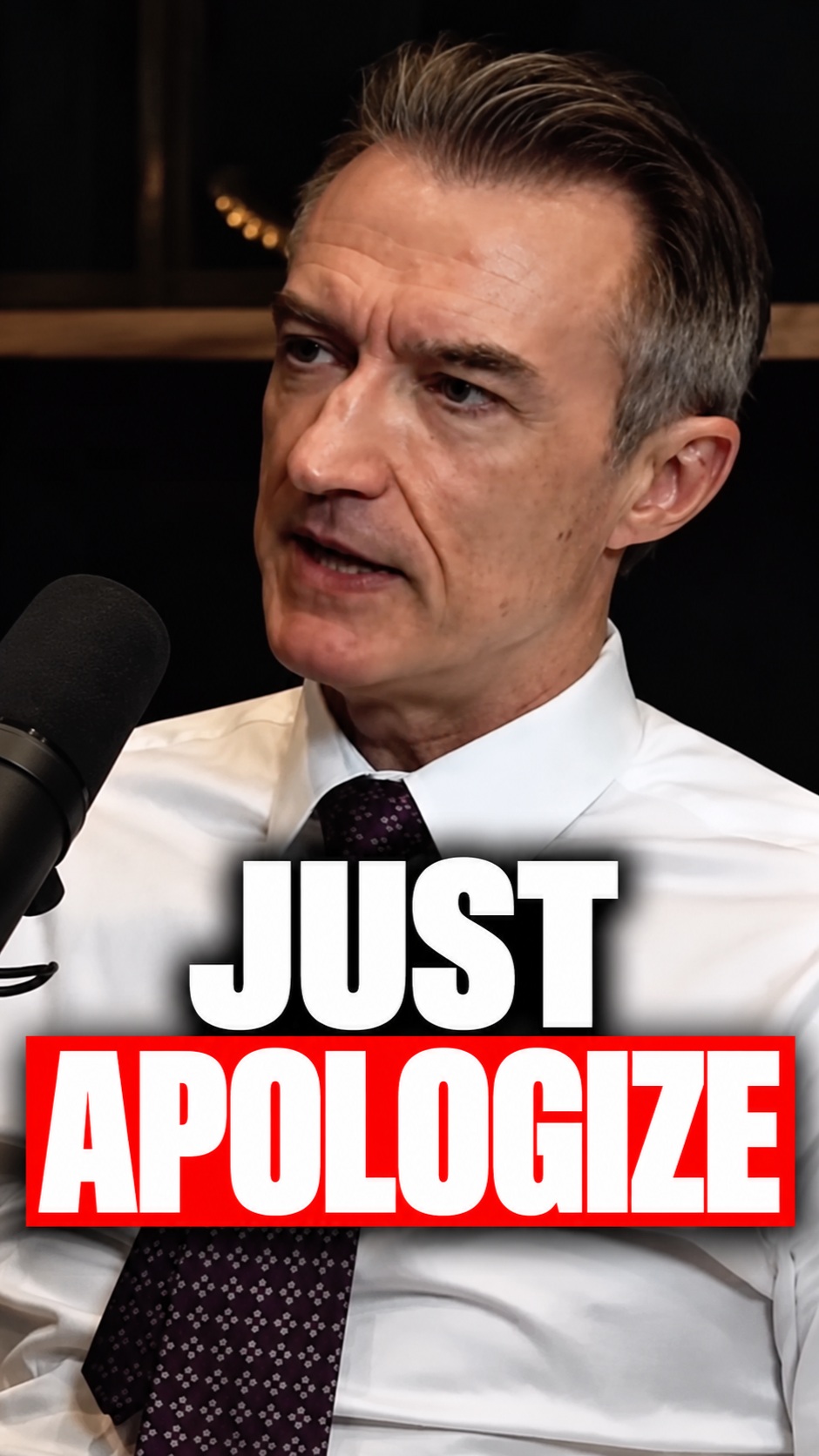
The speaker explains his philosophy on forgiveness, stating that a genuine apology can earn forgiveness for most offenses. He then breaks down the difference between insincere 'bullshit' apologies (e.g., 'I'm sorry you got upset') and a real apology, providing a detailed script for a genuine apology that acknowledges the specific action, recognizes the hurt it caused, and expresses sincere regret.
Post caption
There's not a lot I won't forgive if someone gives me a genuine apology.
But most people don't actually know how to apologize.
"I'm sorry you got upset."
"I'm sorry you were offended."
"I'm sorry for whatever I did."
Those aren't apologies.
Those are ways of avoiding responsibility while pretending to take it.
A real apology requires you to acknowledge exactly what you did and the pain you caused.
Transcript
If you apologize, there's... I... There's not a lot I won't forgive. Like, I'm not saying I... I'll forget it. I'm not saying, oh, we're totally good like it never happens. I understand. That. But if someone says what I call a non bullshit apology. Right? The bullshit apologies, oh, I'm sorry you got so upset when I did that. Like, that's a bullshit apology. You know? I'm sorry that you were offended. That's a bullshit apology. Or I'm sorry for what I did. Because we... What are we talking about? We might not be talking about the same thing. Or you might be saying, I'm sorry that you found out about that, not that you did it. So a real apology is I lied to you, and I realized that that hurt you. And I'm really sorry. I shouldn't have done that. I regret that I did that, and I know that it hurt you, and I'm really sorry. That's a real apology.