Viral Hooks
Trending short videosInside the US time-keeping station
S

@scientific_american

Instagram · Vlog

@scientific_american What if you could tune in to the exact time over the radio? At WWV, a radio station in Colorado run by the National Institute of Standards and Technology (@nist), cesium atomic clocks keep time with extraordinary precision, broadcasting time signals that help people and technologies around the country stay in sync. Emma Gometz takes us inside the station to explore how time goes from inside atomic clocks to across the airwaves. The easiest way to tune in is to call (303) 499-7111, but you can also pick up the broadcast on several radio frequencies. #atomicclock #time #radio #engineering #howitworks

View original on Instagram

The edit1 shot · 2 text
Shots Text2:40

Performance

Views
693.4K
Likes
52.4K
Comments
889
Engagement
7.7%
Outlier
26×
Length · 28 Oct 2026
2:40

Video #47726 · Vlog

Inside the US time-keeping stationfrom @scientific_american

[01]

Overview

A narrator gives a tour of the NIST radio station WWV in Colorado, interviewing an engineer named Matt Deutsch who explains the station's role in broadcasting the official US time. The tour covers the history of the station, its continued relevance, and culminates in a look inside a protected 'screen room' containing the cesium atomic clocks that maintain the precise time standard.

[02]

Simple outline

  1. 1Pose abstract question
  2. 2Reveal unique location
  3. 3Introduce expert guide
  4. 4Explore inner sanctum
  5. 5Unveil core technology

[03]

Related videos

[04]

Classification

Format
Concepts
Behind The ScenesLocation ShowcaseBreakdown
Elements
B-Roll CutawayVoiceover

[05]

Hook analysis

What stops the scroll in the first 3 seconds

Verbal hook

Do you think that time is real?

Visual hook

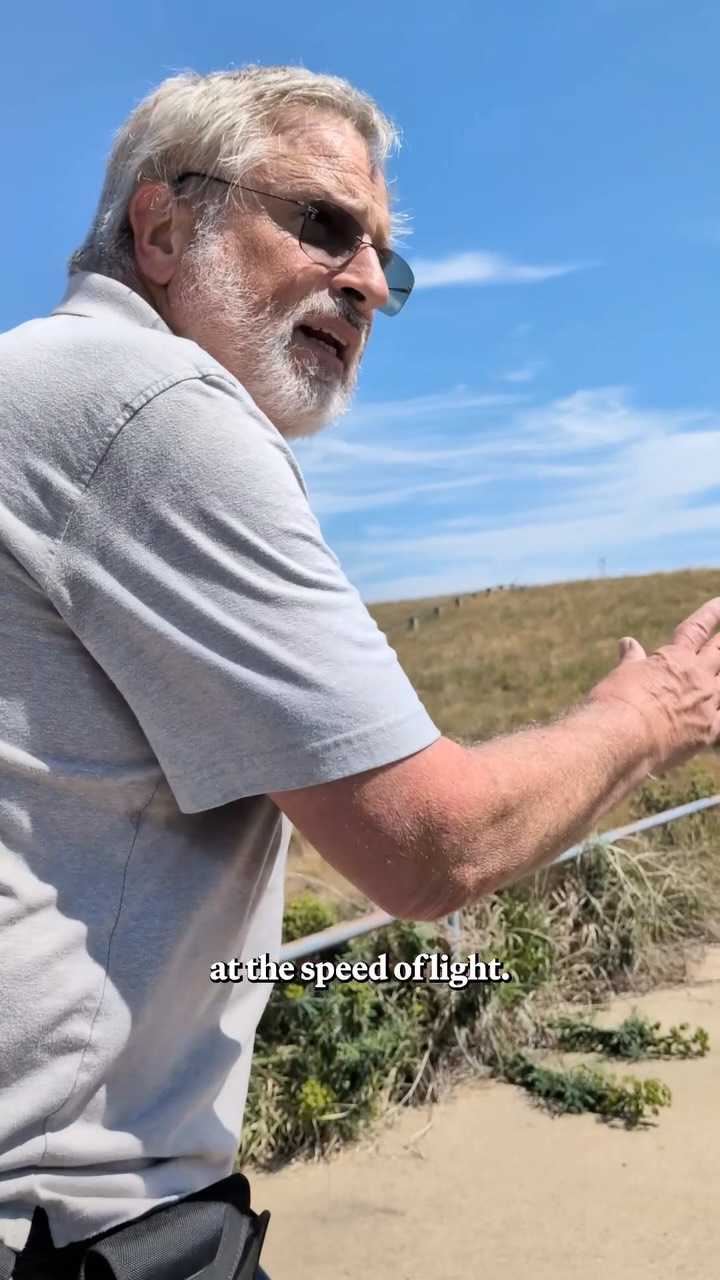
A man with a serious expression stands in a stark, sunny landscape, looking directly at the camera before breaking into a smile.

[07]

Hook and payoff

The promise the opener makes, and how the video pays it back

Hook

An intriguing, philosophical question about a fundamental concept (e.g., time) is posed to create an immediate curiosity gap.

Payoff

The final reveal of the core technology or 'source' of the concept. This provides a satisfying visual and intellectual payoff, closing the curiosity loop established by the hook.

[08]

Narrative framework

The structural pattern this video runs on

Framework

The Secret Source Explainer

To take the viewer on a guided journey from a broad, abstract concept to the hidden, physical source of that concept, led by an on-site expert to grant a sense of exclusive access and authority.

  1. 1

    The Concrete Pivot

    Immediately ground the abstract hook in a specific, mysterious physical location where the concept is managed, created, or controlled, turning a philosophical question into a tangible mystery.

  2. 2

    The Authority Introduction

    Introduce the official institution and then a human expert on-site who will act as the guide, establishing credibility and a personal connection for the viewer.

  3. 3

    The Mission Statement

    The expert clearly and concisely explains the fundamental purpose and function of the location, answering the 'why does this exist?' question.

  4. 4

    The Legacy & Relevance Beat

    Provide historical context (e.g., founding date) and then immediately justify the subject's continued importance in the modern world, preemptively answering viewer skepticism.

  5. 5

    The Inner Sanctum Journey

    Physically lead the viewer into a restricted, protected, or core operational area, creating a sense of privileged access and escalating anticipation for the final reveal.

Themes

  • science communication
  • technology
  • history of technology
  • government infrastructure

Techniques

  • on-location filming
  • expert interview
  • voiceover narration

Post caption

What if you could tune in to the exact time over the radio? At WWV, a radio station in Colorado run by the National Institute of Standards and Technology (@nist), cesium atomic clocks keep time with extraordinary precision, broadcasting time signals that help people and technologies around the country stay in sync. Emma Gometz takes us inside the station to explore how time goes from inside atomic clocks to across the airwaves. The easiest way to tune in is to call (303) 499-7111, but you can also pick up the broadcast on several radio frequencies. #atomicclock #time #radio #engineering #howitworks

Text overlays

  • contextual · beginning

    [Interviewer:] Do you think that time is real?

  • contextual · beginning

    [Laughs]

Transcript

Do you think that time is real? It's a trick question, isn't it? I'm at a remote radio station in Colorado where the US government broadcasts what time it is to the rest of the world. The agency that determines the time is called the National Institute of Standards and Technology or NIST. You know, they're in charge of all the standards, and one of the standards is standard time interval. And that's our job is to broadcast that to the nation, and the best way to do it is by radio no that it's available to everyone everywhere. Let's go take a look at WWV. This is Matt Deutsch, an engineer here at the radio station. You can tell that's not part of my my, being an engineer, you know, very rigid. This station has existed since 1919. Since then, GPS satellites have become a more popular way to broadcast the time, but this station is still running today. You'd be surprised how many services still use it. This is a screen room that has the tier scale inside of it protected by a Faraday cage. And here we have five cesium clocks that