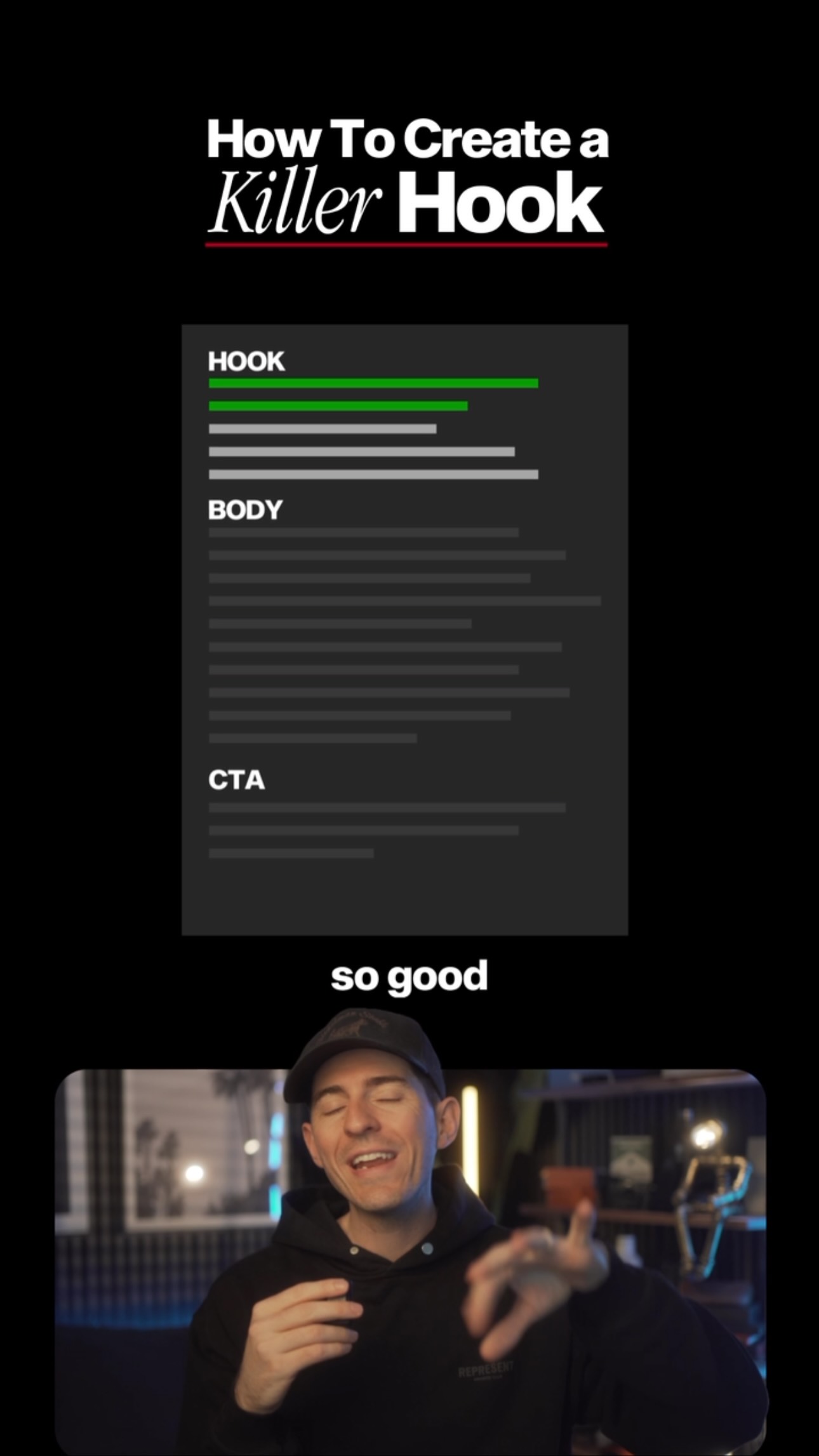
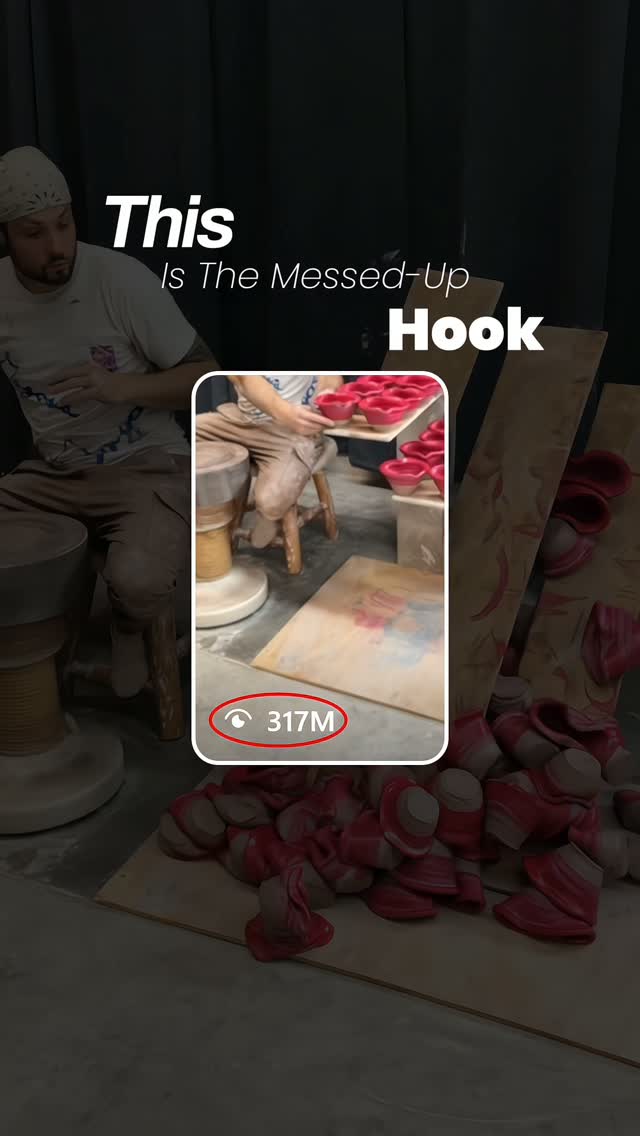
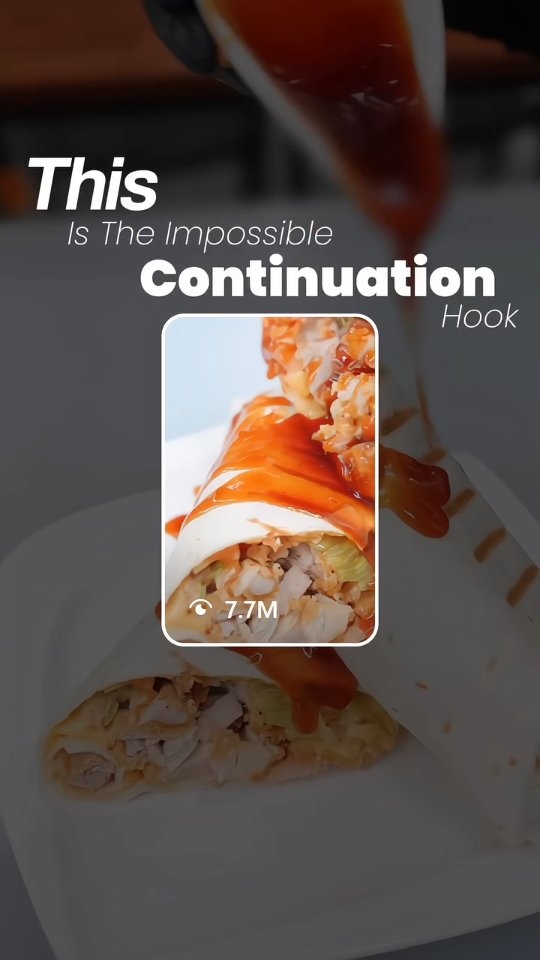
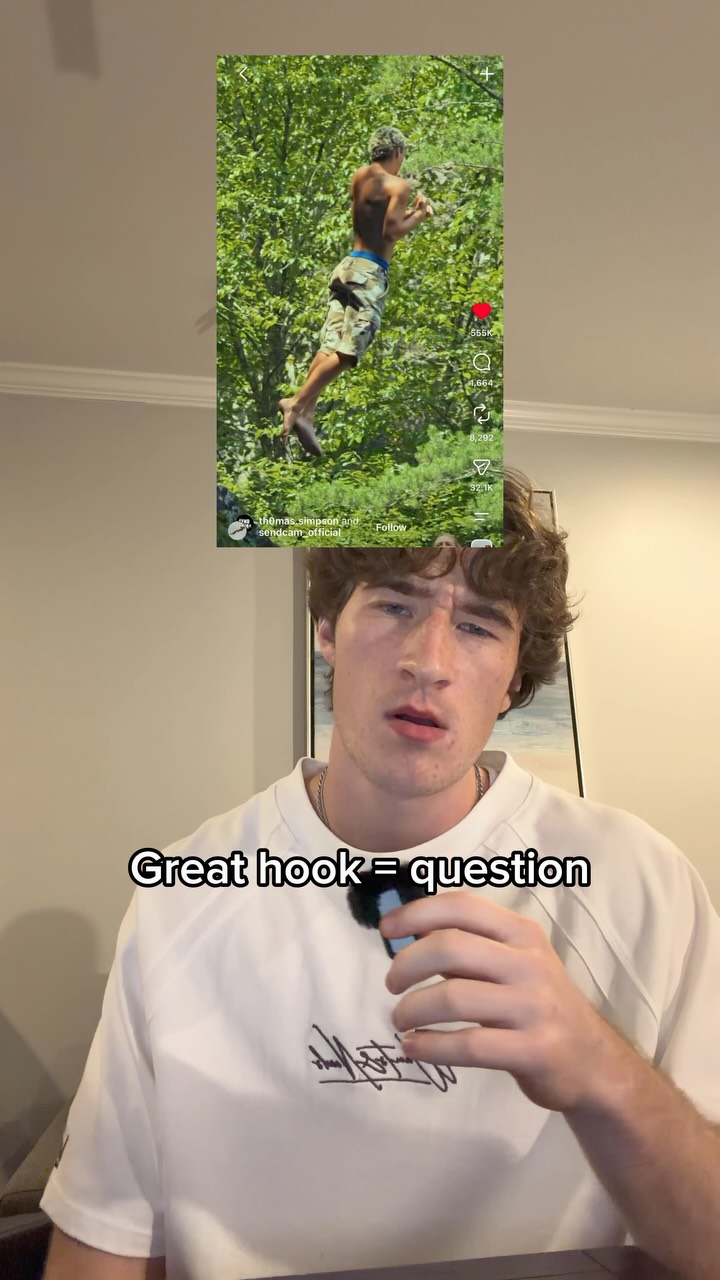
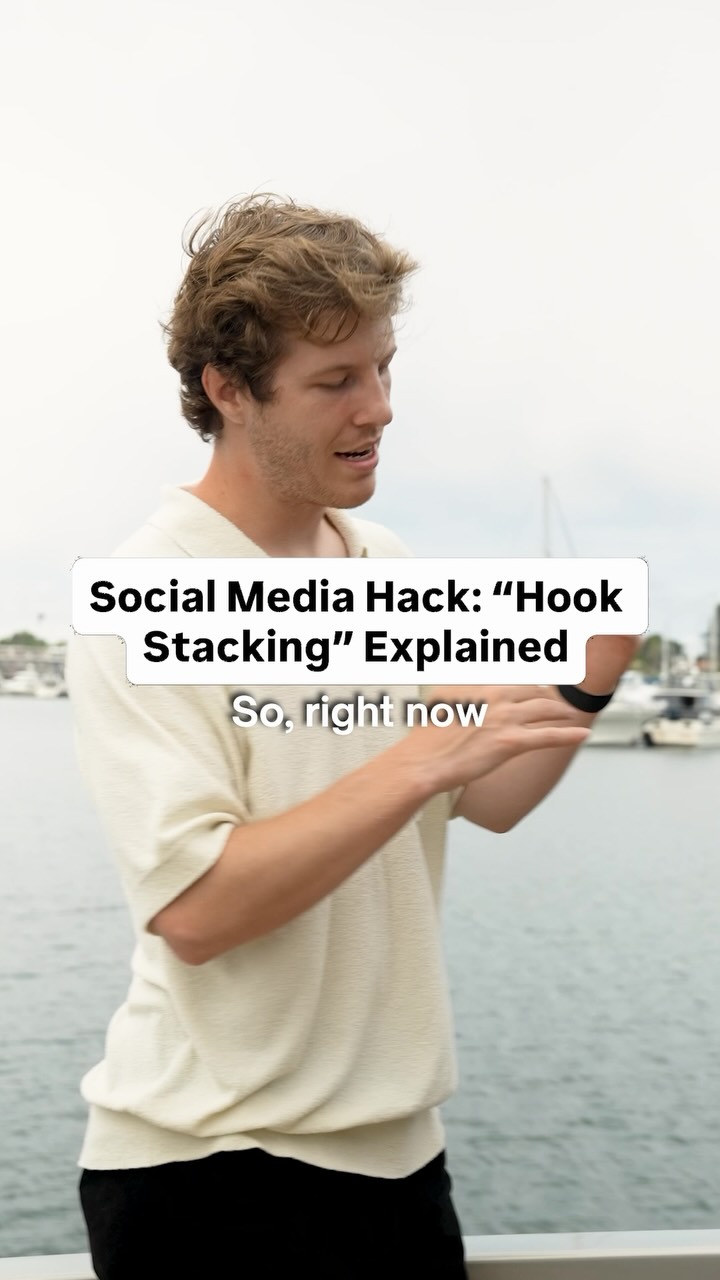
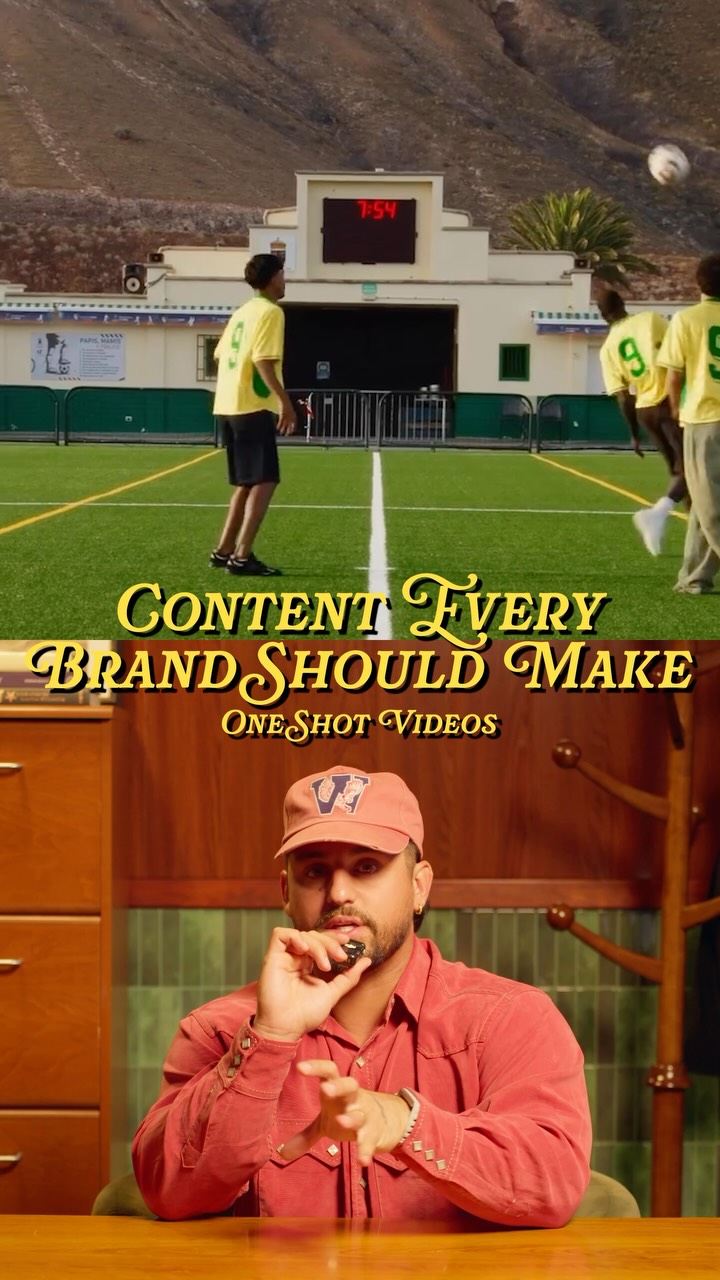
The creator explains his 'Triple Hook Method' for creating engaging video openings, breaking it down into three distinct steps—Context, Lean, and Contrarian Snapback—using animated graphics, data visualizations, and video examples to illustrate each stage. He concludes by summarizing the formula and offering a call-to-action for a more detailed training video.
Post caption
Here’s how to write a hook so good it is scientifically impossible to skip.
This is called the Triple Hook Method.
And if you do this right, it will hypnotize the viewer in a way where they physically cannot scroll away.
Now to help you learn how to do this in practice, I’ve got a video that breaks this down in more detail with a bunch of examples.
Over 700,000 people have watched it.
Comment “hooks” and I’ll send it through so you can level up your hooks
Follow @kallawaymarketing to learn how to grow faster on social media
#marketing #socialmedia #contentcreator #contentstrategy #video
Transcript
Here's how to write a hook so good it is scientifically impossible to skip. This is called the triple hook method. And if you do this right, it will hypnotize a viewer such that they physically cannot scroll away. Alright. Step one is the context. And this is the basic step, but so many people still get this wrong. Viewers only watch content where they have a vested interest in the topic. So the first line of your hook must establish context on what the video is gonna be about. You can say it in the audio. Seven, take your content toolkit. Show it in the visuals, write it in the text or caption, ideally all three, but the context must be established immediately. We have data that shows even delaying the context to the back half of the first sentence increases the skip rate dramatically. So priority number one is to set immediate context as soon as possible. Now step two in the triple hook is where most people mess up. This is called the lean. What you're trying to do is get someone curious in a certain direction. You wanna make them lean in on the context to actively want to hear more. Now you can make this lean in happen in a variety of ways. You can give some proof or stat validating the incoming claim, reference a specific pain point they have or a benefit they want, or share something interesting, shocking, or unexpected. But regardless of what you pick, the viewer must lean in instead of opt out. So when you read back that first one to two sentences just on its own, is the context immediately clear rank is there some curiosity inducement that makes the viewer want to lean in for more? It's called the context lean. This is what opens the curiosity loop you hear everybody talk about. Now step three in the triple hook is really where the money's made. Like worse% of people know how to do this. I call it the contrarian snapback. To catch a fish, you gotta get the hook in its mouth swimming one way and then yank the line going another direction. Not to be morbid, but storytelling works the exact same way. The goal is to say something in the contrarian snapback that pulls the viewer away from the direction they were leaning, essentially snapping them back down another path. That triple combination of rapidly buying into the context, leaning in based on some curiosity, and then getting snapped back in another direction is the good tier hook formula that works every single time. Now if you wanna learn how to actually do this in practice with examples, Best hooks, and I'll send it to you so you can watch it.