@wonderlemmon
Instagram · Yap
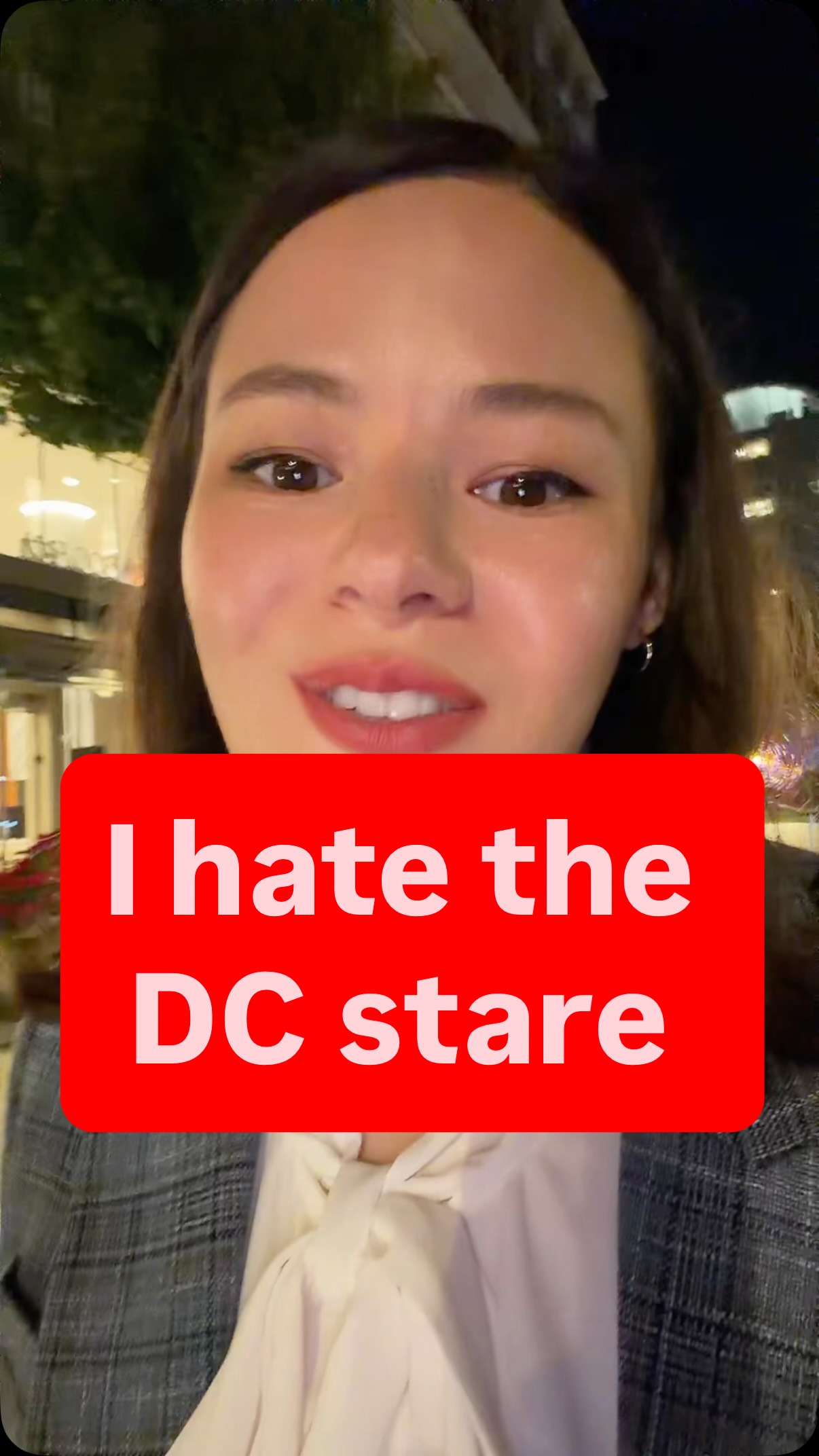
@wonderlemmon 🤷🏻♀️ I truly hate the DC stare #washingtondc #politics #professional #communication #tips

@wonderlemmon
Instagram · Yap
@wonderlemmon 🤷🏻♀️ I truly hate the DC stare #washingtondc #politics #professional #communication #tips
Performance
Video #48862 · Yap
[01]
The creator shares her frustration with a social behavior she calls the 'DC stare,' which she just experienced at a networking event. She defines it as people quickly assessing your value based on money or power within 30 seconds, and then breaking eye contact to scan the room for more important connections if you don't meet their criteria.
[02]
[03]
 160.1K4.4×Creator rants about tech culture@morganhoong · Cultural Rant
 2.1M6.6×Explains psychology of social media lurking@sensei.nick · Breakdown
 222.1K3.8×Rant about modern dating cycle@nickalexcomedy · Cultural Rant
 502.8K32.4×Direct to camera mindset advice@viralclubhouse_ · Motivational Mantra
 397.3K17.3×Listing relatable corporate frustrations@roxycouse
 355.3K13.6×Passionate monologue on online visibility@sarahhguerra_ · Motivational Mantra
 266.7K3×Vulnerable monologue on career goals@morganhoong · Vulnerable Monologue
 1.1M3.4×30 day social networking challenge@markianb · Challenge
 2.4M90.8×Eye contact trick for conversations@jefferson_fisher · Tutorial / How To
 185.4K11.6×Car rant about friendship standards@amandanelz · Cultural Rant
 247.2K36.6×Why talking to strangers is valuable@harnidhk · Anecdotal Philosophy
 682.2K22.2×Deconstructing modern youth culture trends@orenmeetsworld · Breakdown
[04]
[05]
What stops the scroll in the first 3 seconds
Title hook · 55%
I hate the DC stare
Verbal hook · 40%
I just came from a networking event in Washington, D.C.
Visual hook · 5%
A close-up, selfie-style shot of the creator walking at night while talking directly and expressively to the camera, creating a sense of movement and personal connection.
[06]
Steal this for your own video
I hate the
[07]
The promise the opener makes, and how the video pays it back
Hook
State a strong, negative emotional judgment about a specific, niche behavior, immediately followed by a promise to define it.
Payoff
The viewer is equipped with the language and understanding to identify and articulate a previously unnamed frustration, creating a sense of validation and shared experience.
[08]
The structural pattern this video runs on
Framework
The Insider's Complaint
To identify a frustrating, niche social phenomenon, give it a memorable name, and break down its mechanics and motivations for an audience who may have experienced it without being able to articulate it.
The Grounding Anecdote
Establish credibility and context by referencing a recent, personal experience with the phenomenon.
The Concept Naming
Introduce a catchy, memorable name for the frustrating behavior, solidifying it as a distinct concept.
The Functional Definition
Explain precisely what the behavior is and how it manifests during an interaction.
The Ruthless Quantifier
Assign a specific, short timeframe to the behavior to emphasize its efficiency and coldness.
The Brutal Criteria
Expose the raw, transactional, and often cynical rules that govern the behavior (e.g., assessing status, power, or value).
The Behavioral Proof
Describe the specific, observable actions that signal a negative judgment has been made, giving the viewer a tangible takeaway.
The Cultural Justification
Explain the broader environmental or societal pressure that drives the behavior, providing context for why it occurs.
🤷🏻♀️ I truly hate the DC stare #washingtondc #politics #professional #communication #tips
title · beginning
I hate the DC stare
contextual · beginning
FROM A NETWORKING EVENT IN WASHINGTON, D.C.
informational · beginning
ONE THING THAT I CANNOT FREAKING STAND IS THE D.C. STARE
informational · beginning
THE D.C. STARE IS THE WAY THAT PEOPLE NETWORK WITH YOU
informational · middle
WHEN YOU'RE TALKING TO THEM, THEY'RE QUICKLY GARNERING TO SEE WHETHER YOU'RE SOMEBODY WHO'S WORTH TALKING TO OR NOT.
informational · middle
THIS DECISION WILL HAPPEN WITHIN, LIKE, 30 SECONDS.
informational · middle
BASICALLY BOILS DOWN TO, LIKE, DO YOU HAVE MONEY? DO YOU HAVE POWER?
informational · middle
WHEN YOU MEET PEOPLE IN WASHINGTON, D.C., YOU HAVE TO PROVE THAT YOU HAVE POWER RIGHT AWAY.
informational · middle
IF YOU DON'T, THEN THEY WILL START SCANNING THE ROOM
informational · middle
THEY'RE NOT MAKING EYE CONTACT WITH YOU ANYMORE
informational · end
BECAUSE IT'S A ROOM FULL OF PEOPLE TRYING TO MOVE UP IN THE WORLD
informational · end
AND WITHIN 30 SECONDS, IF THEY CANNOT GLEAN THAT THIS IS AN IMPORTANT CONVERSATION, THEY WILL START LOOKING
Just came from a networking event in Washington DC. One thing that I cannot freaking stand is the DC tier. And let me tell you what that is. DC stare is the way that people network with you. Like, when you're talking to them, they're quickly garnering to see whether you're, like, somebody who's worth talking to or not. This decision will happen within, like, thirty seconds. Basically boils down to, like, do you have money? Do you have power? When you meet people in Washington, DC, you have to prove that you have power right away. If you don't, then they will start scanning the room and kind of looking they're not making eye contact with you anymore. Because it's a room full of people trying to move up in the worse. And within thirty seconds, they cannot glean that this is an important conversation. They will start looking for