@fmsmith319
Instagram · Yap
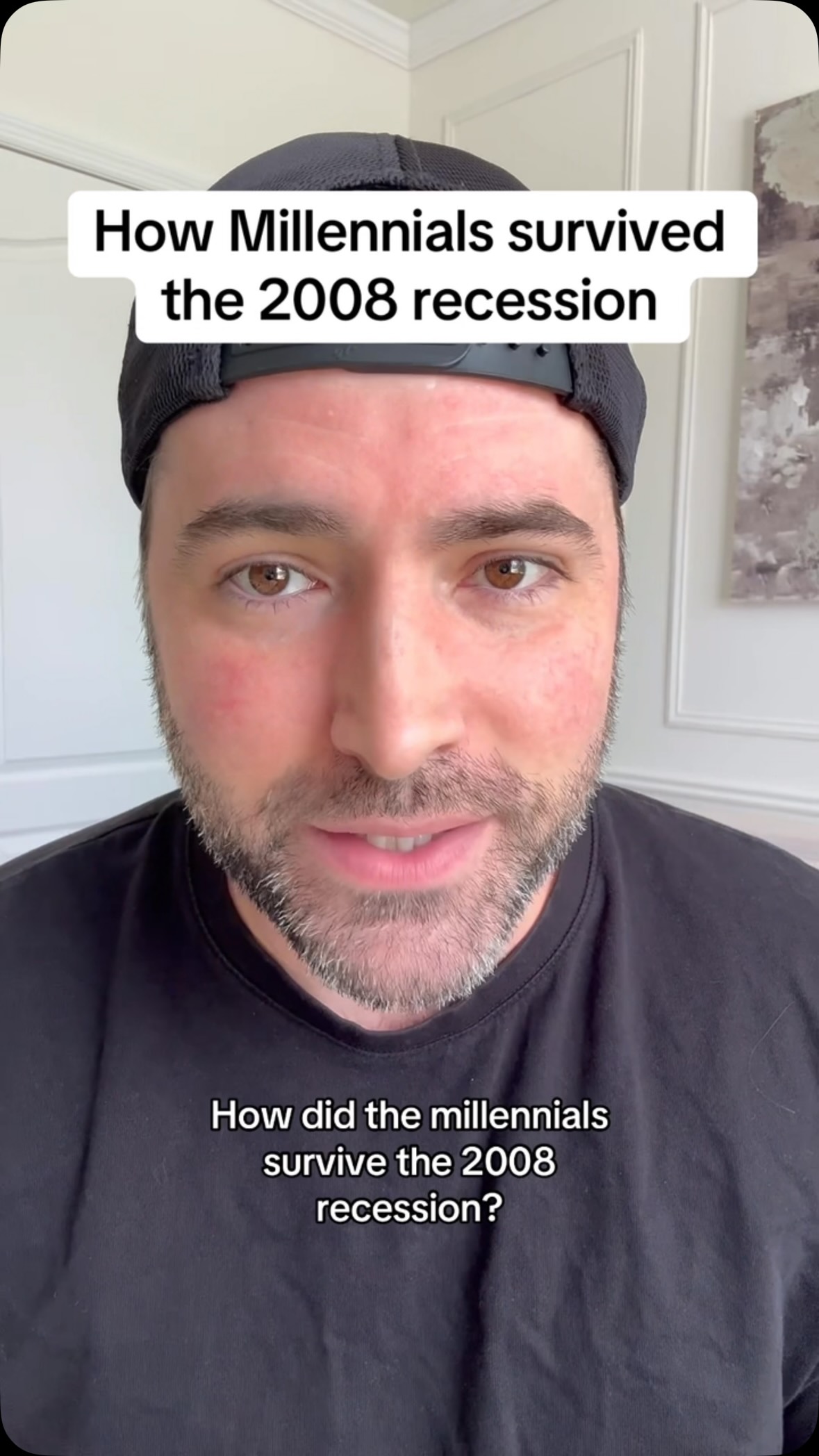
@fmsmith319 How Millennials survived the 2008 recession

@fmsmith319
Instagram · Yap
@fmsmith319 How Millennials survived the 2008 recession
Performance
Video #49112 · Yap
[01]
The creator explains his perspective on how millennials survived the 2008 recession by arguing that the cost of living was so low that most people didn't feel the economic impact unless they lost their job or house. He provides specific examples of low costs, such as rent being $200-400 per person, the value of a serving job, $5 Subway footlongs, and cheap car leases. He contrasts these past prices with today's high costs, particularly for food, and concludes that life would be on 'easy mode' if current salaries were paired with 2008-era prices.
[02]
[03]
 854.3KRant about why nothing is worth the price@fmsmith319 · Cultural Rant
 274K1.4×Creator rants on housing market@fmsmith319 · Cultural Rant
 189.9KExplaining the modern work crisis@yourbrain_onmoney · Breakdown
 646.4K2.3×Explaining millennial career disillusionment@chloe.shih · Breakdown
 1.9M11.7×Evidence-based generational economic critique@fmsmith319 · Breakdown
 176.3K9.9×Generational real estate hot take@alfonsofrfr · Hot Take
 1.2M22.4×Relatable monologue on millennial burnout@roxycouse · Relatable One Shot
 581.4K9×Explaining a personal economic theory@fmsmith319 · Opportunity Explainer
 750.2K608.4×Satirical monologue on hustle culture@rolo_tony · Satirical Advice
 1.6M5.2×Creator gives direct travel advice@cbwritescopy · Hot Take
 732K2.6×Comparing college self to now@itskatesteinberg · Storytime
 2.2M219.5×Man rants about modern expectations@devin.the.one · Rapid Fire Listicle
[04]
[05]
What stops the scroll in the first 3 seconds
Title hook
How Millennials survived the 2008 recession
Verbal hook
How did the millennials survive the 2008 recession?
Visual hook
A tight, close-up shot of the speaker's face, creating an immediate and personal connection with the viewer.
[07]
The promise the opener makes, and how the video pays it back
Hook
Pose a direct, generationally-relevant question that frames a 'then vs. now' debate, presented both textually and verbally for immediate clarity.
Payoff
The final beat reframes the entire past experience into a simple, powerful concept, providing a satisfying and definitive conclusion to the argument that resonates with the audience's current struggles.
[08]
The structural pattern this video runs on
Framework
The Nostalgic Contrast
To argue that a past era was fundamentally easier by presenting a series of highly specific, nostalgic, and affordable examples, then contrasting them sharply with the expensive and difficult reality of today to evoke a strong emotional response.
The Counter-Intuitive Thesis
Immediately answer the hook's question with a bold, slightly controversial statement that challenges a common narrative (e.g., 'It was so cheap, we didn't even feel it').
The Foundational Proof
Ground the thesis with the most universal and relatable example of affordability from that era, focusing on a core living cost like housing.
The Income-to-Cost Justification
Connect the low cost of living to modest income, demonstrating how a basic job was sufficient to afford a comfortable life, making the past seem more attainable.
The Cultural Touchstone Proof
Cement the argument with highly specific, nostalgic examples (brands, products, prices) that evoke a strong emotional response and sense of shared experience in the target demographic.
The 'Unbelievable Stat' Proof
Introduce a shocking, data-driven example of affordability from the past that seems impossible by today's standards, often supported by on-screen text evidence.
The Lifestyle Synthesis
Describe the social or recreational activities that were easily accessible due to the low cost of living, painting a picture of a fuller, less stressful social life.
The Memorable Slogan
Coin a concise, powerful phrase that perfectly encapsulates the core feeling or paradox of the era being described (e.g., 'broke, but not struggling').
The Direct Contrast
Explicitly compare a specific cost from the past with its dramatically inflated cost today to generate shock and validate modern frustrations.
The Concluding Reframe
End by summarizing the entire past experience with a simple, powerful metaphor or label (e.g., 'easy mode') that solidifies the video's thesis and leaves a lasting impression.
How Millennials survived the 2008 recession
title · beginning
How Millennials survived the 2008 recession
contextual · middle
*per person
informational · middle
• Honda Accord LX: Honda famously ran a highly publicized national promotional lease offering a brand-new 2010 Accord LX for exactly $199 a month for 36 months (usually with around $2,199 due at signing). • Honda Civic LX / YP): The trendier Civic was even cheaper. A standard Civic lease during this era regularly hovered between $159 and $179 a month, making it a massive hit for college students and commuters.
contextual · end
*or if average salary was 75k+ with today's prices
Did the millennials survive the two thousand and '8 recession? It was just so cheap. I don't think many millennials even felt it, to be honest with you. If we didn't lose our job or lose our house, no one really changed anything. As long as you had a job, everything was so cheap. Most of our friends growing up, especially in our early twenties, they were splitting a house or splitting an apartment for anywhere from 200 to $400 a month for rent. If you got a serving job, you hit the fucking lottery because you could work three or four shifts and pay for your rent. We lived on $5 footlongs at Subway. That was millennial core. There were leases in the 2009, 2010 era that I think you could lease a Honda Civic rank new for, like, $1.79 a month. And us millennials went out all the time. We would go and get coffee. We'd go walk around Urban Outfitters. We'd go to movies all the time. When we went for wings, there were places that had 25¢ wings. 40¢ wing night. You could have 10 wings for, like, $5. Now if you get 10 wings at a restaurant, some of these restaurants, they're charging $18. We were broke, but not struggling is probably the best way I could describe it. It. Today, all of this would be over and no one would be complaining if you could rent for $800 a two bedroom apartment or you can get a one bedroom for 5 or $600. Then it's like, well, whatever. That's so easy. Life would be on easy mode. If you could get groceries for 300 a month, easy mode.