@fineasjackson
Instagram · Talking Head Edit
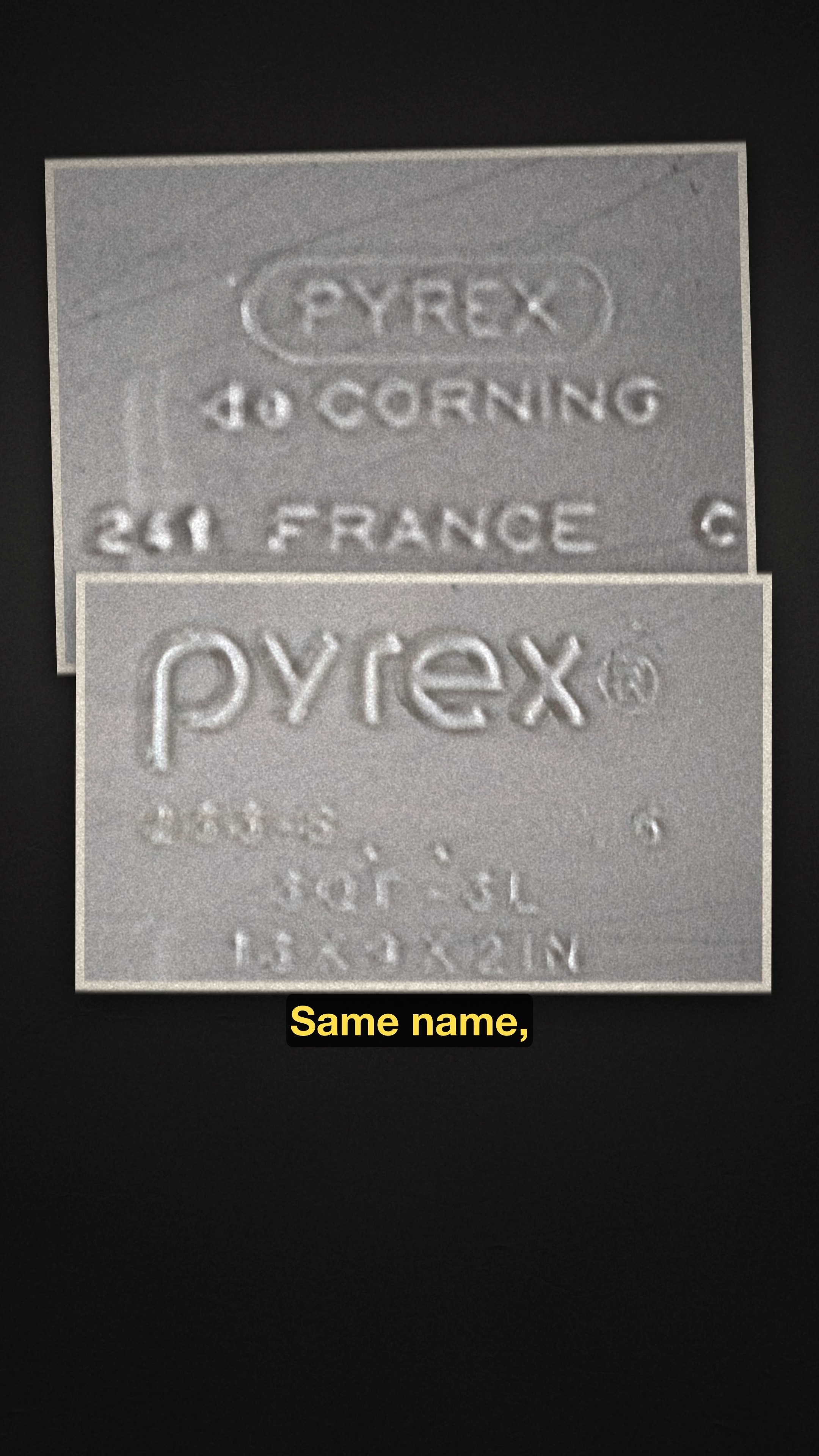
@fineasjackson Your Pyrex isn’t the glass it used to be. But why?

@fineasjackson
Instagram · Talking Head Edit
@fineasjackson Your Pyrex isn’t the glass it used to be. But why?
Performance
Video #49661 · Talking Head Edit
[01]
The creator explains the surprising difference between American and European Pyrex dishes by telling the origin story of the material. He traces its invention back to the late 1800s, when railroads needed a type of glass for their lanterns that wouldn't shatter from thermal shock, and details how Corning chemists solved the problem by creating borosilicate glass.
[02]
[03]
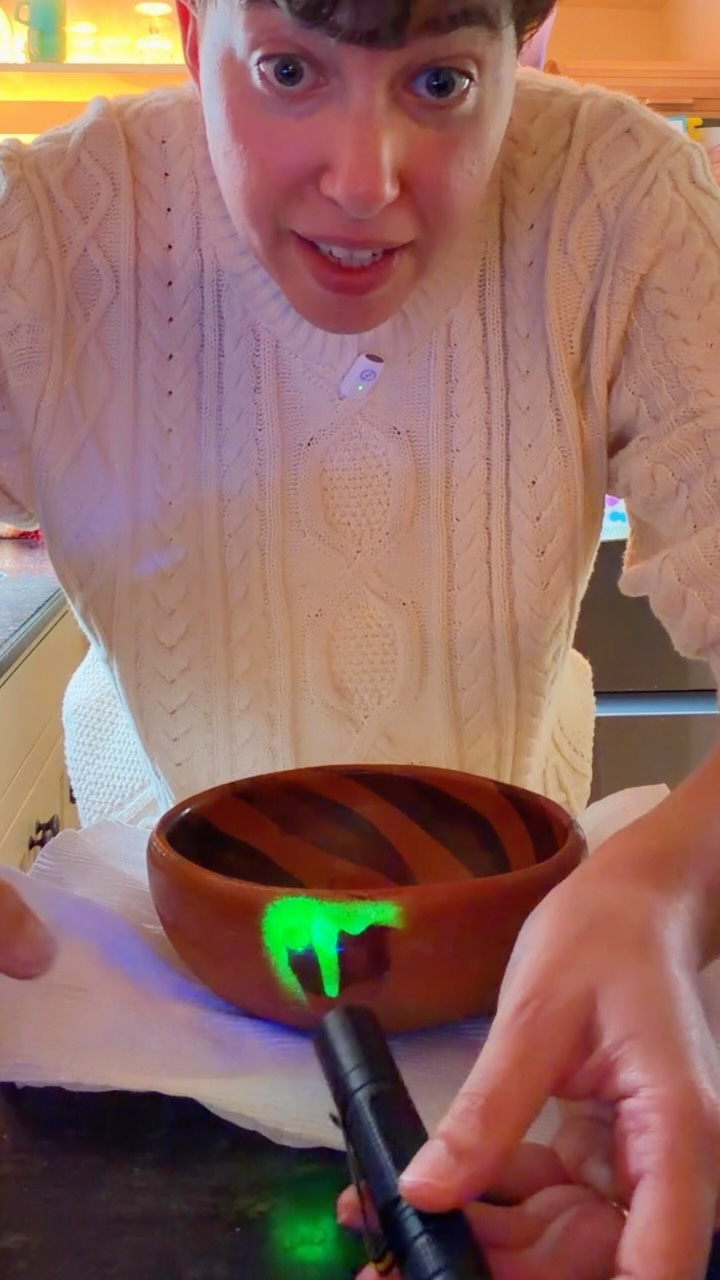 405.6K15.4×Demonstrating lead in traditional pottery@the.lead.lady · Public Service Announcement
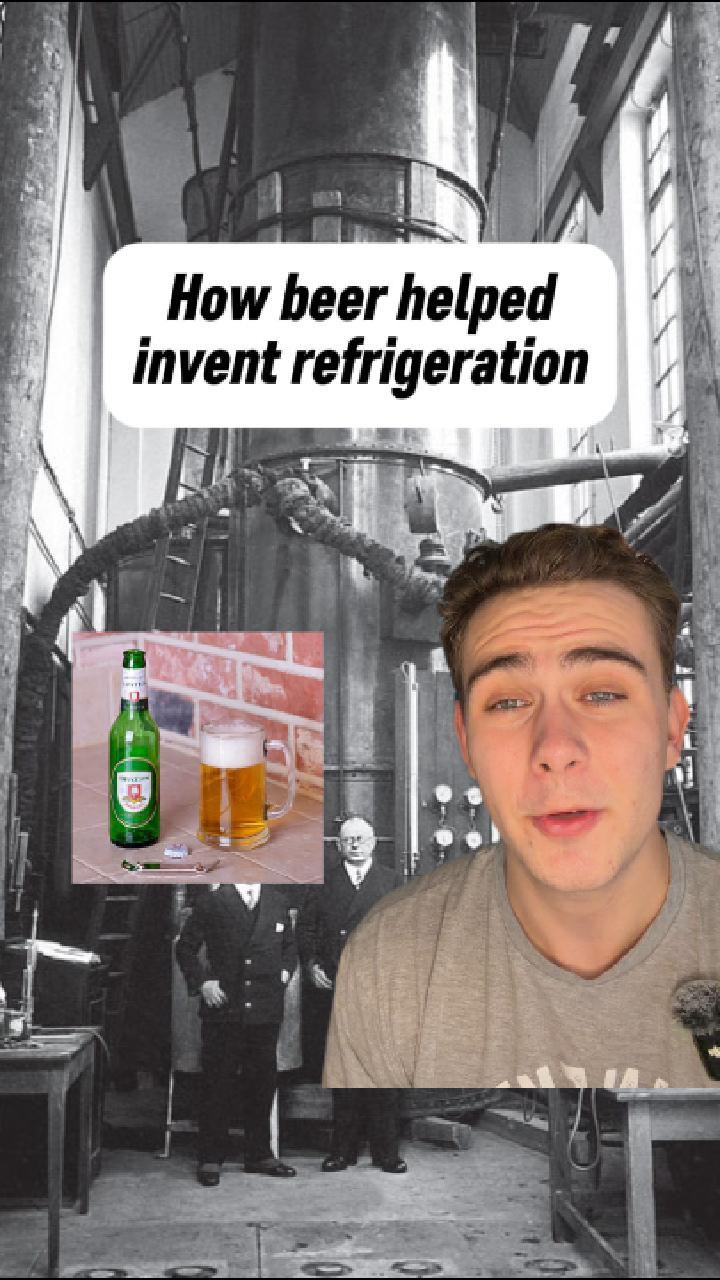 477.4K109.3×Surprising history of an invention@migo_beer · Strange but True
 173.9K5.8×Telling the story behind a lamp@tdotbdot1 · Origin Story
 51.7KDIY project disaster and solution@kismet_design · Journey Documentation
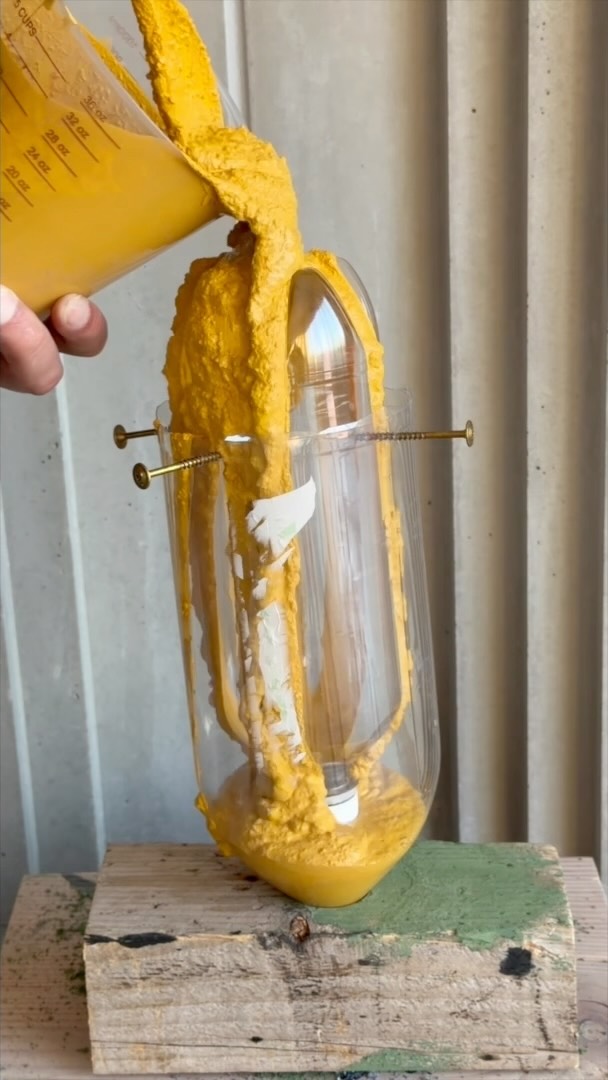 3.6M217.3×Making concrete lamps from bottles@highdesertdesignweek · Tutorial / How To
 5M458.4×Deconstructing a simple object's economics@ericcrackschina · Case Study Breakdown
 1.3M90.9×Explaining the science of doorknobs@fineasjackson · Strange but True
 3.3M3.1×Creator explains unique kitchen cooktop@jennaphipps · Q&A Response
 1.9M3.7×Smashing Stanley cup for lead test@the.lead.lady · Challenge
 4.2MExplains science behind metal cube@craighillcompany · Breakdown
 105.1KStory of sourcing vintage lighting@tdotbdot1 · Quest Recap
 1.4M2×Lighter design problem and solution@craighillcompany · Breakdown
[04]
[05]
What stops the scroll in the first 3 seconds
Verbal hook · 60%
Look at these two dishes.
Visual hook · 40%
A direct comparison of two seemingly identical glass dishes, presented with quick cuts to highlight their sameness, which visually establishes the central mystery of the video.
[06]
Steal this for your own video
Look at these two . They look the same, but .
[07]
The promise the opener makes, and how the video pays it back
Hook
An intriguing paradox is presented using two visually identical objects that have dramatically different properties or outcomes, creating an immediate knowledge gap and a sense of hidden danger.
Payoff
The innovation is given its brand name, connecting the entire historical journey back to the familiar object from the hook and resolving the initial paradox.
[08]
The structural pattern this video runs on
Framework
The Hidden History Blueprint
To reveal the surprising and important history behind a seemingly mundane object by framing its creation as the solution to a high-stakes historical problem, thereby explaining a modern-day paradox.
The Everyday Paradox
Show two seemingly identical items, but reveal they have a critical, hidden difference in performance or safety, posing a direct question to the viewer.
The Unexpected Origin
Pivot the narrative away from the modern context to an unrelated and surprising historical setting, stating that the answer begins there.
The High-Stakes Problem
Describe the original, often dangerous, problem from that historical context that the object was invented to solve.
The Foundational Science
Use simple animation and narration to explain the core scientific principle that caused the historical problem.
The Call to Adventure
Introduce the person or company who was tasked with solving this high-stakes problem.
The 'Eureka' Moment
Reveal the specific key innovation, material, or process that was discovered to solve the problem.
The Scientific Payoff
Explain *how* the innovation works on a scientific level, again using simple visuals, to provide a satisfying intellectual conclusion.
Your Pyrex isn’t the glass it used to be. But why?
branding · beginning
"Chasing Beauty" Episode 96
contextual · middle
1908
informational · end
1/3
Look at these two dishes. Same name. Same shape. One was bought in Europe. The other was bought in America. Take them out of a hot oven and set them down on a wet counter. One will probably be fine. The other one can shatter. So how can two dishes with the same name be made of different glass? This is Chasing Best episode tier. And today, we're looking at Pyrex. To understand Pyrex, you have to start on a railroad. In the late eighteen hundreds, railroad signaled their trains at night with lanterns. A flame inside a glass globe. And glass has a weakness. It grows when it heats up and shrinks when it cools down. So when cold rain hits hot glass, the outside shrinks while the inside is still swollen. The glass pulls itself apart. Lantern globes kept shattering. And a railroad signal that goes dark at night is a dangerous thing. So the railroads went to a glassmaker in Upstate New York called Corning. Around nineteen o eight, a Corning chemist called Eugene Sullivan found the fix. Boron. Glass made with boron only grows about a third as much when it heats up. Corning called