@briarcochran
Instagram · Graphic Yap
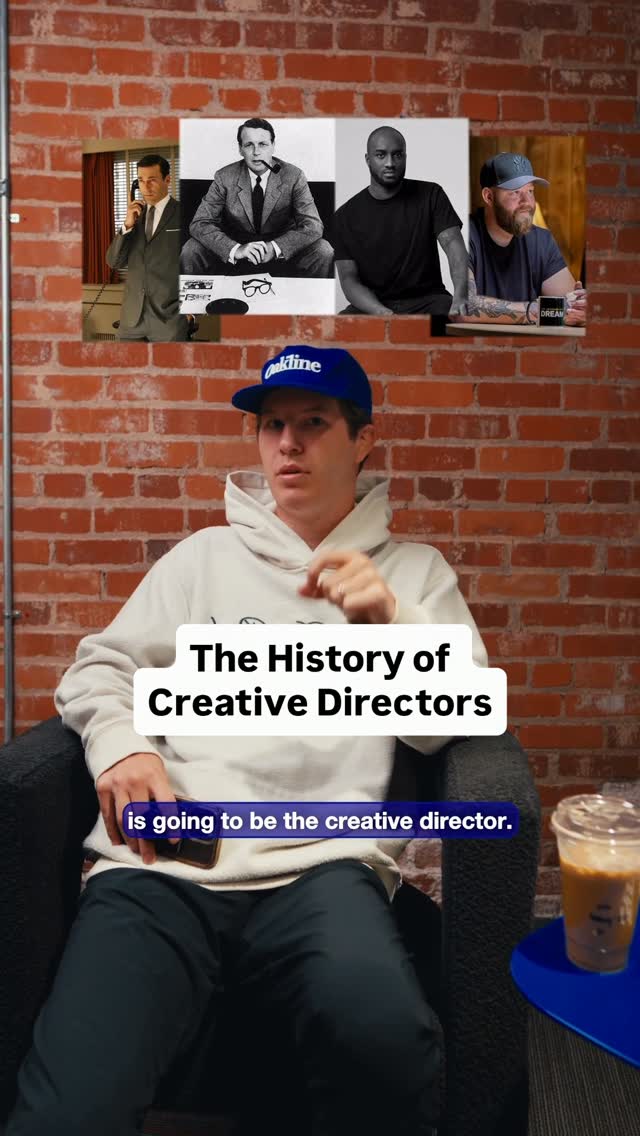
@briarcochran The History of the Creative Director

@briarcochran
Instagram · Graphic Yap
@briarcochran The History of the Creative Director
Performance
Video #49930 · Graphic Yap
[01]
The creator introduces the 'Creative Director' as the most important job of the future, then pivots to explaining the history of the role by breaking it down into four chronological stages. He starts with the 1948 David Ogilvy era, explaining his impact on brand development and association, before transitioning into the 1960s Don Draper era, using visual overlays of these historical figures to support his educational breakdown.
[02]
[03]
 955.2K4.5×Defining a creative role with book@jason_swet · Definitional Breakdown
 346.3K64.5×Using a book to define a role.@jason_swet · Explainer
 764.7K5.2×Animated five-step graphic design guide@chromas.lab · Tutorial / How To
 845.7K156.9×Creator promotes art direction course@jason_swet · Product Promo
 307.1K1.1×Explaining the art direction of everything@orenmeetsworld · Breakdown
 238.1K48×Creator promotes his art direction course@jason_swet · Product Promo
 242.1K39.9×Breakdown of award winning campaign@brotsalz · Case Study Breakdown
 115.4K99.9×Numbered list explaining art direction@jason_swet · Breakdown
 339.1K55.8×Creative director explains ideation method@creasegroup · Tutorial / How To
 129.1KExplaining photographers' new creative role@lenselworld · Explainer
 129.8K3.9×Breaking down key roles at farm hotels@samtravels · Breakdown
 207.9K9.5×Creator explains visual ideas framework@jason_swet · Opportunity Explainer
[04]
[05]
What stops the scroll in the first 3 seconds
Title hook · 45%
The History of Creative Directors
Verbal hook · 50%
The most important job maybe in 2026 over the next five to ten years is going to be the creative director, but in order for you to understand what it is today, you have to understand the history of this role.
Visual hook · 5%
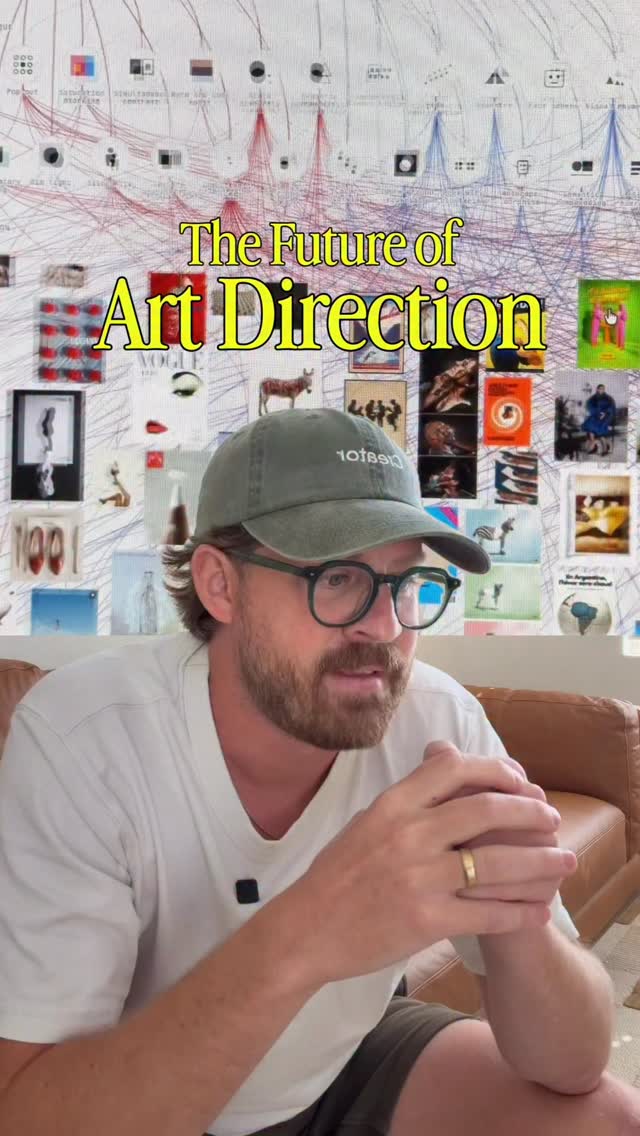
Speaker sitting casually in a chair against a brick wall with a prominent title text graphic and multiple historical photos overlaid above his head.
[06]
Steal this for your own video
The most important over the next is going to be , but to understand what it is today, you have to understand the history of .
[07]
The promise the opener makes, and how the video pays it back
Hook
A bold, forward-looking prediction that immediately pivots into a prerequisite historical deep-dive, creating a strong information gap.
Payoff
The culmination of the historical stages that ultimately proves and contextualizes the initial future prediction made in the hook.
[08]
The structural pattern this video runs on
Framework
The Chronological Evolution Blueprint
Deconstructing a complex modern concept by tracing its historical evolution through distinct, character-driven stages, using specific case studies to illustrate each era's defining characteristics.
The Prophetic Hook
Captures attention by making a massive, definitive claim about the future importance of the subject matter.
The Framework Establishment
Sets clear viewer expectations and retention incentives by explicitly stating the exact number of stages the narrative will cover.
The Avatar Introduction
Humanizes the first abstract historical stage by anchoring it to a specific, recognizable figure or archetype.
The Case Study Proof
Validates the avatar's significance with a concrete, real-world example of their methodology in action, making the history tangible.
The Ethos Summary
Distills the complex mechanics of the entire era into a single, easily digestible philosophy or overarching goal.
The Chronological Bridge
Creates narrative momentum by transitioning directly into the next historical stage, maintaining the list structure's forward progression.
The History of the Creative Director
title · throughout
The History of Creative Directors
The most important job maybe in 2026 over the next five to ten years is going to be the creative director, but in order for you to understand what it is today, you have to understand the history of this role. There's been essentially four stages, and I'm gonna take you through it. You might actually understand some of these characters. In 1948, we start with a man named David Ogilvy. He started an bad agency in New York, became one of the wealthiest and best copywriters, creative directors, whatever you wanna call him. What he was so good at and known for was making phenomenal association and brand development inside of ads. So for example, there was this company where they were selling dress shirts and the dress shirts were kind of hard to sell. And so all he did was put an eye patch to symbolize the more grit, to kind of target a little more of the more tough demographic, but still that need to look professional and they sold like crazy. And so in the David Ogilvy area, what you gotta remember is in the early nineteen hundreds, the goal was essentially worse. Make an ad, get a return, make an ad, get a better. But we progress a little bit more into the second stage, which is this is the Don Draper stage if you've ever seen Madman. This is better. More into the nineteen sixties, the nineteen seventies, where creative