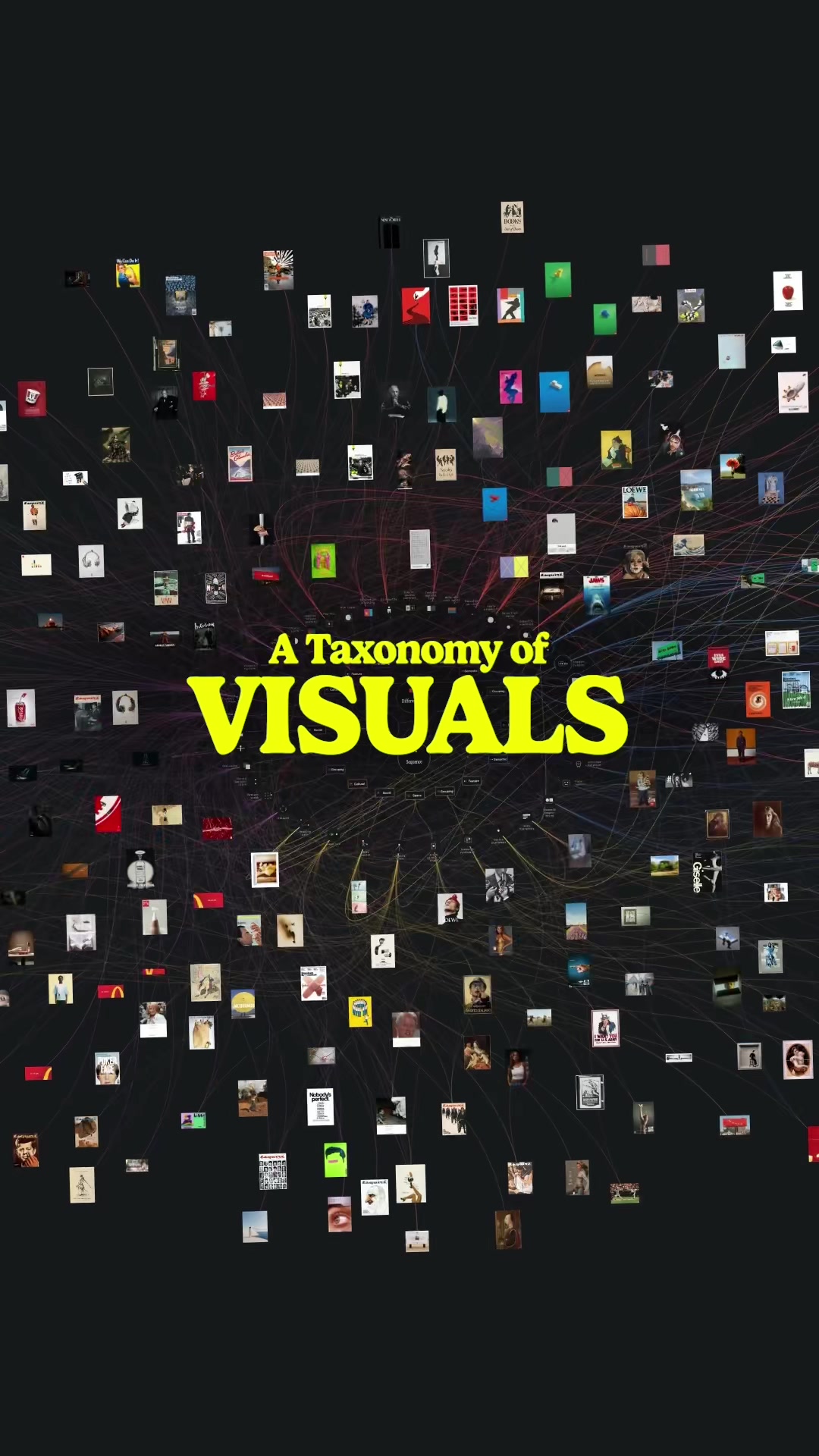
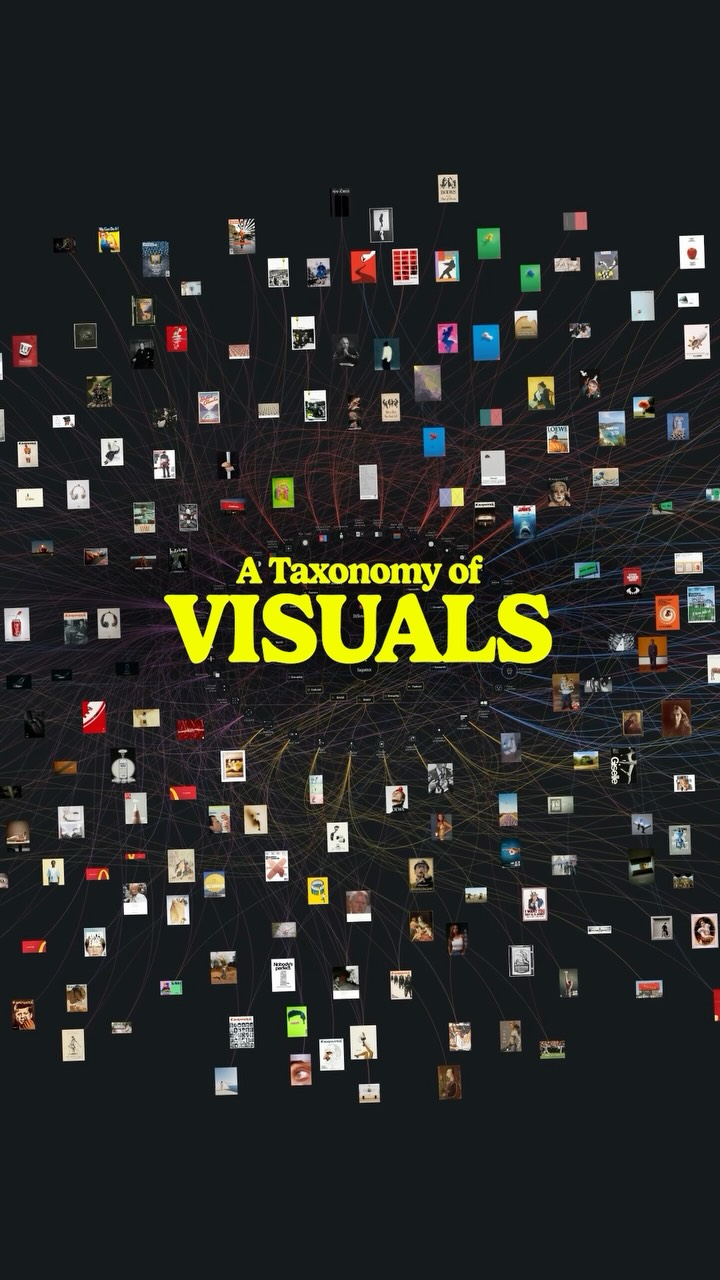
@jason_swet I’m developing a taxonomy of visuals that connects images through the techniques and ideas behind them.
I think we all want to understand the thinking behind the references we collect, and how we can apply those ideas to our own work. How can we give an image more meaning? How can we translate an idea into a visual?
None of this is entirely new. The principles and techniques themselves have been taught for decades. There are creatives, designers, and art directors who are masters at it. But so much of that knowledge is instinctual. Visually mapping the mechanisms behind an image’s style and aesthetic, and connecting those techniques to what it communicates, is the part I’m developing. That’s the part that I haven’t seen anyone do in this specific way.
And it feels especially valuable now, when we’re inundated with imagery. Understanding why visuals work helps us make deliberate choices, explain our thinking, and direct the work as the tools and possibilities keep changing.
This is small piece of the next big chapter of Modern Art Direction, and I’ll be sharing more as it develops.
The tool is still in beta with my current bootcamp students. Honestly I’m not sure if it’ll ever be entirely public outside of my programs. That might depend on demand. But I’ll be sharing more and more of the taxonomy and frameworks behind it here and in the newsletter.
Visit visuals.modernartdirection.com to join the waitlist for updates and glimpses into what I’m building.
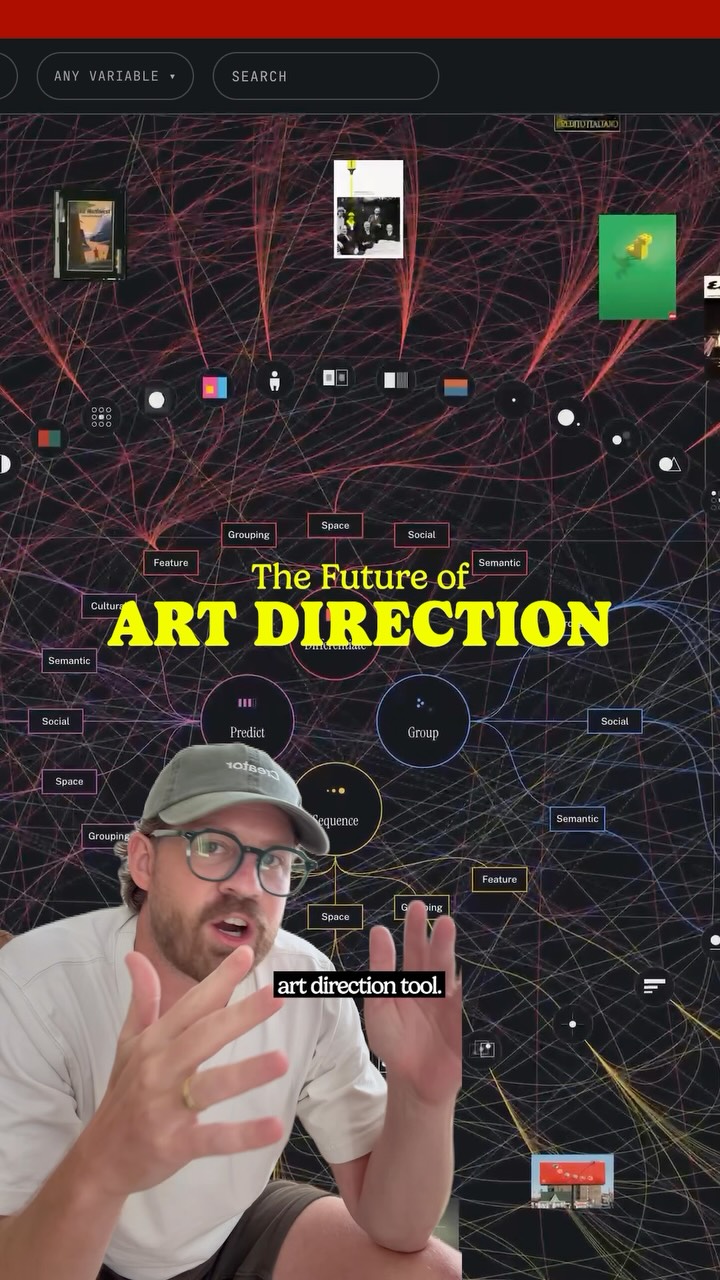
The creator introduces a problem in the design world: the gap between collecting visual references and truly understanding the ideas behind them. He then presents his solution, a 'Taxonomy of Visuals,' a system he's developing to classify the underlying techniques of visual communication. He uses motion graphics to walk through an example of his framework (the 'differentiate' operation), clarifies that his system focuses on techniques rather than aesthetics, and draws an analogy to biological taxonomy to explain his structured approach.
Collecting visual references and understanding visual ideas are two very different things.
Verbal hook · 45%
Collecting visual references and understanding visual ideas are two very different things.
Visual hook · 5%
A complex, animated data visualization of a web of interconnected images, creating immediate visual intrigue and establishing the video's core topic.
[06]
Hook template
Steal this for your own video
[Surface-level activity] and [deeper skill] are two very different things.
— Collecting recipes and actually knowing how to cook are two very different things.
— Saving workout videos and understanding how muscles grow are two very different things.
— Reading about investing and knowing why a stock moves are two very different things.
[07]
Hook and payoff
The promise the opener makes, and how the video pays it back
Hook
Establish a critical distinction between two related but fundamentally different concepts to frame a problem and assert expertise.
Payoff
Frame the call to action as an invitation to join an exclusive, intellectual community dedicated to exploring the topic further.
[08]
Narrative framework
The structural pattern this video runs on
Framework
The Expert's Framework
Presenting a common but misunderstood problem within a specific niche, then revealing a proprietary intellectual framework as the solution, and finally demonstrating its value through a clear example and analogy.
1
The Solution Reveal
Introduce the name of the proprietary system or framework being developed to solve the stated problem.
2
The Problem Validation
Provide specific, relatable examples of how the target audience experiences the problem, validating its existence and urgency.
3
The Knowledge Gap
Acknowledge existing knowledge in the field to build credibility, then pivot to identify the specific, practical gap that the new framework fills.
4
The Practical Demonstration
Walk through a simple, concrete example of the framework in action, translating the abstract concept into a tangible application.
5
The Anti-Misconception
Clearly define what the framework is NOT (e.g., a trend, a style) to preempt misunderstanding and sharpen its unique value proposition.
6
The Elevating Analogy
Compare the framework to a well-respected, complex system from an unrelated field (like science) to lend it authority, rigor, and intellectual weight.
Themes
Education
Creativity
Frameworks
Design Theory
Techniques
Data visualization
Analogical reasoning
Direct address
Post caption
I’m developing a taxonomy of visuals that connects images through the techniques and ideas behind them.
I think we all want to understand the thinking behind the references we collect, and how we can apply those ideas to our own work. How can we give an image more meaning? How can we translate an idea into a visual?
None of this is entirely new. The principles and techniques themselves have been taught for decades. There are creatives, designers, and art directors who are masters at it. But so much of that knowledge is instinctual. Visually mapping the mechanisms behind an image’s style and aesthetic, and connecting those techniques to what it communicates, is the part I’m developing. That’s the part that I haven’t seen anyone do in this specific way.
And it feels especially valuable now, when we’re inundated with imagery. Understanding why visuals work helps us make deliberate choices, explain our thinking, and direct the work as the tools and possibilities keep changing.
This is small piece of the next big chapter of Modern Art Direction, and I’ll be sharing more as it develops.
The tool is still in beta with my current bootcamp students. Honestly I’m not sure if it’ll ever be entirely public outside of my programs. That might depend on demand. But I’ll be sharing more and more of the taxonomy and frameworks behind it here and in the newsletter.
Visit visuals.modernartdirection.com to join the waitlist for updates and glimpses into what I’m building.
So follow along if you want to get nerdy about visuals with me.
Transcript
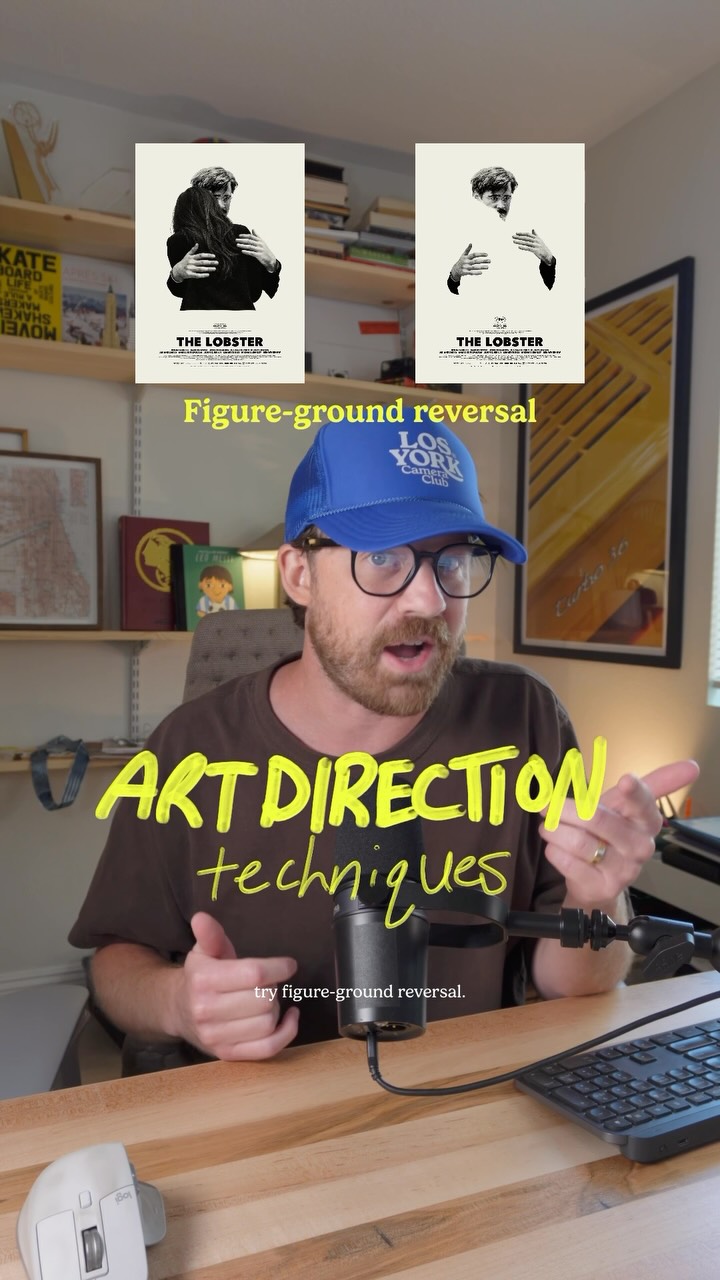
Collecting visual references and understanding visual ideas are two very different things. That's why I'm developing a taxonomy of visuals. I've been teaching art direction for over a year now and I keep seeing the same problem. Designers collect things that look nice. Tech companies best wash their brands with meaningless aesthetics. And we learn fundamental design principles, but we don't necessarily learn how to use them to craft visual ideas. How do you take a brief or a campaign's big idea and translate it into something visual? That's the gap I'm trying to address. Now this is very much a work in progress. These principles have existed long before I ever started thinking about this. From best out psychology to semiotics, there's already decades of research, but what's missing is a practical way to connect it all. For example, let's say you want something to stand out. That's an operation we can call differentiate. You could differentiate through visible features like color or shape or maybe through meaning using semantic contrast. From tier, you can explore specific techniques and visual examples. And to be clear, I'm categorizing visual techniques, not aesthetics, not surrealism or y two k futurism or whatever obscure aesthetic is trending this week. I'm classifying the underlying mechanism behind that image regardless of the subject, medium, or aesthetic. Inspired by the way biologists classify the characteristics and evolutionary relationships of animals from domain, kingdom, phylum to class order, family, genus, species. That's what I'm really excited to dig into. So follow along if you wanna get nerdy about Visuals with me.