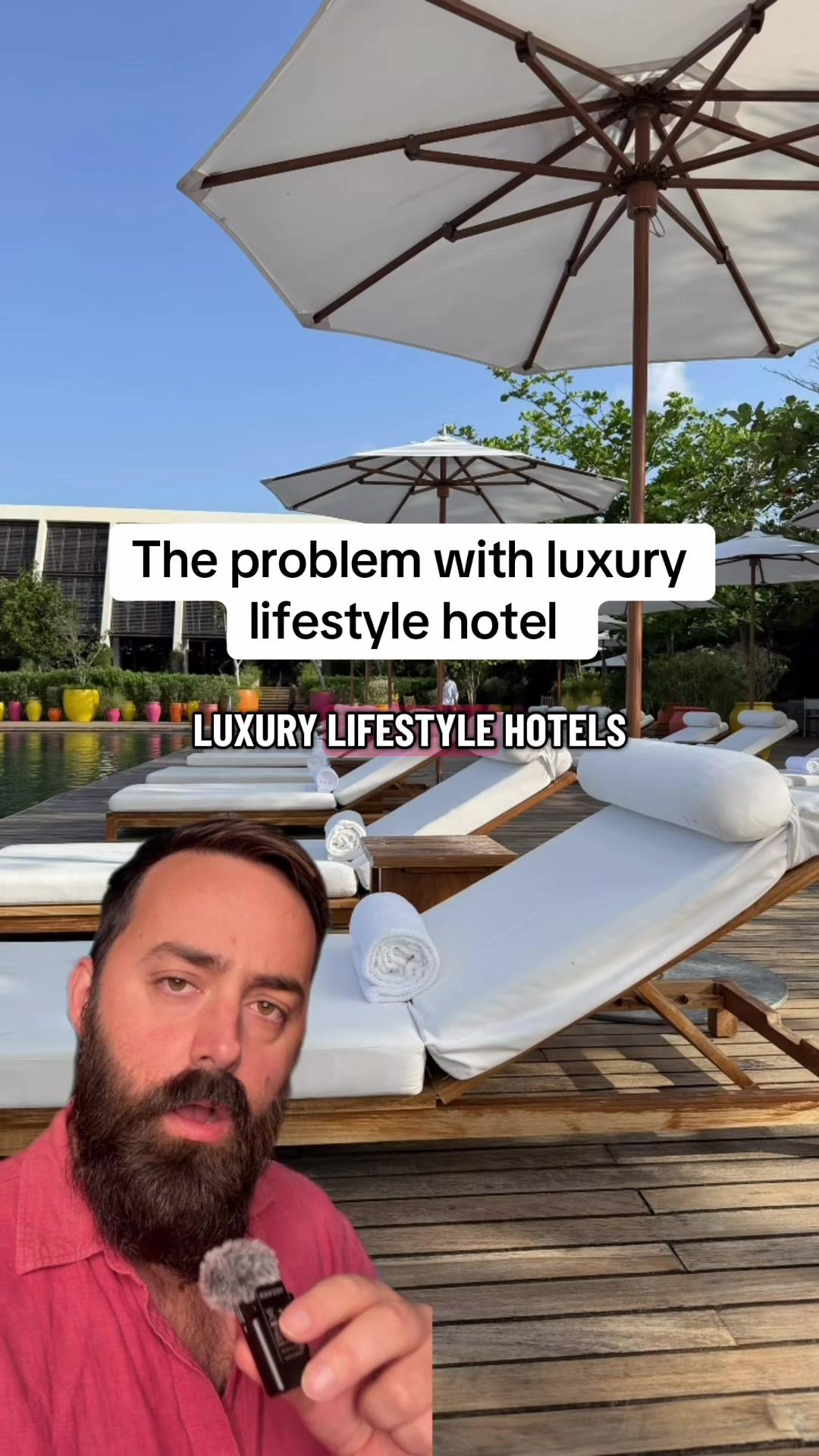
@iambenwolff Here are two real stories from Ritz’s $2000 rule…
•
Story 1: A guest checked out of the Ritz-Carlton in Atlanta and traveled to Hawaii, only to realize he had left his laptop behind. Consequently, he contacted the hotel, explaining that the laptop was crucial for an upcoming presentation.
•
A housekeeper discovered the laptop, yet understood regular shipping wouldn’t deliver it in time. As a result, she personally flew to Hawaii to hand-deliver it, then returned the same night—exemplifying the Ritz-Carlton’s commitment to exceptional service.
•
Story 2: A newlywed couple lost their wedding ring on Cancun’s beaches. Despite hours of searching, they left at closing time without finding it.
•
The Ritz-Carlton staff, unwilling to accept defeat, purchased four metal detectors and searched throughout the night. Their dedication paid off, and they arranged for the couple to find their ring waiting for them in the morning—transforming potential heartbreak into a demonstration of extraordinary commitment to guest satisfaction.
•
This is the difference between good and great hospitality…
Business case study split-screen explainerfrom @iambenwolff
[01]
Overview
The creator explains the origin and strategic genius of the Ritz-Carlton's famous '$2,000 rule.' He breaks down how the policy, initiated by Horst Schulze in 1983, was not about money but about empowering employees to build trust and deliver exceptional service, which he defines as true luxury. The creator concludes by providing the financial justification for the rule, comparing the $2,000 discretionary spending to the $200,000 average lifetime value of a loyal guest.
What if your boss gave you the power to spend $2,000 without approval?
Visual hook · 35%
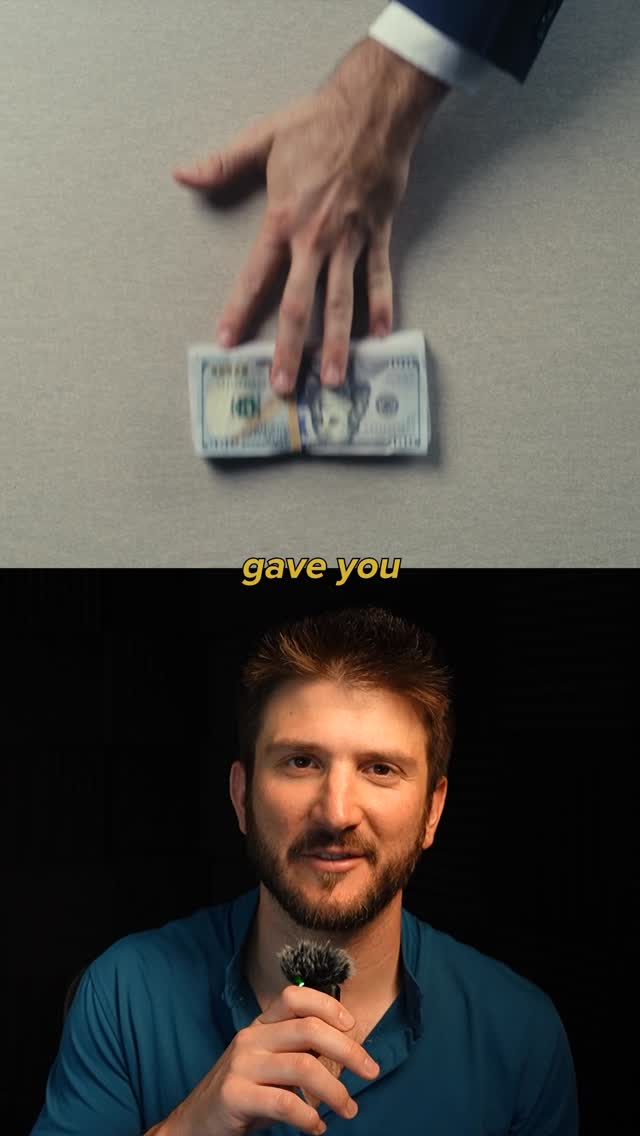
A close-up shot of a hand placing a thick stack of hundred-dollar bills onto a flat surface, immediately establishing the theme of money.
[06]
Hook template
Steal this for your own video
What if your [decision-maker] gave you the power to spend [dollar amount] without approval?
— What if your restaurant owner gave you the power to comp $100 without approval?
— What if your project lead gave you the power to spend $500 on a client rescue without approval?
— What if your school principal gave you the power to spend $50 on a student need without approval?
[07]
Hook and payoff
The promise the opener makes, and how the video pays it back
Hook
Pose a provocative hypothetical question that directly involves the viewer, making a seemingly unrelatable business concept feel personal and intriguing.
Payoff
Deliver the final, satisfying reveal by connecting the initial 'radical' action to a massive, quantifiable return on investment, proving the 'genius' claim and providing a clear, memorable takeaway.
[08]
Narrative framework
The structural pattern this video runs on
Framework
The Counterintuitive Genius Blueprint
This framework introduces a seemingly illogical or radical strategy from a well-known entity, subverts the viewer's initial assumptions about its purpose, and then provides a powerful, data-driven justification that makes the strategy seem brilliant in hindsight.
1
The Real-World Anchor
Connect the hypothetical to a real, famous example (a company, a person, an event) to establish credibility and anchor the story in reality.
2
The Genius Claim
Make a bold, definitive statement about the example's success or genius, promising the viewer an exclusive insight or 'the real reason' it worked, thus creating a strong curiosity gap.
3
The Conceptual Pivot
Deliberately misdirect the viewer by refuting the most obvious explanation (e.g., 'it wasn't about money') and replacing it with a more profound, counterintuitive concept (e.g., 'it was about trust').
4
The Founder's Doctrine
Attribute the strategy to a leader's core philosophy, explaining the fundamental problem they were *really* trying to solve, which adds depth, wisdom, and a human element to the narrative.
5
The Skeptic's Rebuttal
Directly address and preempt audience doubt by introducing a powerful piece of data or 'the math' that logically underpins the entire strategy.
Themes
Customer Service
Brand Loyalty
Employee Empowerment
Business Philosophy
Techniques
Split Screen
B-Roll Storytelling
Historical Case Study
Trends
Business Case Study Explainer
Post caption
Here are two real stories from Ritz’s $2000 rule…
•
Story 1: A guest checked out of the Ritz-Carlton in Atlanta and traveled to Hawaii, only to realize he had left his laptop behind. Consequently, he contacted the hotel, explaining that the laptop was crucial for an upcoming presentation.
•
A housekeeper discovered the laptop, yet understood regular shipping wouldn’t deliver it in time. As a result, she personally flew to Hawaii to hand-deliver it, then returned the same night—exemplifying the Ritz-Carlton’s commitment to exceptional service.
•
Story 2: A newlywed couple lost their wedding ring on Cancun’s beaches. Despite hours of searching, they left at closing time without finding it.
•
The Ritz-Carlton staff, unwilling to accept defeat, purchased four metal detectors and searched throughout the night. Their dedication paid off, and they arranged for the couple to find their ring waiting for them in the morning—transforming potential heartbreak into a demonstration of extraordinary commitment to guest satisfaction.
•
This is the difference between good and great hospitality…
Text overlays
contextual · beginning
boss
contextual · beginning
$2,000
contextual · beginning
what Ritz-Carlton
contextual · middle
It was about
informational · middle
The equivalent of $6,000 TODAY
contextual · end
lifetime
informational · end
$200,000.
Transcript
If your boss gave you the power to spend $2,000 without approval? Well that's what Ritz Carlton did in 1983. They launched their now famous $2,000 rule, which completely revolutionized luxury hospitality forever. But here's why it was genius. Because it wasn't about money at all. It was about trust. When Horace Schultz took over Ritz Carlton in the early eighties, he understood that luxury wasn't about marble pillars and gold detailing. It was about guests feeling safe, taken care of, like mom used to do it. That's real luxury. So they gave all employees permission to spend $2,000 to solve a guest problem, the equivalent of $6,000 today. But if you still think that's crazy, here's the math behind it. The average lifetime value of a Ritz Carlton guest is $200,000. So spending $2,000 was nothing compared to what that loyalty could bring.
Business case study split-screen explainer | Viral Hooks