@naturalhistorymuseum
TikTok · Vlog
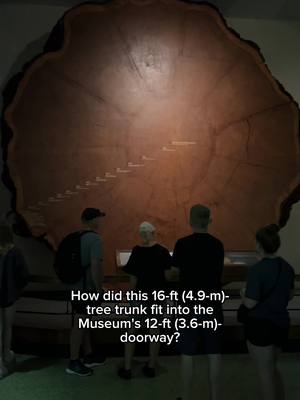
@naturalhistorymuseum Giant sequoias are the world’s heaviest trees. It would take up to seven blue whales to equal the weight of a grown sequoia! #STEM #creatorsearchinsights #giantsequoia #TreeTok #MuseumTok

@naturalhistorymuseum
TikTok · Vlog
@naturalhistorymuseum Giant sequoias are the world’s heaviest trees. It would take up to seven blue whales to equal the weight of a grown sequoia! #STEM #creatorsearchinsights #giantsequoia #TreeTok #MuseumTok
Performance
Video #6549 · Vlog
[01]
The creator poses a question about how a giant 16-foot tree trunk slice fit into a museum. They then provide historical context about the tree's 1400-year lifespan, showing a timeline of major inventions that occurred during its life. The creator compares the original tree's height to the Statue of Liberty before finally revealing the answer: the slice was cut into pieces in 1912 and reassembled inside the museum.
[02]
[03]
 1.2M4.5×Travel vlog with surprising facts@erekosima43 · Location Showcase
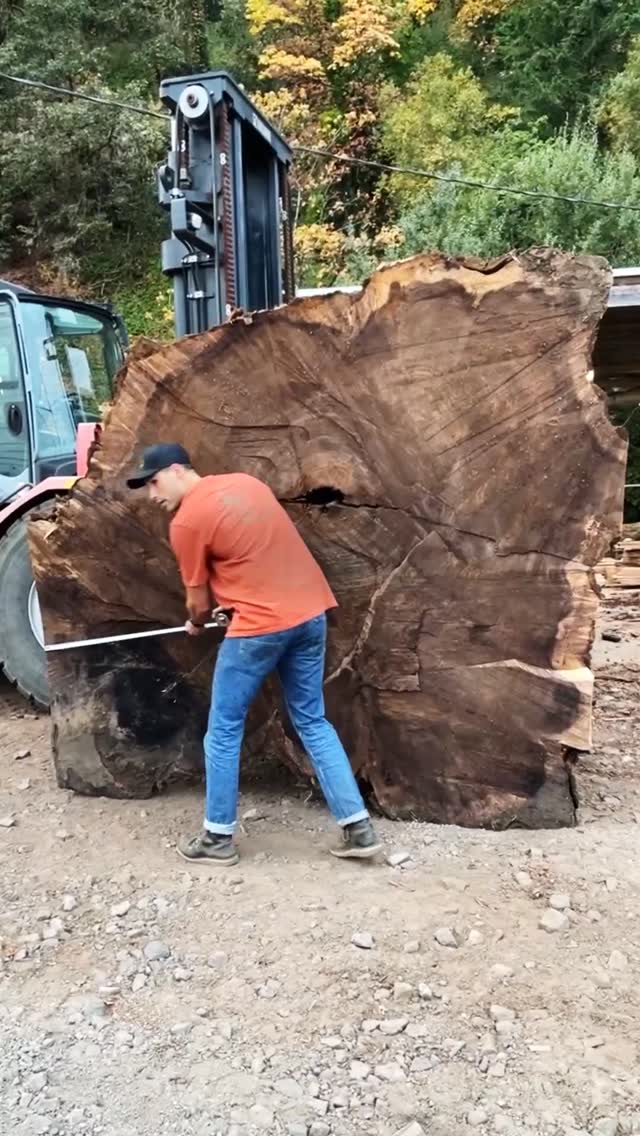 580.5K75.9×Processing historic logs into slabs@gobywalnut · Origin Story
 878.3K1.1×Attempting to split a palm tree log with an axe@bradley.thor · Challenge
 3M3.5×Man splits huge log with hands@bradley.thor · Challenge
 2.8M58.9×Giant log milling process reveal@gobywalnut · Process
 1.2M1.5×Testing a pocket chainsaw on a tree until it snaps@bradley.thor · Challenge
 1.9M2.4×Building custom metal Christmas tree@want.zamora · Day X of Doing Y
 336.4K35.7×Explaining old vs new lumber@ellieridgerealtor · Breakdown
 1.3M196.6×Crafting a masterpiece wood slab@gobywalnut · Origin Story
 3.3M4×Full axe tree-felling demonstration in response to a viewer comment@bradley.thor · Process
 1.3MShow and tell wood comparison@howlingwolf.carpentry · Show and Tell
 594.8KGuy chops what he thinks is a dead tree and apparently causes a massive power outage@bradley.thor · Relatable Scenario
[04]
[05]
What stops the scroll in the first 3 seconds
Title hook · 45%
How did this 16-ft (4.9-m)-tree trunk fit into the Museum's 12-ft (3.6-m)-doorway?
Verbal hook · 40%
How did this 16 foot tree trunk fit into the museum's 12 foot doorway?
Visual hook · 15%
A wide, awe-inspiring shot of a massive cross-section of a tree trunk, which immediately establishes a sense of immense scale and creates curiosity.
[07]
The promise the opener makes, and how the video pays it back
Hook
Pose a logistical puzzle or physical paradox about an object that creates an immediate 'How did they do that?' question.
Payoff
Provide a 'secret' detail or call to action that empowers the viewer with insider knowledge, encouraging them to re-examine the subject with a new perspective.
[08]
The structural pattern this video runs on
Framework
The Curiosity Gap Cascade
Hook the viewer with a seemingly impossible physical paradox, then build the object's significance through layers of historical and scale-based context before revealing a surprisingly simple solution.
The Significance Anchor
Establish the object's deep historical or cultural importance to justify the viewer's attention, often by stating its immense age.
The Contextual Time-Lapse
Rapidly illustrate the object's age or duration by comparing its lifespan to well-known historical events or inventions, making the abstract concept of time feel tangible.
The Relatable Scale Comparison
Ground the object's immense physical size by juxtaposing it against a universally recognized landmark or object, translating abstract measurements into a concrete visual.
The Practical Reveal
Answer the initial hook question with a straightforward, logical solution, often supported by archival or behind-the-scenes evidence.
Giant sequoias are the world’s heaviest trees. It would take up to seven blue whales to equal the weight of a grown sequoia! #STEM #creatorsearchinsights #giantsequoia #TreeTok #MuseumTok
title · beginning
How did this 16-ft (4.9-m)-tree trunk fit into the Museum's 12-ft (3.6-m)-doorway?
contextual · beginning
The giant sequoia in the Hall of North American Forests
informational · beginning
offers a glance at more than 1,400 years of history.
informational · beginning
When the tree sprouted around CE 550, the English language didn't even exist.
informational · middle
Throughout its lifetime, it saw the invention of the magnetic compass, the printing press, the compound microscope, and the first automobile!
informational · middle
700s Magnetic compass invented
contextual · middle
The tree from which the Museum's slice originates
informational · middle
*Today, it's illegal to cut down giant sequoias.
informational · middle
stood about 331 ft (101 m) tall before it was felled by loggers in California in 1891.
informational · middle
That's taller than the Statue of Liberty, which is 305 ft (93 m) tall—including her pedestal.
informational · end
In 1912, in order to fit through the Museum's doorways, this slice of sequoia was cut into pieces and then reassembled.
call-to-action · end
The next time you visit, look closely and you'll see the seams where the slice was put back together.
How did this 16 foot tree trunk fit into the museum's 12 foot doorway? The giant sequoia in the Hall Of North American Worst offers a glance at more than fourteen hundred years of history. When the tree sprouted around CE five fifty, the English language didn't even exist. Throughout its lifetime, it saw the invention of the magnetic compass, the printing press, the compound microscope, and the first automobile. The tree from which the museum slice originates stood about 331 feet tall before it was best by loggers in California in 1891. That's taller than the Statue Of Tier, which is 305 feet tall, including her pedestal. In tier, in order to fit through the museum's doorways, this slice of sequoia was cut into pieces and then reassembled. The next time you visit, look closely and you'll see the seams where the slice was put back together.