Viral Hooks
Trending short videosTracing the history of 'curry'
D

@diasporaco

Instagram · Talking Head Edit

@diasporaco Curry, Part 1 🍛 🌶️ Before it was “curry,” it was kari. Tracing the Tamil roots of a global word, inspired by Curry: A Tale of Cooks and Conquerors by Lizzie Collingham. 🤔 Which curry should we deep-dive next? Tell us in the comments 👇

View original on Instagram

The edit1 shot · 16 text
Shots Text

Performance

Views
1.3M
Likes
101.1K
Comments
612
Engagement
8%
Outlier
153.7×

Video #17086 · Talking Head Edit

Tracing the history of 'curry'from @diasporaco

[01]

Overview

The creator explains the historical origin of the word 'curry.' She traces the Tamil word 'kari' (meaning black pepper) from ancient India, explains its evolution to mean a spiced dish, and details its journey as a valuable commodity through global trade routes to Rome and Egypt. She then connects the spice's value to the arrival of European colonizers (Portuguese and British) who, overwhelmed by the diversity of Indian cuisine, simplified numerous distinct dishes under the single, anglicized term 'curry.'

[02]

Simple outline

  1. 1State surprising historical claim
  2. 2Establish original meaning
  3. 3Detail historical escalation
  4. 4Reveal the modern simplification

[03]

Related videos

[04]

Classification

Concepts
Origin StoryStrange but True
Elements
B-Roll CutawayText OverlayImage Overlay

[05]

Hook analysis

What stops the scroll in the first 3 seconds

Title hook · 45%

a single word

Verbal hook · 40%

A single word coined in the sixteen hundreds reshaped how the world eats South Asian food.

Visual hook · 15%

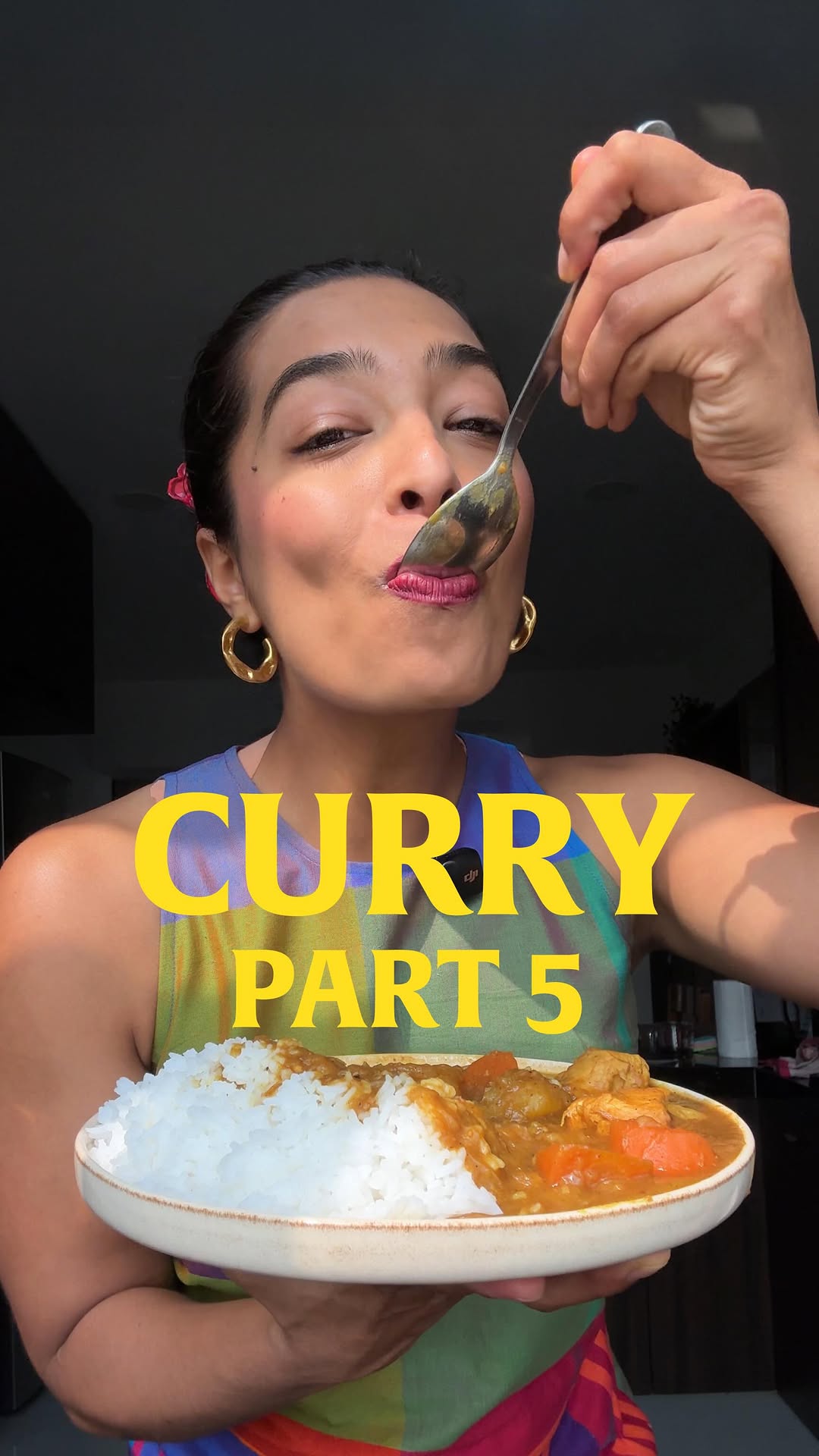
A woman with a vibrant red patterned shirt serves a rich, dark chicken dish from a spoon onto a bed of white rice on a bright green banana leaf, creating strong color contrast and immediate action.

[07]

Hook and payoff

The promise the opener makes, and how the video pays it back

Hook

Make a bold, counter-intuitive claim about the history of a common concept, creating an immediate knowledge gap and promising a surprising revelation.

Payoff

Deliver the final punchline by directly contrasting the authentic origin with the simplified modern version, satisfying the promise of the hook and leaving the viewer with a new perspective.

[08]

Narrative framework

The structural pattern this video runs on

Framework

The Etymological Reveal

To deconstruct a commonly understood word or concept by tracing its surprising and often corrupted historical journey from an authentic origin to its modern, simplified form.

  1. 1

    The Ancient Anchor

    Transport the viewer to a specific time and place to establish the concept's authentic, original form and meaning, grounding the narrative.

  2. 2

    The First Evolution

    Demonstrate how the concept naturally evolved or changed meaning within its original context over a long period.

  3. 3

    The Global Catalyst

    Introduce an external force (e.g., trade, migration) that caused the concept to spread globally, dramatically increasing its value and influence.

  4. 4

    The Shocking Proof Point

    Insert a highly specific, surprising, and memorable historical anecdote that proves the concept's immense importance or value, designed for maximum shareability.

  5. 5

    The External Conflict

    Introduce a powerful outside group (e.g., conquerors, corporations) that encounters the now-complex concept, setting up the central conflict.

  6. 6

    The Complexity Problem

    Illustrate the rich diversity and nuance of the concept, framing it as 'too complex' from the perspective of the outside group.

  7. 7

    The Great Simplification

    Explain how the outside group misunderstood, co-opted, or intentionally flattened the nuanced concept into a single, simplified version for their own convenience.

Themes

  • Cultural history
  • Linguistic evolution
  • Impact of colonialism on food
  • Global trade

Techniques

  • Storytelling
  • Historical documentation
  • Visual aids

Post caption

Curry, Part 1 🍛 🌶️ Before it was “curry,” it was kari. Tracing the Tamil roots of a global word, inspired by Curry: A Tale of Cooks and Conquerors by Lizzie Collingham. 🤔 Which curry should we deep-dive next? Tell us in the comments 👇

Text overlays

  • title · beginning

    a single word

  • informational · beginning

    in the 1600s

  • informational · beginning

    how the world 🌍 eats South Asian

  • informational · beginning

    300 BCE

  • informational · beginning

    Ancient Tamilakam

  • informational · middle

    a region that covers the Southern most part of the Indian subcontinent

  • informational · middle

    KARI (கறி) (Sangam-era Tamilakam) = Black pepper

  • informational · middle

    KARI = charring or blackening of a spiced meat or vegetable

  • informational · middle

    ancient Rome

  • informational · middle

    Pharoah Ramases II mummified nose

  • informational · middle

    in 1213 BCE

  • informational · middle

    "black gold"

  • informational · middle

    The Portuguese

  • informational · middle

    to colonise

  • informational · end

    Your Tamil Kari, Mughal Korma, Gujarati Kadhis, Syrian Christian Ishtoo, and Rajasthani Dal

  • informational · end

    not Kari, curry.

Transcript

A single word coined in the sixteen hundreds reshaped how the world eats South Asian food. Picture this, it's 300 Best. You're in ancient Tamilaka, a region that covers the southernmost part of the Indian Subcontinent. This is the indigenous home of kari, meaning black pepper. It grows as a vine just about everywhere you look and is your primary seasoning. Over the course of a millennia, the word kari evolves to mean the charring or blackening of a spiced meat or vegetable. Then maritime trade routes are established. Suddenly, black pepper is traveling to ancient Rome where the nobles are so crazy for it. They're draining the empire's good. You know what's even crazier? The Egyptians stuffed peppercorns off Pharaoh Ramesses the second's mummified no in December hoping good accompany him into the afterlife. Word travels about this black good. Portuguese and the British rank their ships and saunter over to colonize. Your Tamil kari, Mughal korma, Rank karis, Syrian Christian Ishtuz and Rajasthani dal. It was all too much for them to keep track of. So instead of learning the nuance, they reduced all that food into one worse. Not kari, curry.


Tracing the history of 'curry' | Viral Hooks