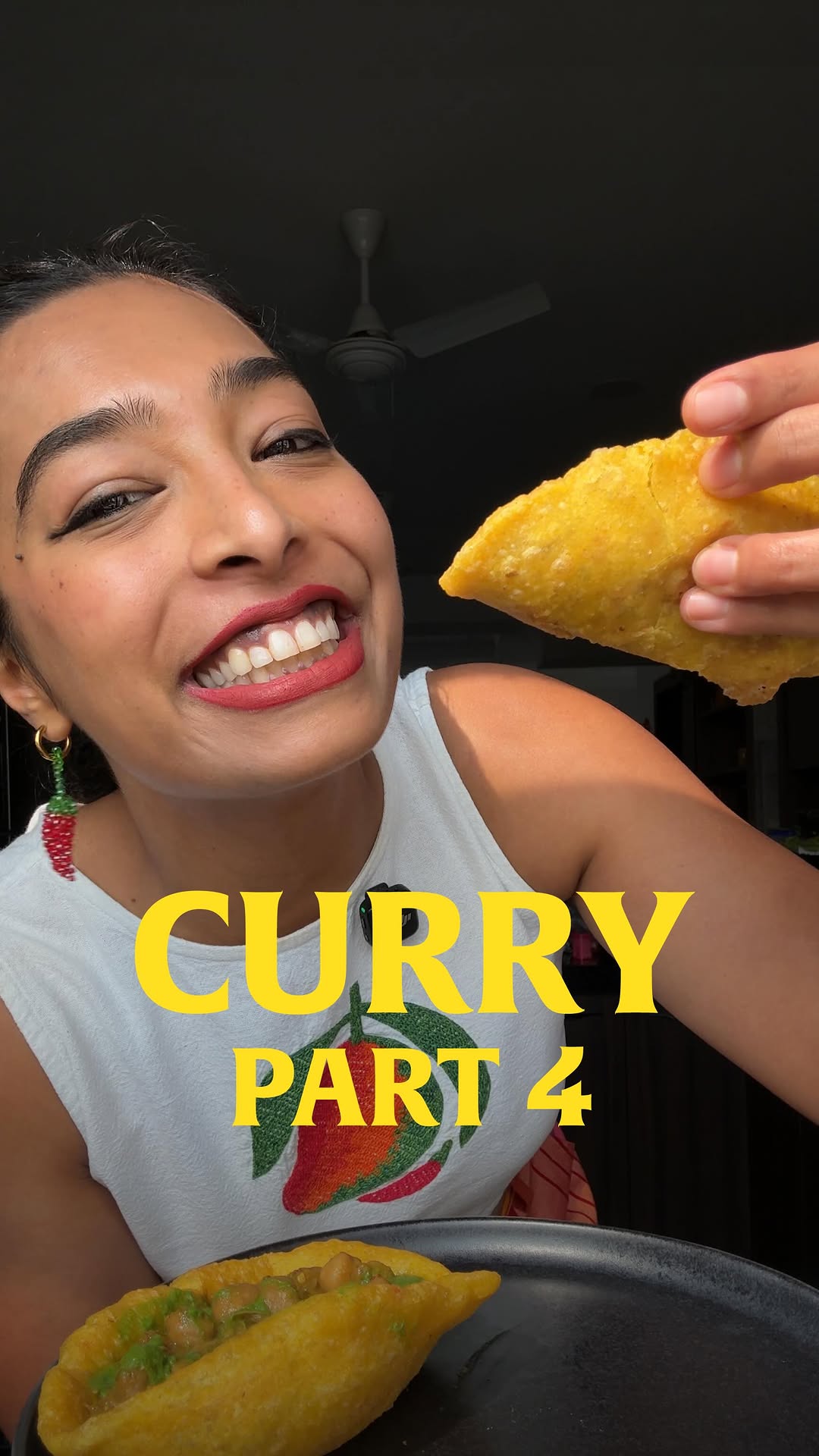
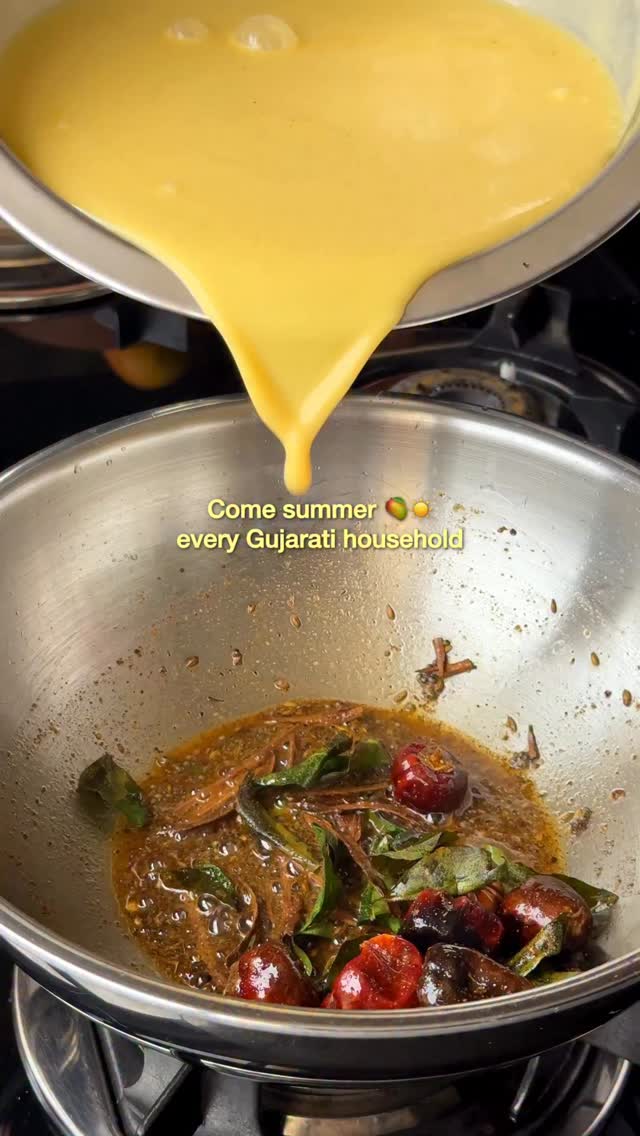
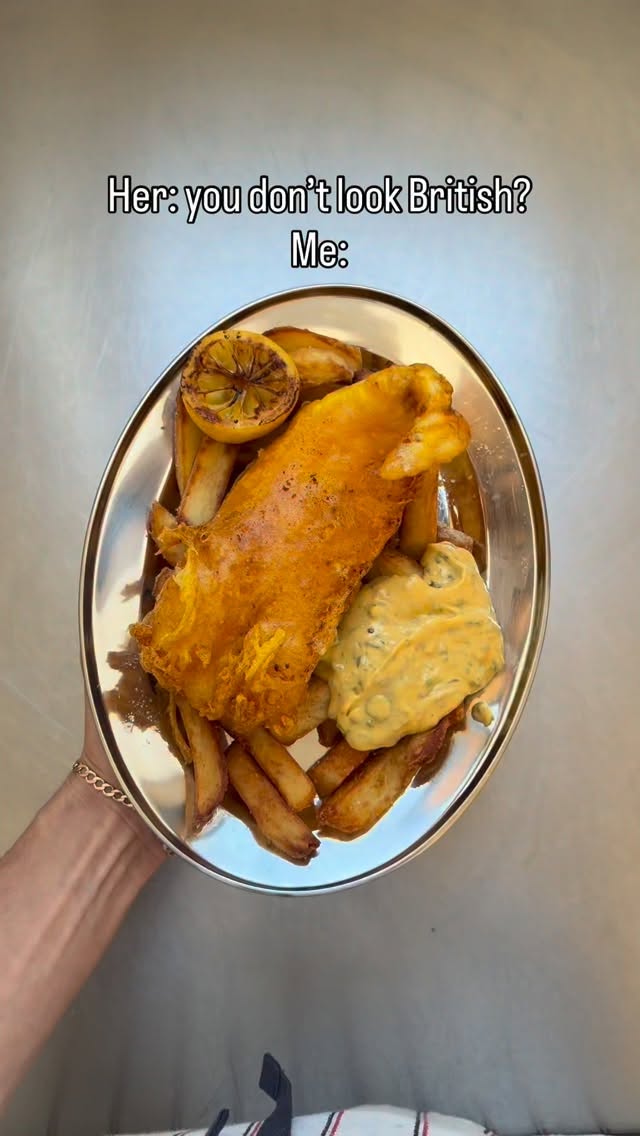
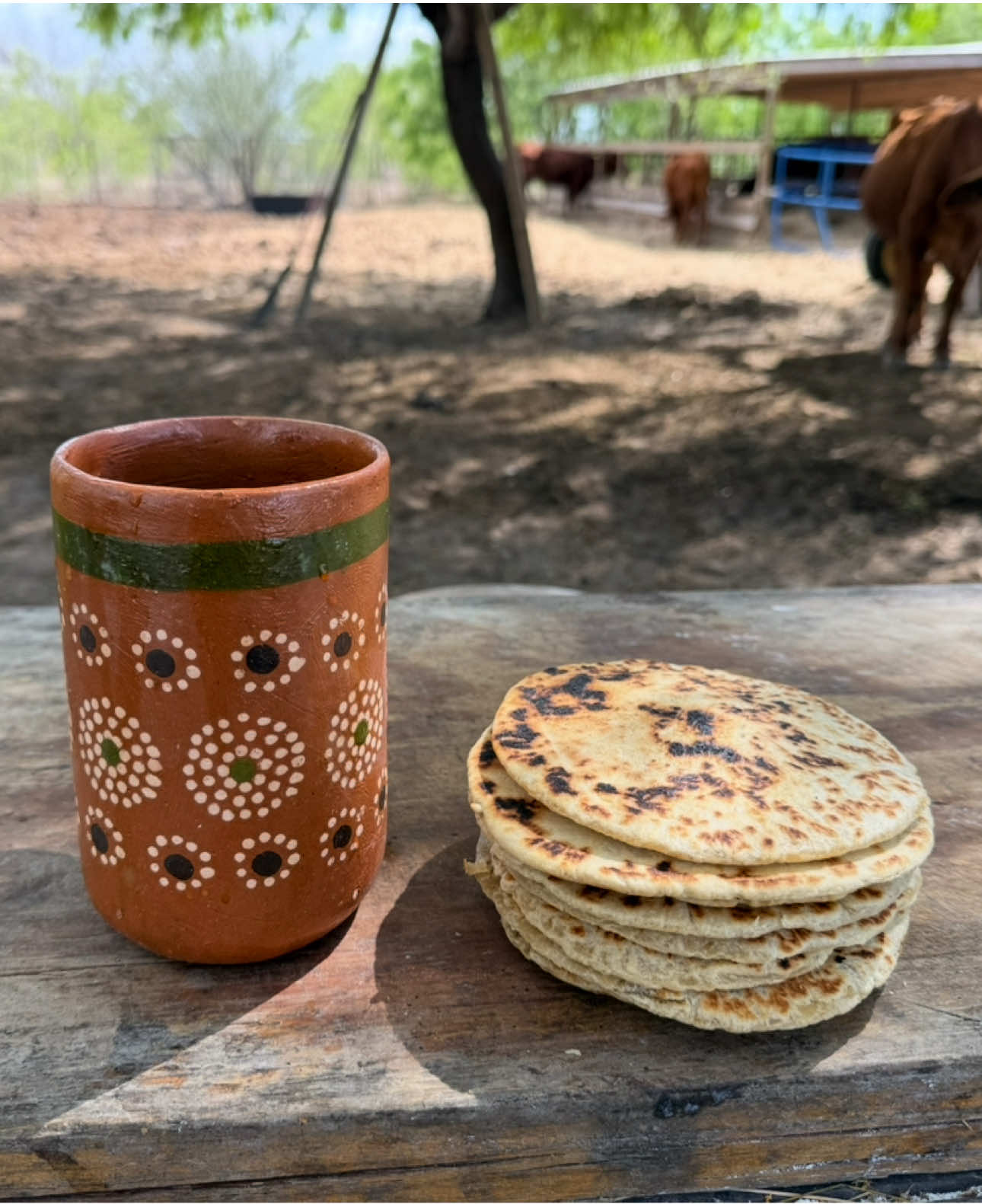
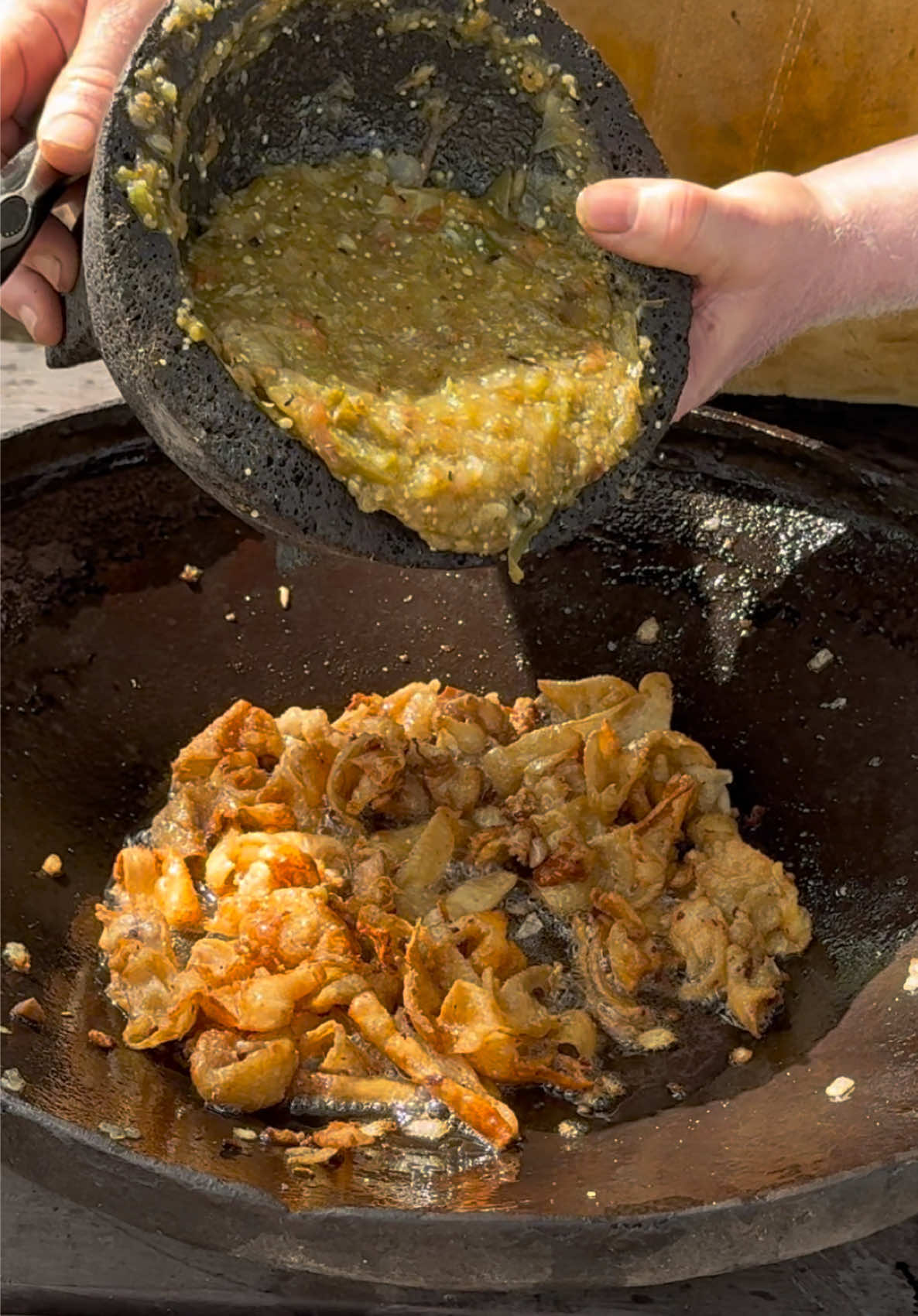
The creator tells the origin story of the Trinidadian street food 'doubles'. She begins by setting the historical context of the 19th century, explaining how the abolition of slavery in the British Caribbean led to the creation of the indentured servitude system, which transported over 300,000 Indians to the region. The creator then describes the harsh conditions these laborers faced and how 'chana' (chickpea curry) became an essential food for survival, before explaining how, after indenture ended, a couple in Port of Spain began selling the dish on fried bread ('bara'), leading to the creation of 'doubles' when customers asked for two.
Post caption
Curry, Part 4 🍛
Tracing the roots of the Caribbean’s most iconic street foods 🔥 Inspired by Curry: A Tale of Cooks and Conquerors by Lizzie Collingham.
Where should we travel next? Drop your curry requests below 👇
Transcript
As The Caribbean's most enduring street food, Trinidadian doubles. In the nineteenth century, slavery is abolished in the British Caribbean. An economy built on forced labor begins to panic. Who will work their sugar plantations now? At the same time, thousands of miles away in British ruled India, communities are collapsing under extreme taxation and recurring famine. The British Empire uses this moment of vulnerability to introduce indenture. Exploitation rewritten as contracts. Over 300,000 Indians are transported to Trinidad, Guyana, and Jamaica. They arrive with nothing, food is rationed, and everything is overpriced. For these workers, channa has always been essential. Even with fried flat bread to power through long days in the field. Then in 1917, indenture finally ends. Workers move to towns and ports. They need food that is cheap, best, and portable, something that good be eaten between shifts. In Port Of Spain, a young couple, Imamul and Rasulan, begin selling karich chana over chenedarian butter, a lightly spiced fried bread. One isn't enough, so customers rank to double up. And that's how a food born of forced migration becomes