Viral Hooks
Trending short videosEconomic theory explained with memes
M

@maxxrosenblum

Instagram · Greenscreen Talking Head

@maxxrosenblum In the parlance of George Soros, markets do not passively reflect fundamentals; they actively distort them. We are currently witnessing a textbook case of ‘reflexivity’ in the artificial intelligence sector a recursive feedback loop where skyrocketing valuations justify massive capital expenditures, which in turn validate the original, inflated thesis. It is a sterile environment of mimetic desire, where the price signal has detached from utility to become a measure of collective hallucination. Silicon Valley is no longer investing in technology; it is investing in the narrative of its own inevitability. History suggests that such epistemological arbitrage has a strict shelf life. Soros made his fortune betting on the inevitable “snapback” the violent moment when gravity reasserts itself and expectations collapse into the rigid constraints of accounting. As the delta between narrative and revenue widens, the market is not heading for a correction, but an ontological shock. The lesson of the new Gilded Age is simple: you can print liquidity, but you cannot print reality. #economics #finance #markets #theory

View original on Instagram

The edit1 shot · 8 text
Shots Text

Performance

Views
132.7K
Likes
5.2K
Comments
61
Engagement
4%
Outlier
34.2×

Video #18429 · Greenscreen Talking Head

Economic theory explained with memesfrom @maxxrosenblum

[01]

Overview

The creator explains George Soros's economic theory of reflexivity, arguing that markets create reality through feedback loops of belief and investment rather than reflecting fundamentals. He applies this theory to the current AI boom, framing it as a dangerous 'reflexive supercycle' where hype drives capital expenditure, creating a bubble validated by its own momentum. The creator concludes by stating this is how Soros profits—by identifying and betting against these reality gaps just before they collapse.

[02]

Simple outline

  1. 1State provocative thesis
  2. 2Explain the hidden mechanism
  3. 3Apply to a current event
  4. 4Predict the inevitable outcome

[03]

Related videos

[04]

Classification

Concepts
BreakdownHot Take
Elements
Meme Integration

[05]

Hook analysis

What stops the scroll in the first 3 seconds

Title hook · 55%

THE ECONOMICS OF MASS DELUSION

Verbal hook · 40%

This is why George Soros keeps trying to crash the economy.

Visual hook · 5%

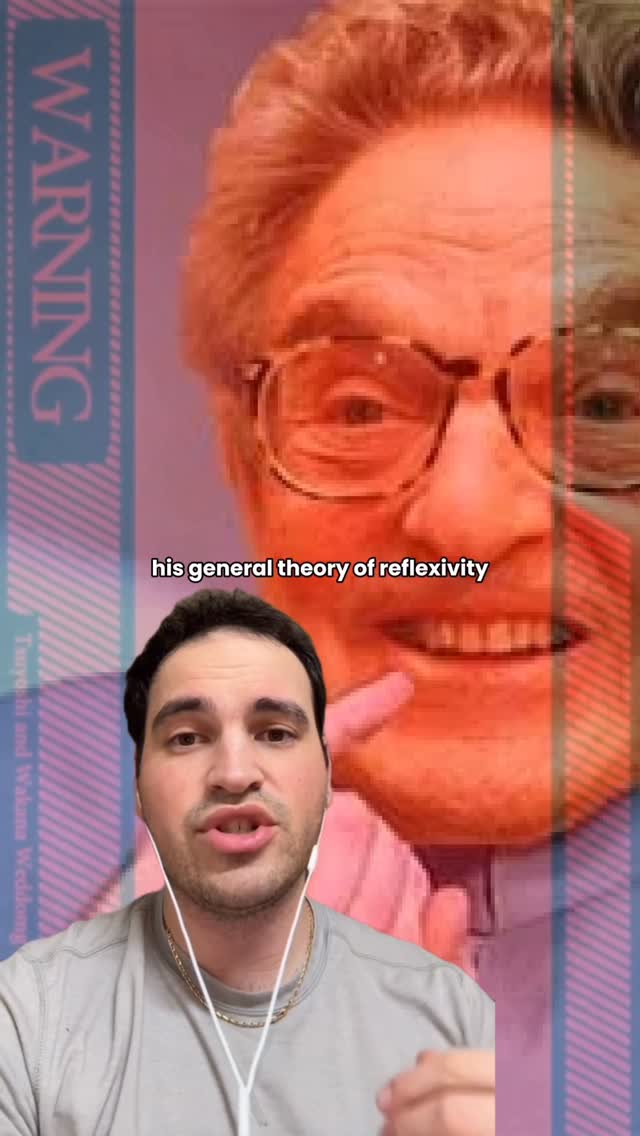
A speaker in a small picture-in-picture window addresses the camera directly, set against a background image of George Soros with a large, bold title overlay. The combination of direct address, a well-known figure, and a provocative title creates immediate visual intrigue.

[06]

Hook template

Steal this for your own video

THE [FIELD] OF [UNSETTLING PHENOMENON]

  • — THE PSYCHOLOGY OF MASS COMPLIANCE
  • — THE MATHEMATICS OF WEALTH DESTRUCTION
  • — THE SCIENCE OF ENGINEERED ADDICTION

[07]

Hook and payoff

The promise the opener makes, and how the video pays it back

Hook

A bold, conspiratorial-sounding claim about a well-known entity or person, promising to reveal a hidden motive or mechanism.

Payoff

A final, ominous prediction that circles back to the initial figure/entity, framing them as the master of the situation and reinforcing the hook's premise, providing a satisfying narrative closure.

[08]

Narrative framework

The structural pattern this video runs on

Framework

The Maverick's Prophecy

Presenting a contrarian or 'forbidden' theory from a controversial figure to explain a current, chaotic phenomenon, culminating in a dramatic prediction that validates the initial premise.

  1. 1

    The Maverick's Doctrine

    Introduce a contrarian theory or framework, contrasting it with a conventional, 'outdated' viewpoint to establish its intellectual superiority and create an 'in-group' of viewers who understand the 'real' truth.

  2. 2

    The Mechanism Explained

    Break down the abstract theory into a simple, cause-and-effect feedback loop. This makes the complex idea feel tangible and proves the initial thesis is based on a logical system.

  3. 3

    The Urgent Case Study

    Ground the theory in a highly relevant, contemporary event. This answers the 'why should I care?' question and makes the abstract concept feel immediate and consequential.

  4. 4

    The Inevitable Collapse

    Escalate the stakes by detailing the negative consequences of the mechanism, framing participants as trapped and forecasting the system's eventual, dramatic failure.

Themes

  • Economic theory
  • Market psychology
  • Media influence
  • Artificial Intelligence
  • Conspiracy

Techniques

  • Picture-in-picture
  • Meme integration
  • Visual analogy

Trends

  • Video essay
  • AI boom commentary

Post caption

In the parlance of George Soros, markets do not passively reflect fundamentals; they actively distort them. We are currently witnessing a textbook case of ‘reflexivity’ in the artificial intelligence sector a recursive feedback loop where skyrocketing valuations justify massive capital expenditures, which in turn validate the original, inflated thesis. It is a sterile environment of mimetic desire, where the price signal has detached from utility to become a measure of collective hallucination. Silicon Valley is no longer investing in technology; it is investing in the narrative of its own inevitability. History suggests that such epistemological arbitrage has a strict shelf life. Soros made his fortune betting on the inevitable “snapback” the violent moment when gravity reasserts itself and expectations collapse into the rigid constraints of accounting. As the delta between narrative and revenue widens, the market is not heading for a correction, but an ontological shock. The lesson of the new Gilded Age is simple: you can print liquidity, but you cannot print reality. #economics #finance #markets #theory

Text overlays

  • title · beginning

    THE ECONOMICS OF MASS DELUSION

  • contextual · beginning

    WARNING

  • informational · middle

    ZIRP Zero Interest Rate Policy. A controversial policy pursued by central banks in countries whose economies have collapsed, in an effort to reflate the system. Under ZIRP, a country's central bank sets the interest rate to zero or near zero, to make capital purchases more attractive....

  • contextual · middle

    Something Big Is Happening

  • contextual · middle

    "Nvidia stock is extremely overvalued"

  • informational · end

    Balance Sheet A financial statement that reports a company's assets, liabilities, and shareholder equity at a specific point in time.

  • informational · end

    Off-Balance Sheet (OBS) A term for assets or liabilities that do not appear on a company's balance sheet.

  • informational · end

    Mean Reversion The theory that asset prices eventually revert to their long-term mean or average level.

Transcript

This is why George Soros keeps trying to crash the economy. Soros is the architect of our current epistemological nightmare. His general theory of reflexivity argues that markets don't discover prices, they hallucinate them. Only while Better economics assumes equilibrium, Soros assumes collective schizophrenia. He realized that false perceptions rewrite reality. Therefore, we all play into this. We buy the lie, the chart goes up, and the chart proves the lie was true. It's all one big recursive feedback loop of delusion. Bias drives capital, capital drives the narrative, and suddenly you're pricing a utopia that doesn't exist because the liquidity says so. It's so much bigger than just trading stocks now, tier trading on the basis of memetics, but to Soros the fundamental value is just a lagging indicator of how much the crowd is willing to dissociate and give into said meme. But to better explain why you should care now, consider the fact that we are currently trapped in the most dangerous reflexive supercycle in history. The AI boom is a desperate Gilded Age LARP fueled by SERP era refugees terrified of the permanent plateau. And considering the state of the Internet and AI in a post match humor world, if the consensus miraculously becomes that AI will save the economy, every CEO must divert capex to Nvidia or die, making this a hostage situation over anything else. It's proof that the belief forces the investment and the investment creates the fake data points that validate the bubble reality. And valuation multiples have detached from reality because frankly pricing and cash flow doesn't capture the full vision we might have conviction for. This new world market cult requires that we're pricing in everything including the Rapture. One more Bloodback Bound, feedback loop, where the only thing keeping the lights on is the collective terror of actually looking at the balance sheets. And this is exactly how Soros made his billions, by identifying these so called inflection points, the exact moment their reflexivity creates a reality gap so wide it snaps the spine of the market. But what do we do when narrative exhaustion sets in, when your AI girlfriend can't actually figure out how to pay The US national debt? Well then, we're looking at an ontological shock: a violent mean reversion. And that's the thesis. The greater the deviation from the underlying utility, the more pronounced the snapback is. And Soros is betting that you'll believe the hype until the very last second. He's helping to blow up the bubble and just waiting for you to blink no he can sell the top and pop it.

Economic theory explained with memes | Viral Hooks