@itsemilyhiggins
Instagram · Talking Head Edit
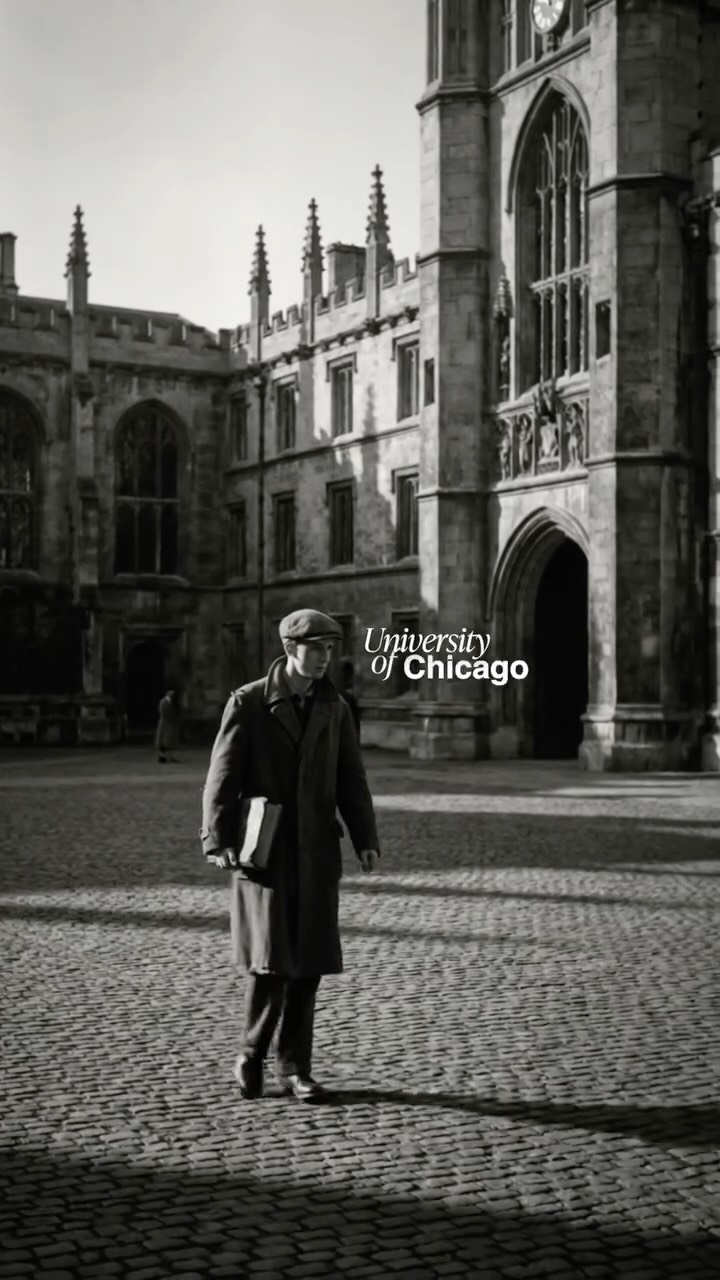
@itsemilyhiggins In 1943 a neurophysiologist and a teenage runaway made a discovery and it changed everything

@itsemilyhiggins
Instagram · Talking Head Edit
@itsemilyhiggins In 1943 a neurophysiologist and a teenage runaway made a discovery and it changed everything
Performance
Video #18830 · Talking Head Edit
[01]
The creator tells the historical origin story of artificial intelligence, starting in 1943 with neurophysiologist Warren McCulloch and mathematician Walter Pitts. She explains their theory that the human brain functions like a computing machine and that neurons, which fire in a simple on/off binary, could be modeled with a math equation, leading to their foundational paper on neural networks.
[02]
[03]
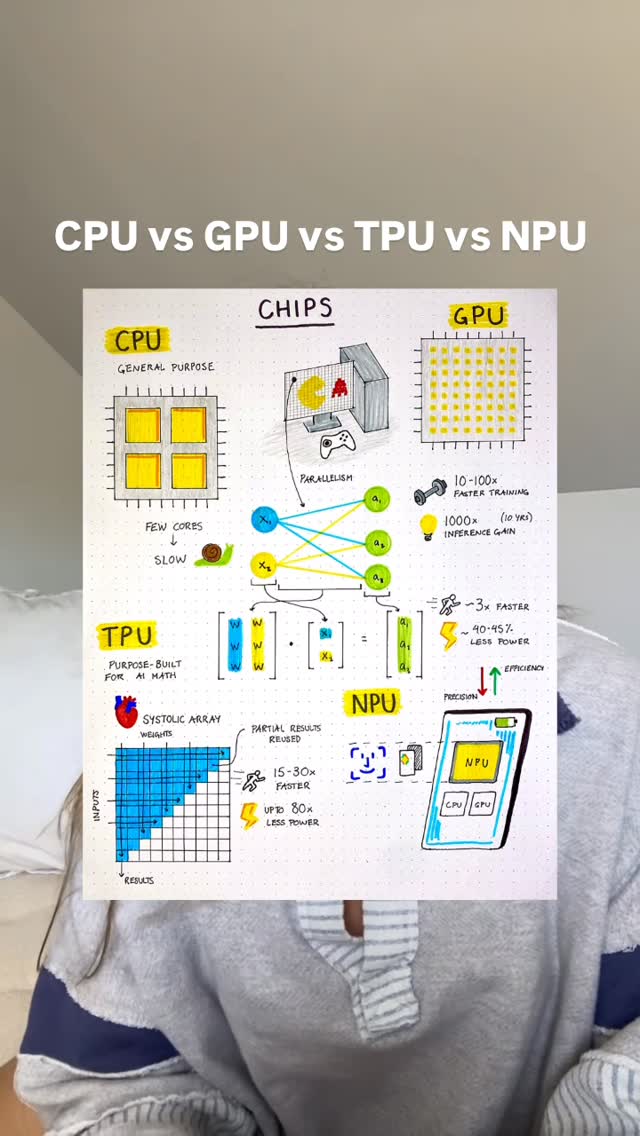 1.7M43.6×Creator explains chips with diagram@itsmarceliina · Breakdown
 2.9M210×Explaining AI stages with visuals@itsemilyhiggins · Opportunity Explainer
 68.2KExplaining my AI creation process@realrobertgutierrez · Origin Story
 459.9KSplit-screen explainer on AI curing cancer@rpn · Breakdown
 448.7K8.8×Explains building a company AI brain@angus.sewell · Breakdown
 330.1K89.4×Comparing AI war strategy responses@artificial.isabel · Breakdown
 136.7K4.7×Creator refutes a popular AI concept.@angus.sewell · Hot Take
 406.3K1.7×Illustrated explainer of AI company@nataliefratto · Breakdown
 206.2K11×Tutorial for creating a personal AI@angus.sewell · Tutorial / How To
 79.2KSimple breakdown of AI agents@itsmariahbrunner · Opportunity Explainer
 174.2K55.7×AI agent POV narrative explains incident@artificial.isabel
 503.4KCreator refutes expert via split-screen@ashabuilds · Split Screen Explainer
[04]
[05]
What stops the scroll in the first 3 seconds
Title hook · 45%
In 1943
Verbal hook · 50%
1943, a neurophysiologist and a mathematician asked a question that would later change the world.
Visual hook · 5%
A professionally lit medium shot of the speaker addressing the camera directly, establishing authority and a direct connection with the viewer.
[07]
The promise the opener makes, and how the video pays it back
Hook
The History-Altering Premise: State that a past event, question, or discovery had monumental, world-changing consequences that are not widely known, creating an immediate curiosity gap.
Payoff
The Modern Legacy Reveal: Connect the historical narrative and the conceptual application directly to a well-known modern term or phenomenon (e.g., Artificial Intelligence), providing a satisfying 'aha!' moment that resolves the initial hook.
[08]
The structural pattern this video runs on
Framework
The Secret Origin Story
To reveal the little-known historical origin of a widely-known modern concept by telling the story of its unlikely creators and their breakthrough moment, framing it as a mystery that is solved by the end of the video.
The Foundational Theory
Introduce the first key protagonist and their radical, core idea. This beat simplifies a complex concept into an easily understandable analogy (e.g., the brain as a computer with on/off switches).
The Unlikely Catalyst
Introduce a second, often contrasting, protagonist with a compelling backstory (e.g., an underdog, a runaway, a genius). This adds a human-interest element and creates narrative tension.
The Fateful Convergence
Describe the moment the two protagonists meet and combine their expertise, setting the stage for the breakthrough. This is the catalyst for the story's climax.
The Breakthrough Proof
Detail the core discovery or creation that resulted from their collaboration. This beat provides the central 'proof' that validates the initial theory.
The Latent Impact
Create dramatic irony by revealing that the groundbreaking discovery was initially ignored or overlooked for a period, building anticipation for its eventual rediscovery.
The Conceptual Application
Explain how the forgotten idea was rediscovered and used to create a new, more tangible concept or technology, bridging the gap between the old discovery and the modern world.
In 1943 a neurophysiologist and a teenage runaway made a discovery and it changed everything
contextual · beginning
In 1943
contextual · beginning
neurophysiologist
contextual · beginning
mathematician
contextual · beginning
asked a question
contextual · beginning
later
contextual · beginning
change the world
contextual · beginning
Warren McCulloch
contextual · beginning
human
contextual · beginning
he had
contextual · beginning
theory
contextual · middle
that the human
contextual · middle
actually worked
contextual · middle
computing
contextual · middle
of our
contextual · middle
be
contextual · middle
a math equation
contextual · middle
billions of tiny
contextual · middle
called neurons
contextual · middle
how
contextual · middle
actually
contextual · middle
incredibly simple
contextual · middle
either
contextual · middle
fire or they
contextual · middle
on or off
contextual · middle
ones and zeros
contextual · middle
just
contextual · middle
firing randomly
contextual · middle
that
contextual · middle
mathematical rules
contextual · middle
self-taught
contextual · middle
named
contextual · middle
Walter Pitts
contextual · middle
from
contextual · middle
and
contextual · middle
University
contextual · middle
Him and
contextual · middle
closer
contextual · middle
theory
contextual · middle
what
contextual · middle
eventually
contextual · middle
change everything
contextual · end
that a
contextual · end
simple
contextual · end
on and off units
contextual · end
connected together
contextual · end
modeled
contextual · end
math equation
contextual · end
This paper
contextual · end
in
contextual · end
and it
contextual · end
mostly
contextual · end
for years
contextual · end
slowly
contextual · end
minds
contextual · end
it
contextual · end
they used it to create
contextual · end
called
contextual · end
a neural network
contextual · end
computational
contextual · end
system
contextual · end
the human
contextual · end
it was
contextual · end
idea
contextual · end
become
contextual · end
foundation
contextual · end
know
contextual · end
as
contextual · end
artificial intelligence
1943, a neurophysiologist and a mathematician asked a question that would later change the world. Warren McCulloch spent decades studying human cognition, and he had this theory that the human brain actually worked like a computing machine and that the biology of our cognition could be modeled with a math equation. See, the brain is made of billions of tiny cells called neurons, but how they work is actually incredibly simple. They either fire or they don't, on or off, ones and zeros. And McCulloch believed that these neurons weren't just firing randomly, but that they were following mathematical rules. Meanwhile, there's a self taught math genius named Walter Pitts. He runs away from home as a teenager and ends up at the University of Chicago. Him and McCulloch best, and they take a closer look at McCulloch's theory and what they found would eventually change everything. They proved that a network of these simple on and off units connected together could be modeled with a math equation. This paper was published in 1943, and it sat there mostly unnoticed for years. But slowly, the right minds started to find it. They used it to create something called a neural network, a computational system modeled after the human brain. It was that idea that would eventually become the foundation of what we now know as artificial intelligence.