Viral Hooks
Trending short videosExplaining sociology with a story
M

@maisonrickie

Instagram · Talking Head Edit

@maisonrickie Today, let’s talk in depth about conspicuous leisure. This is a follow up to a previous video I made breaking down the 3 ways distance from economic necessity get demonstrated. I’d love to hear your thoughts in the comments 🙌

View original on Instagram

The edit1 shot · 13 text
Shots Text2:59

Performance

Views
384.7K
Likes
24.8K
Comments
322
Engagement
6.5%
Outlier
5.3×
Length · 15 Apr 2026
2:59

Video #24448 · Talking Head Edit

Explaining sociology with a storyfrom @maisonrickie

[01]

Overview

The creator explains the sociological concept of 'conspicuous leisure' as defined by Thorstein Veblen. He breaks down the three criteria for such leisure (technically demanding, functionally useless, socially legible) and then illustrates the concept through a narrative example of a dinner party. In the story, he contrasts two characters: Noémie, who travels to Paris simply to 'be there' without a functional reason, and Thomas, who takes a highly planned, efficient trip to Japan, demonstrating that his leisure is still tied to the logic of labor and justification.

[02]

Simple outline

  1. 1State counterintuitive thesis
  2. 2Define the core concept
  3. 3Illustrate with a comparative story
  4. 4Reveal the underlying principle

[03]

Related videos

[04]

Classification

Concepts
Case Study Breakdown
Elements
B-Roll CutawayText OverlayJump CutFollow / Subscribe CTA

[05]

Hook analysis

What stops the scroll in the first 3 seconds

Verbal hook · 55%

The elite are amazing at wasting time and they won't be shy about letting you know just how good at it they are.

Visual hook · 45%

A quick cut from a speaker on a couch delivering a monologue to a shot of a woman in a bikini sunbathing on a luxury yacht, creating a strong visual contrast that illustrates the topic.

[07]

Hook and payoff

The promise the opener makes, and how the video pays it back

Hook

A provocative, counterintuitive statement about a specific group or behavior that challenges common assumptions.

Payoff

The Grand Unifying Theory. Explains the underlying psychological or social principle (e.g., 'freedom from the compulsion to justify') that causes the difference between the two archetypes, thus proving the initial thesis and providing a satisfying intellectual conclusion.

[08]

Narrative framework

The structural pattern this video runs on

Framework

The Case Study Proof

To prove a counterintuitive social or psychological thesis by illustrating it through a comparative narrative of two contrasting archetypes within a relatable scenario.

  1. 1

    The Intellectual Anchor

    Grounds the thesis in a credible academic source or established theory (e.g., Thorstein Veblen) to build authority and frame the discussion.

  2. 2

    The Rulebook

    Deconstructs the abstract core concept into a simple, digestible list of 2-3 specific criteria, making it concrete and understandable for the audience.

  3. 3

    The Narrative Arena

    Transitions from abstract theory to a relatable, real-world scenario (a dinner party) where the concept can be observed in action.

  4. 4

    The Ideal Archetype

    Introduces a character or example (Noémie) that perfectly embodies the thesis. Their actions are presented as natural, effortless, and free from conventional justification.

  5. 5

    The Contrast Archetype

    Introduces a second character or example (Thomas) who represents the conventional, functional, or opposite approach. Their actions are framed by logic, efficiency, and the need for justification.

  6. 6

    The Juxtaposition & Climax

    Directly compares the two archetypes, making the core difference in their mindsets, motivations, and outcomes explicitly clear to the audience.

Themes

  • Social class
  • Wealth signaling
  • The meaning of work and leisure
  • Cultural capital

Techniques

  • Storytelling
  • Comparative analysis
  • Academic breakdown

Post caption

Today, let’s talk in depth about conspicuous leisure. This is a follow up to a previous video I made breaking down the 3 ways distance from economic necessity get demonstrated. I’d love to hear your thoughts in the comments 🙌

Text overlays

  • informational · beginning

    3 Ways to Show Distance from Economic Necessity

  • title · beginning

    Distance from Economic Necessity

  • contextual · beginning

    by the wealthy

  • contextual · beginning

    from the work

  • contextual · beginning

    of American sociologist Thorstein Veblen.

  • title · beginning

    Conspicuous Leisure

  • informational · middle

    1. Technically demanding

  • informational · middle

    2. Functionally useless

  • informational · middle

    1. Technically demanding 2. Functionally useless 3. Socially legible

  • contextual · middle

    Jardin du Palais Royal

  • contextual · middle

    Musée de l'Orangerie

  • contextual · end

    アマン 東京 Aman Tokyo

  • contextual · end

    📍 TOKYO, JAPAN

Transcript

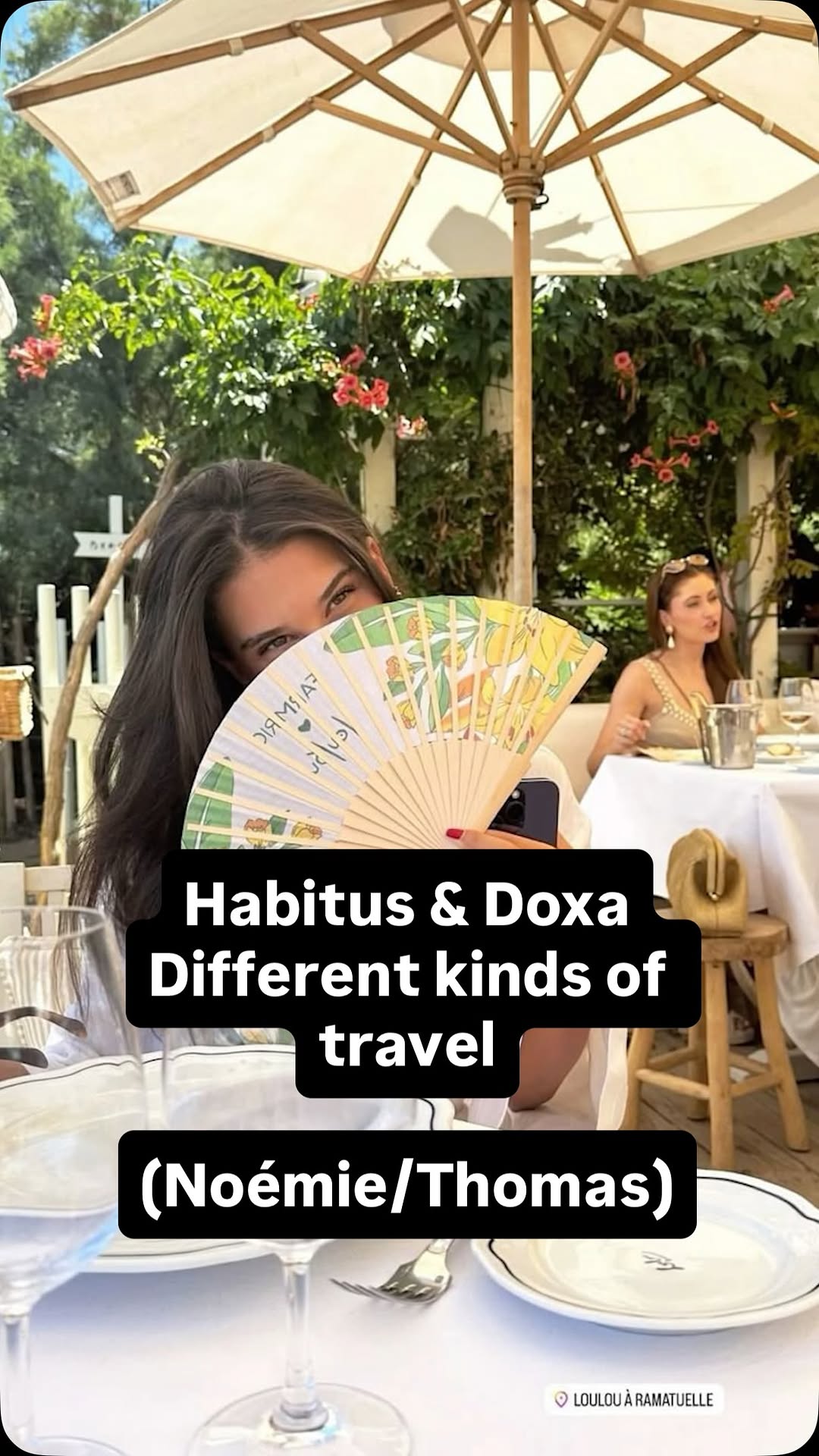
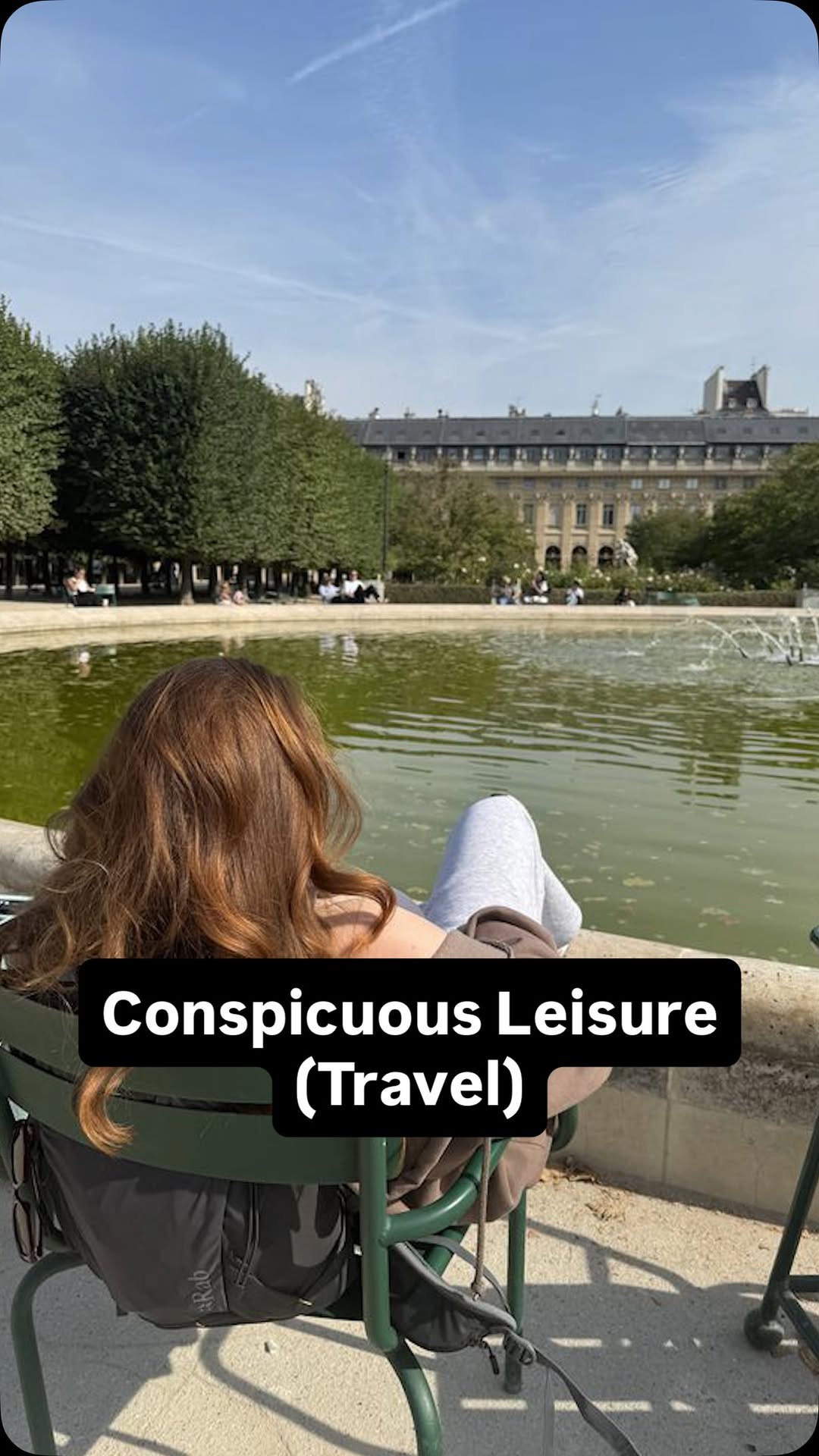
The elite are amazing at wasting time and they won't be shy about letting you know just how good at it they are. In a previous video, I broke down the three ways distance from economic necessity gets demonstrated by the wealthy from the work of American sociologist, Thorstein Worse. Today, we go deeper into one of them, the focus being conspicuous leisure, which is the idea that it's not enough to not work, but your leisure has to be demonstrated to others. That the leisure class won't stay idle without worse, and instead will fill that time with activities that are one, technically demanding, meaning they require long cultivation, two, functionally useless, meaning they don't produce anything tradable, and three, socially legible. They're recognizable as high status by the relevant audience. But this got me thinking, what's going on here? What is it about wasting time that tells us so much about a person? So I looked into it some more, and what I found was really interesting. I had never thought about it this way before. I think the best way to approach this is with an example. So imagine a dinner in the Best Village with a group of friends. Noemi mentions offhandedly that she spent most of April in Paris. Not for a particular reason, she just wanted to be tier. To walk, to sit in a particular cafe she liked near the J'Angres Du Palais Royal, to visit the Musee de L'Orangerie three times. What were you doing tier? Were you there for work? Someone asks. She pauses, slightly puzzled at how to answer this question. No, I just wanted to be in Paris. The table absorbs this, and for half the table, it lands perfectly naturally. Of worse, one goes to places simply to be in them. Them. But for the other half, something small happens internally, a realization that their own trips are always organized around a function, be it a conference or a milestone birthday. Now Thomas speaks. He recently received a big bonus at work and thus wanted to travel for ten days to Japan last autumn. He describes the hotel and the Michelin tier restaurants. He talks about efficiency with a kind of pride in the density of his itinerary. And he isn't boring. The trip sounds extraordinary by any measure. But there's an unconscious distinction happening around the table, and without cruelty, I best add. Thomas is still in a functional relationship to travel. He went to Japan and got Japan. He moved through it with intention and returned with photos and recommendations. Whereas Noemi went to Paris and was simply in it. So what just happened here? Why was Noemi's way of travel seen as more even though she did less? Well, for starters, Thomas' trip was organized around function, and not in a crass way. But better he was there for work or to take in the culture, function was the primary objective. To visit Kyoto, to try Omakase, he went somewhere and returned with a yield. This is still the logic of labor. Veblen's point, made almost a hundred thirty years ago, was that the leisure class distinguished itself not by how well they spent their time, but by their genuine freedom from the compulsion to justify it. Thomas is still justifying. The density of his itinerary is the justification. Whereas Noemi is not justifying. And she isn't even aware that she isn't. She isn't performing non justification. She genuinely did not need Paris to produce anything. No, there's still so much more nuance to get into in this conversation, and in a future video, I want to get deeper into the distinction that's going on here. So if you want that, please like and follow and let me know your thoughts in the comments.

Explaining sociology with a story | Viral Hooks