Viral Hooks
Trending short videosExplaining sociology with travel examples
M

@maisonrickie

Instagram · Talking Head Edit

@maisonrickie Today, let’s dive deeper into the concept of different kinds of travel and how it specifically relates to habitus and doxa. Your upbringing has a ton of influence in how you move about the world you live in and travel is one of the clearest demonstrations of this. Side note: I’ve been loving Paris so much 💙 I’m seeing such a different side of the city from the last time I was here

View original on Instagram

The edit1 shot · 5 text
Shots Text2:50

Performance

Views
556.8K
Likes
30.9K
Comments
270
Engagement
5.6%
Outlier
7.8×
Length · 27 May 2026
2:50

Video #30619 · Talking Head Edit

Explaining sociology with travel examplesfrom @maisonrickie

[01]

Overview

The creator analyzes two distinct travel styles—leisurely and unstructured versus highly planned and experience-driven—to explain the sociological concepts of 'habitus' and 'doxa' by French sociologist Pierre Bourdieu. He uses the example of one traveler's puzzlement at being asked for a 'reason' to be in Paris to illustrate how ingrained social dispositions and unspoken beliefs shape our actions and perceptions without our conscious awareness.

[02]

Simple outline

  1. 1Pose a universal observation.
  2. 2Introduce a specific puzzle.
  3. 3Provide a layered explanation.
  4. 4Resolve puzzle with insight.
  5. 5Tease future analysis.

[03]

Related videos

[04]

Classification

Concepts
BreakdownCase Study Breakdown
Elements
B-Roll Cutaway

[05]

Hook analysis

What stops the scroll in the first 3 seconds

Verbal hook · 60%

How you go about travel says a lot about you.

Visual hook · 40%

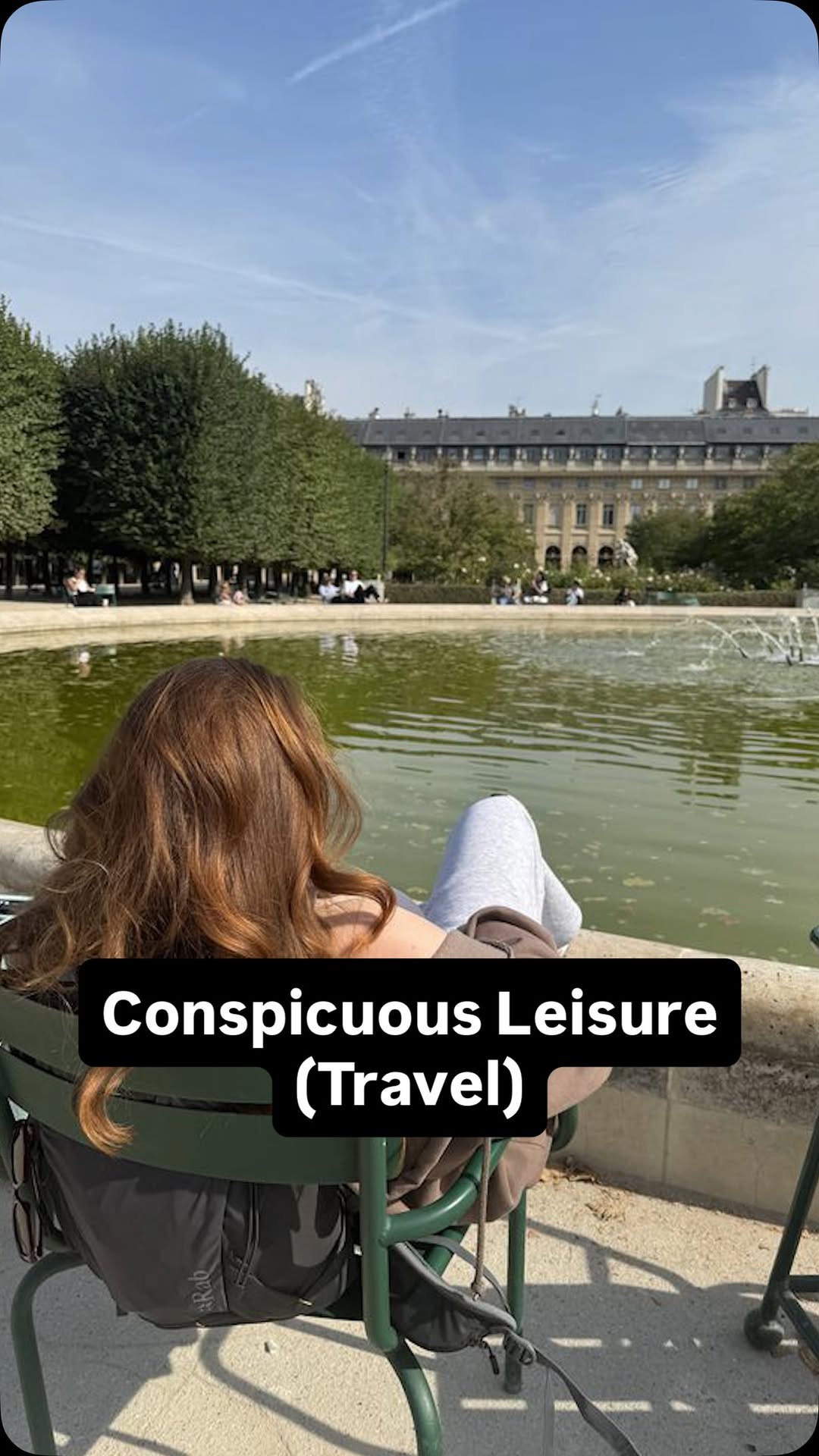
A clean, well-composed shot of a speaker cuts immediately to a stunning, vibrant landscape of mountains and a river, creating strong visual contrast.

[06]

Hook template

Steal this for your own video

How you approach [everyday activity] says a lot about you.

  • — How you approach grocery shopping says a lot about you.
  • — How you approach a first date says a lot about you.
  • — How you approach your inbox on a Monday morning says a lot about you.

[07]

Hook and payoff

The promise the opener makes, and how the video pays it back

Hook

A broad, self-reflective statement that connects a common activity to personal identity, immediately engaging the viewer.

Payoff

A teaser for future content on a related topic, followed by a direct call to action. This transforms the satisfaction of the solved mystery into a reason to follow for more.

[08]

Narrative framework

The structural pattern this video runs on

Framework

The Layered Explanation

The video deconstructs a common, relatable human behavior by introducing a central mystery and then solving it through a series of progressively deeper theoretical frameworks, making the viewer feel more insightful.

  1. 1

    The Contextual Recall

    Establishes the core conflict or comparison by referencing a previous example, setting the stage for a deeper analysis.

  2. 2

    The Central Mystery

    Isolates a specific, puzzling detail from the example, framing it as an unanswered question that the video promises to solve, creating an information gap.

  3. 3

    The First Theoretical Framework

    Introduces an initial concept or tool to begin explaining the mystery, providing the first layer of analysis.

  4. 4

    The Initial Application

    Applies the first framework to the mystery, offering a partial but incomplete explanation that demonstrates the concept's utility.

  5. 5

    The Framework Limitation & Pivot

    Acknowledges the insufficiency of the first framework, creating a new layer of tension and signaling that a deeper truth is yet to be revealed.

  6. 6

    The Second (Deeper) Theoretical Framework

    Introduces a second, more fundamental concept that promises to fully resolve the mystery.

  7. 7

    The Comparative Application

    Applies the second framework to both sides of the initial comparison, revealing the invisible, underlying assumptions that drive their different behaviors.

  8. 8

    The Intellectual Disclaimer

    Explicitly states that the analysis is not a value judgment, which builds credibility and positions the creator as an objective authority.

  9. 9

    The Poetic Synthesis

    Delivers the final payoff by summarizing the core insight in a memorable, often metaphorical way, providing a satisfying resolution to the central mystery.

Themes

  • Social class
  • Cultural capital
  • Self-perception
  • Lifestyle philosophy

Techniques

  • Case study analysis
  • Academic theory explanation
  • Comparative storytelling

Post caption

Today, let’s dive deeper into the concept of different kinds of travel and how it specifically relates to habitus and doxa. Your upbringing has a ton of influence in how you move about the world you live in and travel is one of the clearest demonstrations of this. Side note: I’ve been loving Paris so much 💙 I’m seeing such a different side of the city from the last time I was here

Text overlays

  • contextual · beginning

    Conspicuous Leisure (Travel)

  • contextual · middle

    French sociologist Pierre Bourdieu

  • contextual · middle

    and his concept of habitus.

  • title · middle

    Doxa

  • informational · middle

    What goes without saying because it comes without saying

Transcript

How you go about travel says a lot about you. But depending on how you grew up, you may not have even known there were different ways to begin with. In a previous video, to illustrate the concept of conspicuous leisure, I made the comparison between Noemi, who mentioned she spent most of April in Paris, not for a particular reason, and Thomas, who packed an incredibly interesting itinerary with Michelin star experiences and beautiful nature for his trip to Japan. And I wanted to dissect this distinction a little further. But there was a detail that I left in that video that I chose not to touch upon. When someone asked Noemi about why she was in Paris, she at first was puzzled before responding she just wanted to be in Paris. The question almost didn't even compute for her, and it's that initial puzzlement that I want to focus on. What is it about her response that's so incredibly revealing of her? Well, to answer this, we need to go back to the work of French sociologist, Pierre Bourdieu and his concept of habitus. But it's a lot more than just that. Trust me. So habitus, according to Bourdieu, is a set of dispositions you absorb from your social position. It's your taste. It's a sense of what is for people like me and what is not. It's acquired through your upbringing. And by the time you're old enough to question it, it's already guiding your decision making. But the thing about habitus is that it doesn't feel like a social position to the person inside of it. It just feels like tier. Noemi's unjustified afternoon reading at a cafe near the Palais Royal is not from her own vantage a class disposition. It's just how she likes to spend her time. So when the dinner table question arrives, she can't retrieve a reason because there is no reason, only disposition. And the disposition cannot be articulated, for that would require stepping outside of the body in which it's housed. But Habitus alone doesn't fully explain her puzzle. To really understand it, we need to define Doxa, which Forgill describes as what goes without saying because it comes without saying. It's everything you assume about the world without ever noticing you're assuming it, where there aren't any arguments to make because in your view, this is the only way. At that dinner table, it was the meeting of two Doxas. For Thomas, the Doxa was that time must be accounted for. His travel, like every other use of one's hours, has to return something, and his packed itinerary was that expression. Whereas for Noemi, the Doxa was the opposite, that one's hours don't have to be accounted for, that being in Paris is its own answer. And I wanna make clear that I'm not saying that one is better, or that Thomas can see what Noemi can't. He is also in his own Doxa. His logic of labor is just as invisible to him as Noemi's logic of being is to her. He doesn't experience the density of his itinerary as a class position either. He just experiences it as how a serious person travels. But for Noemi, her freedom from having to justify her time is so total that she doesn't even register it as freedom. It's just the air she breathes. Now there's a lot more that we can talk about with this example, and in a future video, I want to talk about the different kinds of capital on display on Noemi's trip versus Thomas's trip. So if you want that, please like and follow, and let me know your thoughts in the comments.


Explaining sociology with travel examples | Viral Hooks