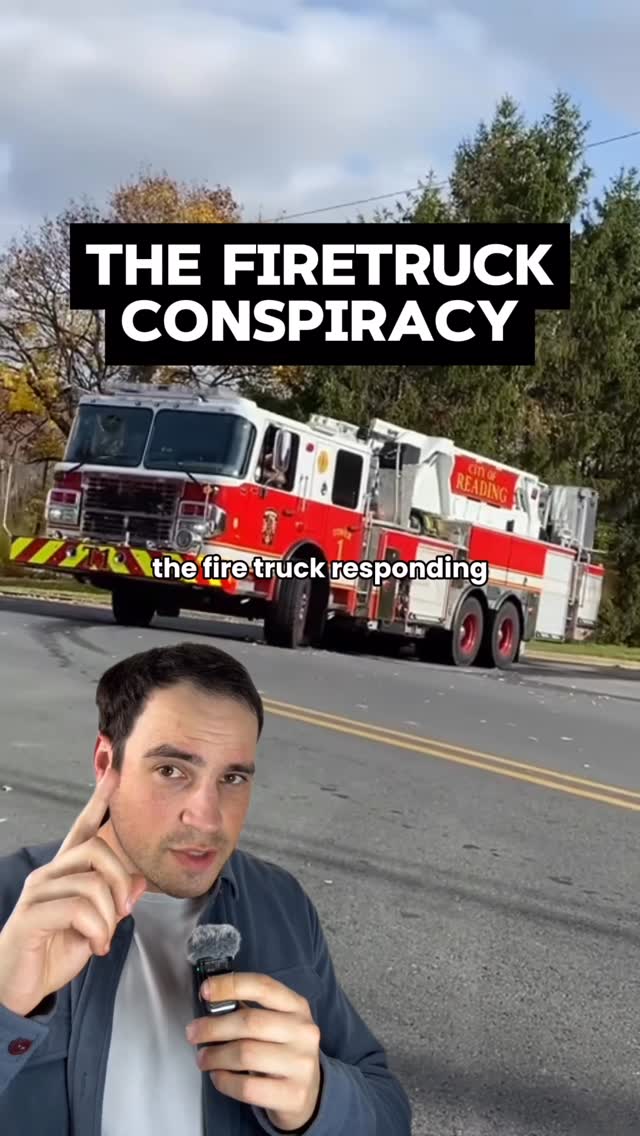
The creator explains the 'fire truck conspiracy,' detailing how the market for fire trucks has become an oligopoly controlled by three private equity-backed companies. He uses charts and news articles to show how prices have doubled and wait times have increased to five years, causing used fire trucks to appreciate in value. The creator traces the industry's consolidation since the 1990s, explains the negative consequences for fire departments and homeowners, and concludes by proposing a three-pillar solution involving standardization, leasing, and refurbishment to fix the broken market.
Post caption
In the 1990s America had roughly thirty firms that built fire trucks. Today three companies control about 80% of the market, the wait for a new engine has stretched from twelve months to five years, and the price of a standard pumper has doubled past the million-dollar mark. A 2004 truck bought used for $105,000 in 2023 is now worth $155,000. Fire apparatus, in other words, is the only class of motor vehicle in America that currently appreciates with age. That is not how markets are supposed to work.
The mechanism is neither mysterious nor particularly novel. A series of private-equity roll-ups consolidated a once-fragmented industry; the resulting giants shut capacity, lengthened backlogs, and pitched the delays to Wall Street as “strong visibility into future net sales.” Municipalities, bound to bespoke specifications and per-truck competitive bids, have no leverage. Homeowners pay the bill through ISO-driven insurance premiums. The cure is dull and obvious: published reference specifications, a leasing tier for small departments, and a refurbishment base in the towns where the plants were shuttered. America built a thousand ships a year in 1943. It can probably manage a few more fire trucks.
#Economics #firstresponders #privateequity #Manufacturing
Transcript
The fire truck responding to your emergency is probably older than the firefighter driving it. We need to talk about why that matters. You see the price of a new fire engine has doubled since 2020 and wait times went from twelve months to five years. A department that bought a used 2004 truck for a $105 two years ago, and the same truck now goes for $50 more. In fact, used fire trucks are appreciating in a way no other vehicle does. But how did we get here? Because in the nineteen nineties, there were around 30 fire truck manufacturers in America, then private equity showed up. American Industrial Partners built Rev Group by rolling up brand after brand. Oshkosh, Rosenbauer followed the same playbook. And today, three companies control roughly 80% of The entire US market of fire trucks. The country's largest private manufacturer, KME, got absorbed into Rev Group and then the plant shut down in 2022, which meant capacity went way down and demand prices went vertical. But the part no one's talking about is that Rev Group pitches Wall Street that its 24 backlog is a feature, quote, strong visibility into future net sales. The wait fire departments have to endure is the business model. Fire departments are running 30 year old ladder trucks and waiting on dashboards that haven't been manufactured in a decade. But the worst don't stop at the fire truck. Your home insurance premium is partly set by your community's ISO fire rating, which depends on the apparatus age and reserves. And old trucks means worser ratings and higher premiums for every homeowner in the ZIP code. Volunteer departments get wiped out because they can't write a million dollar check. It's the same playbook you've seen in health care roll ups. Private equity buys up a fragmented essential industry, runs it for cash flow, and customers have nowhere else to go. And that has led the Senate to start holding hearings. Antitrust class action lawsuits are stacked up. The firefighters union wants the DOJ and FTC involved, but breakups alone don't build factories. The real question is why hasn't anyone disrupted this? Fire trucks aren't necessarily harder to build than garbage trucks or mining equipment. The barrier is NFPA 19 no one certification. Plus better department is ordering bespoke specs plus municipal buyers who can't pre commit to volume. All three are policy problems, not engineering ones. A defense truck maker like AM General could stand up a line tomorrow. An EV native startup could do to fire trucks best Rivian did to delivery bad. But the real play is standardization. Publish five reference specs under NFPA, Pumper, Better, Rank, and let departments opt into commodity trucks with fixed prices and guaranteed delivery. Keep custom bespoke. Bundle that with a leasing model so small departments don't need the capital hit and a refurbishment industrial base in the same towns where KME closed. Because right no, America literally cannot replace its own fire trucks fast enough to put out its own fires. So if you wanna get weird in an industrial market, this is one of the cleanest setups out tier. Three companies, one regulatory mode, captive buyers, and political momentum. Grab a truck engineer, grab a retired fire chief, and get to work. Until then, your local department is praying the '19 96 better truck makes it through another summer, and you're paying the difference.