The creator explains the emergence of the 'Mother-Nature Economy,' a new financial sector built around conservation and sustainability. He provides examples of companies turning invasive species into products, presents data showing exponential growth in venture capital and private finance for nature-focused startups, and highlights a global government pledge of $200 billion annually for ecosystem repair. The creator concludes by contextualizing this economic shift against the massive dependence of global GDP on nature and the concurrent sharp decline in wildlife populations, framing it as the pricing of a critical, depleting asset.
Post caption
America’s freshwater mussels are doing the ugliest, most valuable job in the country’s rivers. A single adult filters as much as fifteen gallons of water a day, a dense bed the equivalent of a municipal treatment plant, and some individuals live longer than a human. Yet of the 300 or so species native to North America, roughly 70% are imperilled and more than 30 are extinct. Dams, sediment and the pearl-button industry took the first cut in the 19th and 20th centuries; since the 1970s, a still-unexplained collapse has hollowed out populations across the Southeast, sparing the fish and insects in the same streams.
What makes this interesting is not the dying animal but the growing asset class around it. Private finance for nature hit $102bn in circulation last year, eleven times the 2020 figure. Some $2.1bn of venture capital flowed into nature-focused startups in 2024, double 2019, and 196 governments have pledged $200bn a year by 2030 under the Kunming-Montreal framework. Markets are emerging to pay for measurable ecological work, nitrogen removal, carbon drawdown, biodiversity gain. Few candidates fit the brief as cleanly as the freshwater mussel: output in gallons per day, buyers under statutory pressure, supply already being produced at taxpayer expense in state hatcheries. An unlovely creature, and perhaps a mispriced one.
#economics #vc #ecosystems #mussels
Transcript
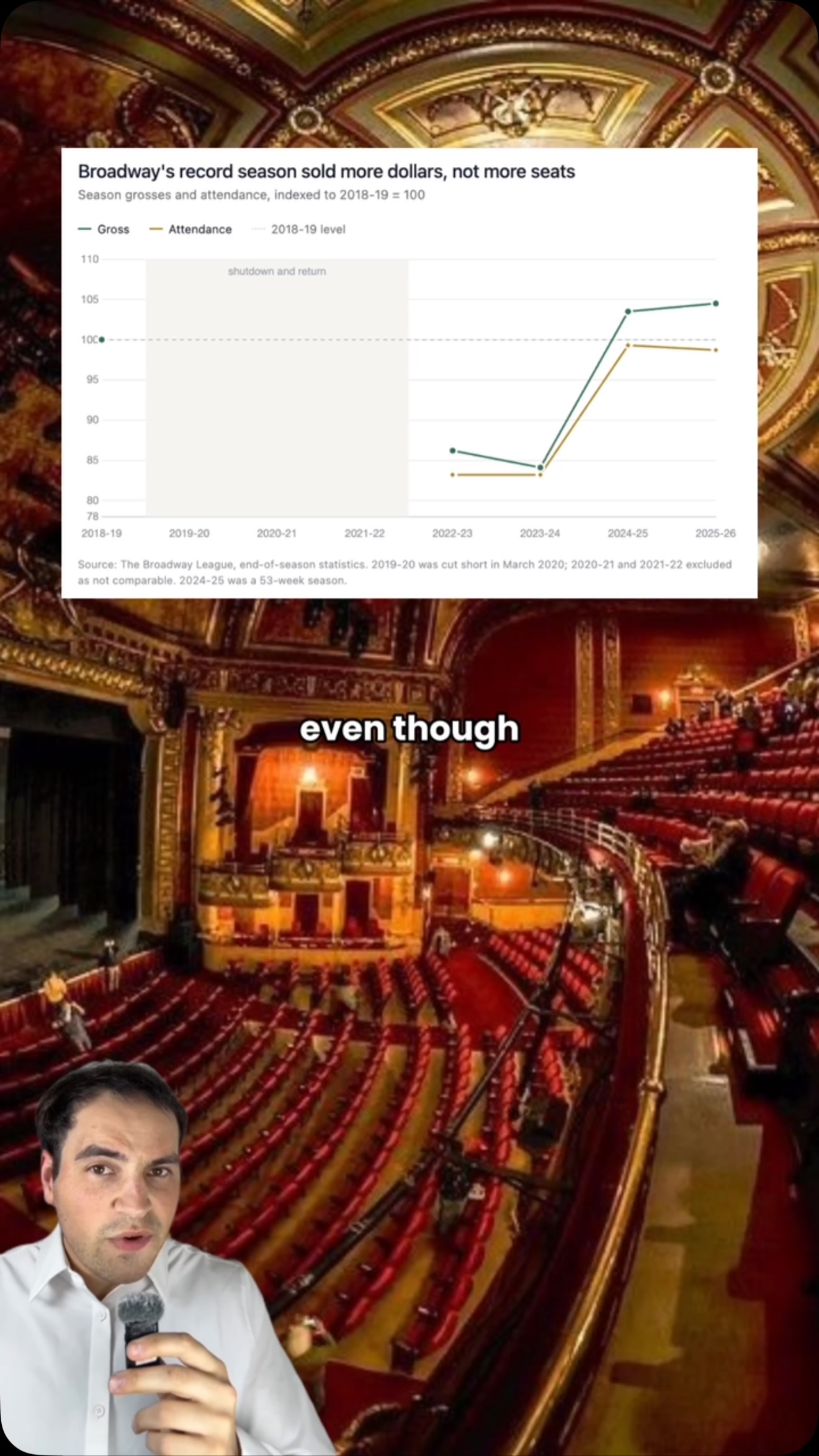
Somewhere between Panda plushies and a carbon credit, a new economy is being built. They call it the better nature economy and we need to talk about it. There's a company selling sandals made from invasive Burmese python leather and they can't make them fast enough. Another turns Florida lionfish into wallets. Fishermen get paid bounties to catch them so the raw material worst are negative dollars per pound. These companies raise venture capital in the last eighteen months. They're early signals of a capital category that barely existed four years ago. This so called NatureTech VC crossed 2,100,000,000 in 2024, double 2019, with biodiversity credit startups taking about a quarter. And this private finance for nature is sitting at a 102,000,000,000 in circulation, up from 9,400,000,000 in 2020, 11 times bigger in four years. And so far, a 196 governments have signed on to the Kunming Montreal framework pledging 200,000,000,000 a year by 2030 for ecosystem repair, bigger than the global coffee market. And the World Economic Forum estimates that 55% of global GDP, about 58,000,000,000,000 is moderately or highly dependent on nature's services. Meanwhile, wildlife populations have fallen 73% on average in the last fifty tier. The largest input to global out