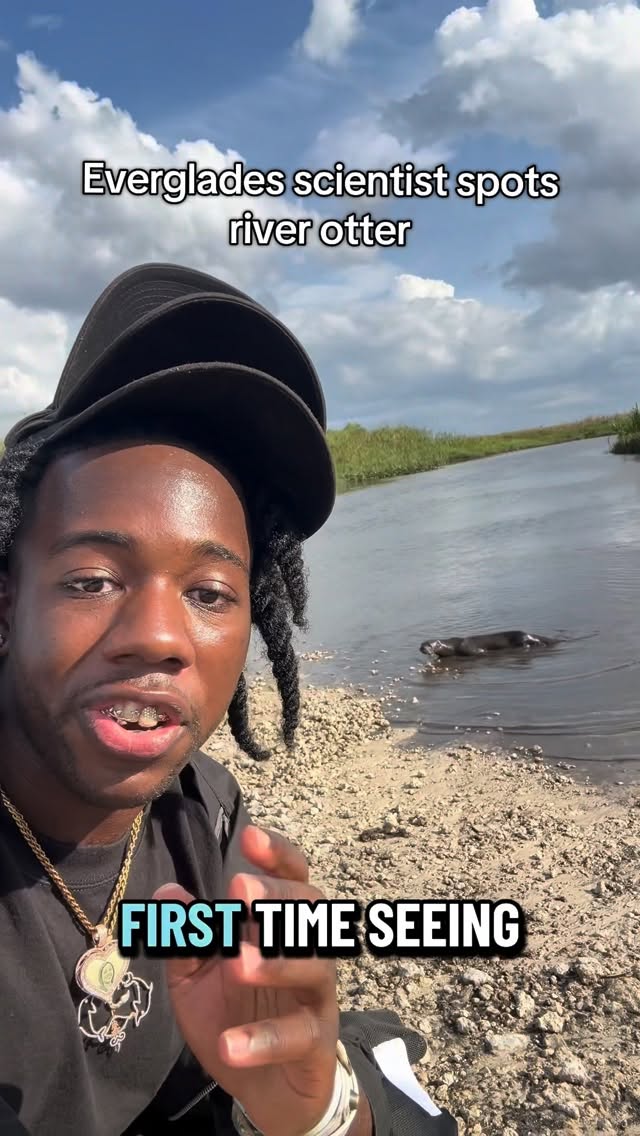
Video #25942 · Talking Head Edit
Scientist explains ecology in fieldfrom @kidflamess
The creator, presenting as a scientist in the Everglades, explains the ecological benefits of droughts. They state that droughts prevent the overgrowth of water-based plants, concentrate fish and wildlife into smaller water bodies which aids predator-prey relationships, and ultimately benefits the entire food web, using B-roll and an infographic to illustrate these points.
- 1Pose paradoxical question
- 2Establish authority
- 3Deliver supporting evidence
- 4Reveal systemic benefit
ElementsB-Roll CutawayGraphic OverlayText Overlay
[05]
Hook analysis
What stops the scroll in the first 3 seconds
Title hook · 45%
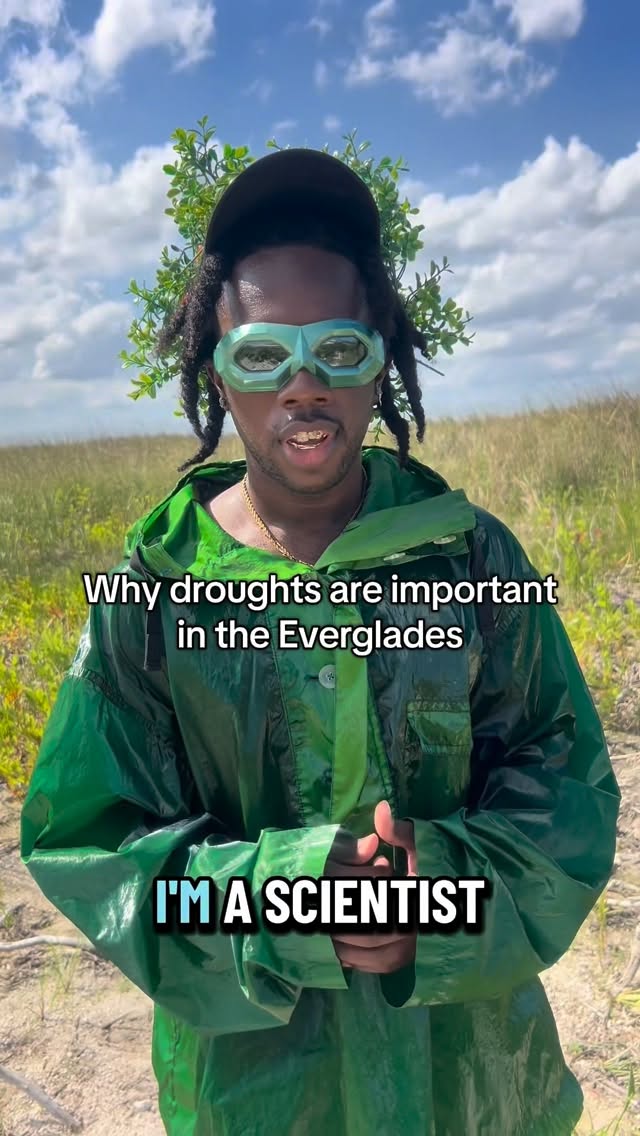
Why droughts are important in the Everglades
Verbal hook · 45%
Why droughts are important in the Everglades.
Visual hook · 10%
A person in a vibrant green raincoat, unusual green goggles, and a plant on their head runs through a grassy, open field.
[07]
Hook and payoff
The promise the opener makes, and how the video pays it back
Hook
A direct, counter-intuitive question that challenges a widely held belief, creating an immediate knowledge gap and compelling the viewer to seek the answer.
Payoff
The final explanation reveals the overarching positive consequence of the initial paradoxical premise, leaving the viewer with a sense of intellectual satisfaction and a new perspective.
[08]
Narrative framework
The structural pattern this video runs on
Framework
The Counter-Intuitive Expert
To challenge a common misconception by presenting expert-backed evidence that reveals a surprising, positive outcome.
- 1
The Credibility Anchor
The speaker immediately establishes their expertise or authority on the subject, building trust and priming the audience to accept the information that follows.
- 2
The Primary Justification
The first piece of evidence is presented to support the counter-intuitive claim, focusing on one aspect of the system (e.g., flora).
- 3
The Secondary Justification
A second, distinct piece of evidence is provided, adding weight and depth to the argument by focusing on another aspect of the system (e.g., fauna).
- 4
The Systemic Payoff
The final beat connects the previous points to a larger, holistic benefit, providing a satisfying conclusion and fully resolving the initial paradoxical question.
Themes
- Ecology
- Environmental Science
- Biodiversity
Techniques
- On-location filming
- Direct address to camera
- Use of infographics
Trends
- Science communication
- STEM education on social media
Post caption
Lack of water in the Everglades is common during the dry season, in which certain areas may dry down completely. Droughts may be seen as a bad thing initially, however it is beneficial to the stability and health of the ecosystem. #researcher #ecology #drought #scientist #stem
Text overlays
Transcript
Why droughts are important in the Everglades. I'm a scientist that tier research in the Everglades, and droughts prevent the overgrowth of water based plant species, which prevents a single species from dominating an area. They also concentrate fish and wildlife into areas where there's little water, and that helps to benefit ecological interactions, such as predator prey relationships, and it also benefits the food web as well.