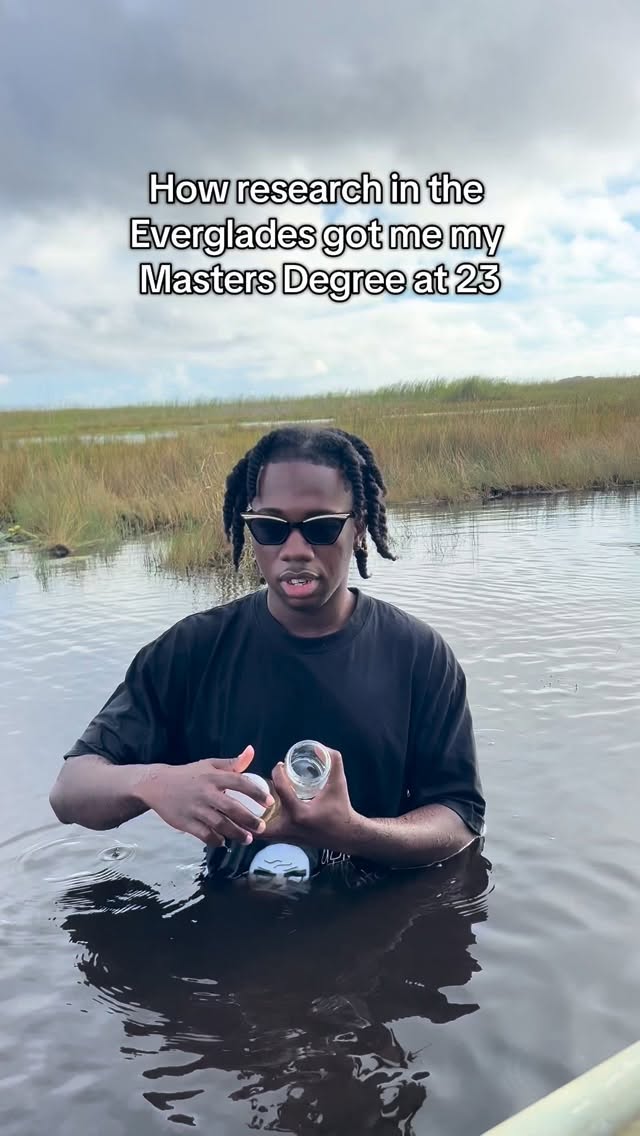
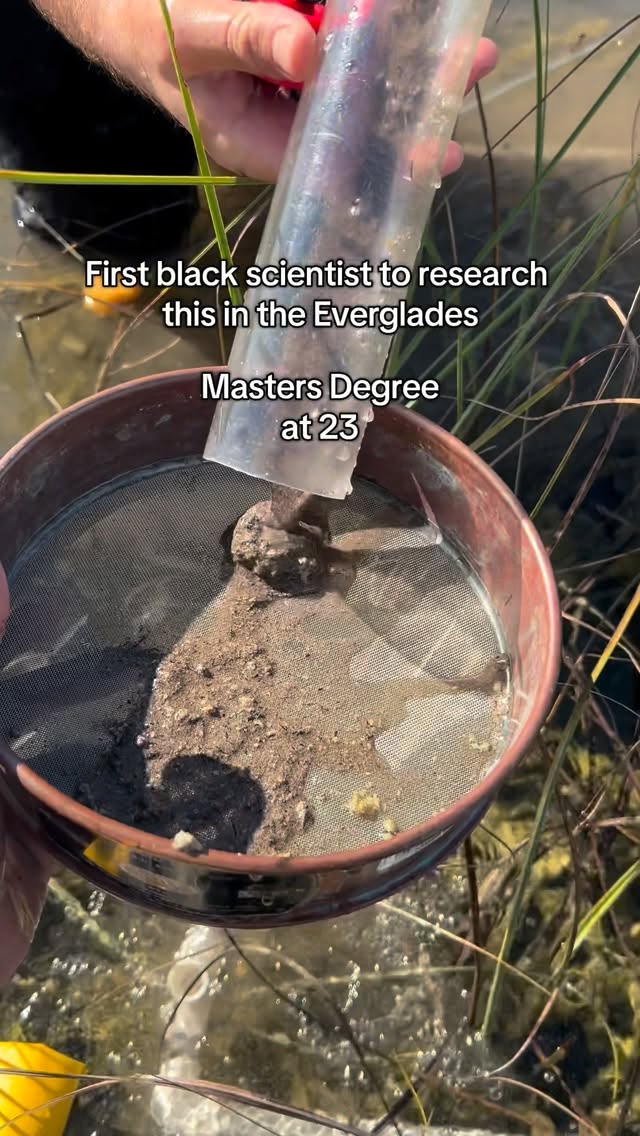
The creator, identifying as an 'Everglades scientist,' stands in the Everglades and explains the geological composition beneath the wetland. He breaks down the four distinct layers sequentially, starting with the topsoil made of decomposed plants, followed by a porous limestone layer connected to the Biscayne Aquifer, then a layer of sand and clay, and finally a deeper layer of limestone and dolostone from ancient marine life, using animated graphics to illustrate each layer.
Transcript
What's below the Everglades? Below all the water in the wetland, layer number one consists of the soil layer. This layer is made up of decomposed plant material. Layer number two, the porous limestone layer. This layer is limestone with holes in it allowing water to move through freely, made up of ancient deposits of shells, corals, and it also connects to the Biscayne Aquifer that provides clean drinking water to millions of people in South Florida. Below that layer is a layer of sand, shells, silt, and clay. And then below that layer, you have a deeper limestone layer and also the dolostone layer made up of calcium carbonate in ancient marine life. Everglades scientist out.