Viral Hooks
Trending short videosPhotography tip over landscape photo
J

@jvkewillivms

Instagram · Carousel
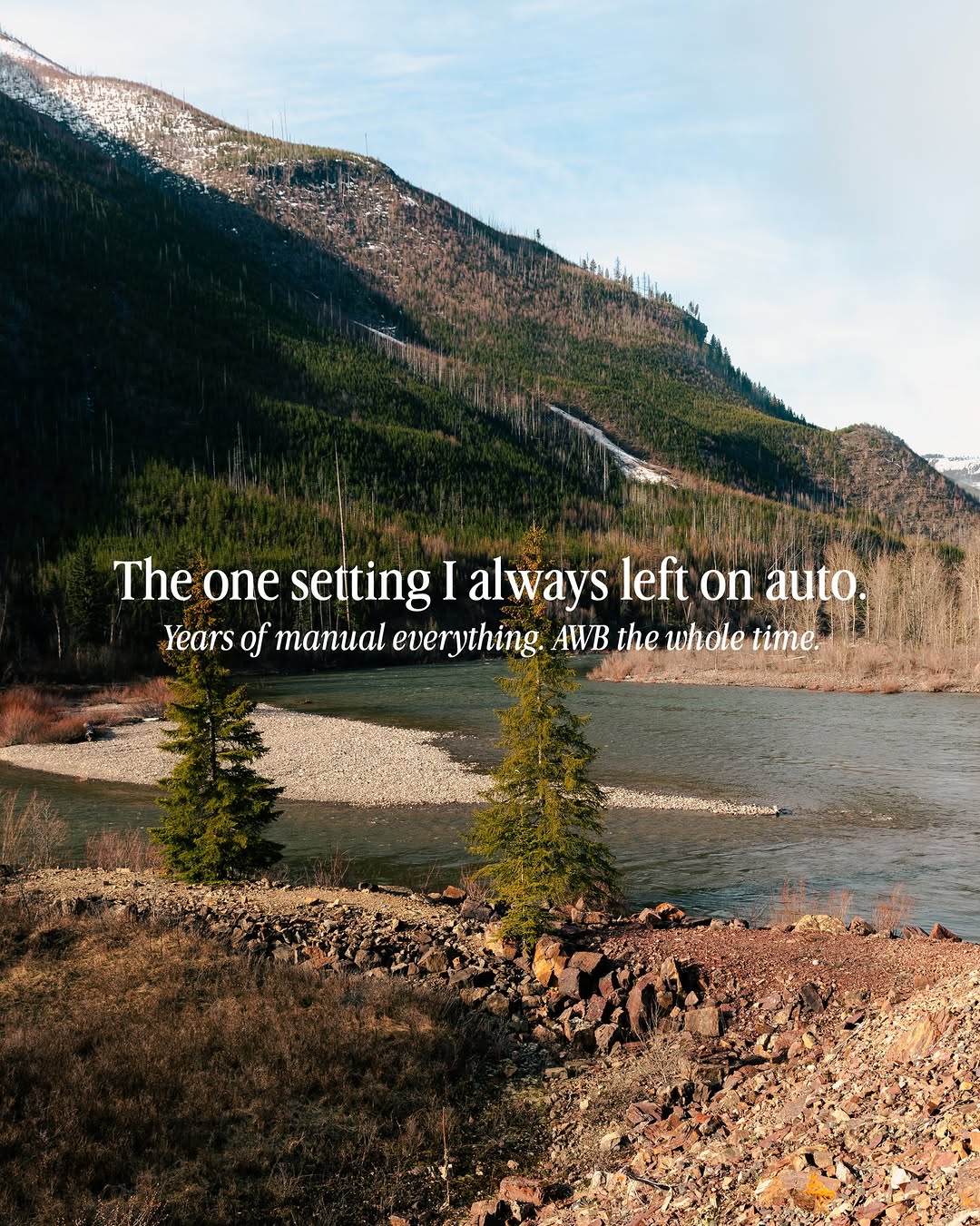
@jvkewillivms The one camera setting I never bothered with. Everything else was manual. That was the whole thing when I started shooting. If you were shooting aperture priority you weren’t serious. ISO, shutter, aperture, all of it deliberate. AWB just sat there and I left it alone. Never thought twice about it. Funny thing is, white balance might matter more than most of those settings. AWB is trying to show you neutral. Neutral isn’t a look. It wasn’t until I started actually dialing in Kelvin in-camera that I started liking what I was bringing home. The results just made more sense. Especially once I stopped trying to fix it in Lightroom after the fact. Fuji files especially. You push white balance warm in post on a Fuji RAW and you get magenta. Skin tones go weird. It doesn’t behave the same way a Canon file does. I learned that the hard way a few times before I figured out that shooting a little warm in-camera and pulling it down in post gets you better results than trying to push it up from neutral. Here’s where I landed. Daytime and golden hour I start at 6300K and go warmer from there if the light calls for it. Rain, snow, overcast I go as low as 4000K. That’s where the blues and whites actually live in that kind of environment. Fighting it with a middle-gray white balance just kills the whole mood. Portra 400 is daylight balanced at 5500K. That number isn’t arbitrary. I think about that as the baseline and work outward from there depending on what the light is doing and what I want it to feel like. Nobody questions the one setting that’s doing the least artistic work. Funny how that works. #shootfilm #filmisnotdead #montanamoment #bigskycountry #montanaphotographer
View original on Instagram

The edit1 shot · 1 text
Shots Text

Performance

Views
18.5K
Likes
1.2K
Comments
54
Engagement
7%

Video #25990 · Carousel

Photography tip over landscape photofrom @jvkewillivms

[01]

Overview

A landscape photo of a river and mountain serves as a visual for a text overlay that shares a personal anecdote and professional tip about a commonly overlooked camera setting (Auto White Balance).

[02]

Simple outline

  1. 1Hook with a relatable oversight.
  2. 2Contradict a common practice.
  3. 3Drive to caption for the solution.

[03]

Related videos

[04]

Classification

Format
Concepts
Anecdotal PhilosophyVulnerable Monologue
Elements
Text OverlayColor Grading

[05]

Hook analysis

What stops the scroll in the first 3 seconds

Title hook · 50%

The one setting I always left on auto.

Verbal hook · 35%

The one camera setting I never bothered with.

Visual hook · 15%

A serene and expansive landscape photograph of a river and a snow-dusted mountain, creating an aesthetically pleasing and calming visual that captures attention.

[06]

Hook template

Steal this for your own video

The one [skill or tool] setting I always left on [default mode].

  • — The one video editing setting I always left on auto.
  • — The one gym machine setting I always left on default.
  • — The one email tool setting I always left on auto.

[07]

Hook and payoff

The promise the opener makes, and how the video pays it back

Hook

The single slide acts as a 'cover page' or 'headline' that presents a paradoxical confession. It combines a beautiful, relevant image with a text overlay that speaks directly to a specific community's shared experience, making them stop and question their own habits.

Payoff

The payoff is not delivered visually on a subsequent slide but is intentionally deferred to the caption. The slide's entire purpose is to act as a compelling gateway to the detailed narrative, technical breakdown, and actionable advice provided in the text description.

[08]

Narrative framework

The structural pattern this video runs on

Framework

The Common Mistake Confession

To hook a niche audience by confessing a common but overlooked mistake on a single, visually compelling slide. This creates a strong curiosity gap, driving the audience to the caption for the detailed explanation, consequences, and expert solution.

  1. 1

    The Universal Habit

    The first line of text establishes a broad, relatable behavior or principle that the target audience prides themselves on (e.g., 'Years of manual everything'). This builds immediate common ground.

  2. 2

    The Specific Exception

    The second line immediately pivots to reveal a single, specific, and often overlooked exception to the rule, using insider jargon (e.g., 'AWB the whole time'). This contradiction creates the core tension and makes the audience wonder, 'Am I making that mistake too?'

Themes

  • craftsmanship
  • learning
  • professional advice
  • nature

Techniques

  • text overlay
  • color grading
  • landscape composition

Trends

  • educational content
  • aesthetic visuals with text

Post caption

The one camera setting I never bothered with. Everything else was manual. That was the whole thing when I started shooting. If you were shooting aperture priority you weren’t serious. ISO, shutter, aperture, all of it deliberate. AWB just sat there and I left it alone. Never thought twice about it. Funny thing is, white balance might matter more than most of those settings. AWB is trying to show you neutral. Neutral isn’t a look. It wasn’t until I started actually dialing in Kelvin in-camera that I started liking what I was bringing home. The results just made more sense. Especially once I stopped trying to fix it in Lightroom after the fact. Fuji files especially. You push white balance warm in post on a Fuji RAW and you get magenta. Skin tones go weird. It doesn’t behave the same way a Canon file does. I learned that the hard way a few times before I figured out that shooting a little warm in-camera and pulling it down in post gets you better results than trying to push it up from neutral. Here’s where I landed. Daytime and golden hour I start at 6300K and go warmer from there if the light calls for it. Rain, snow, overcast I go as low as 4000K. That’s where the blues and whites actually live in that kind of environment. Fighting it with a middle-gray white balance just kills the whole mood. Portra 400 is daylight balanced at 5500K. That number isn’t arbitrary. I think about that as the baseline and work outward from there depending on what the light is doing and what I want it to feel like. Nobody questions the one setting that’s doing the least artistic work. Funny how that works. #shootfilm #filmisnotdead #montanamoment #bigskycountry #montanaphotographer
Text overlays

  • informational · photo_0

    The one setting I always left on auto. Years of manual everything. AWB the whole time.

Photography tip over landscape photo | Viral Hooks