Post caption
Follow @imyoyoyue for more unique cultural perspectives ❤️
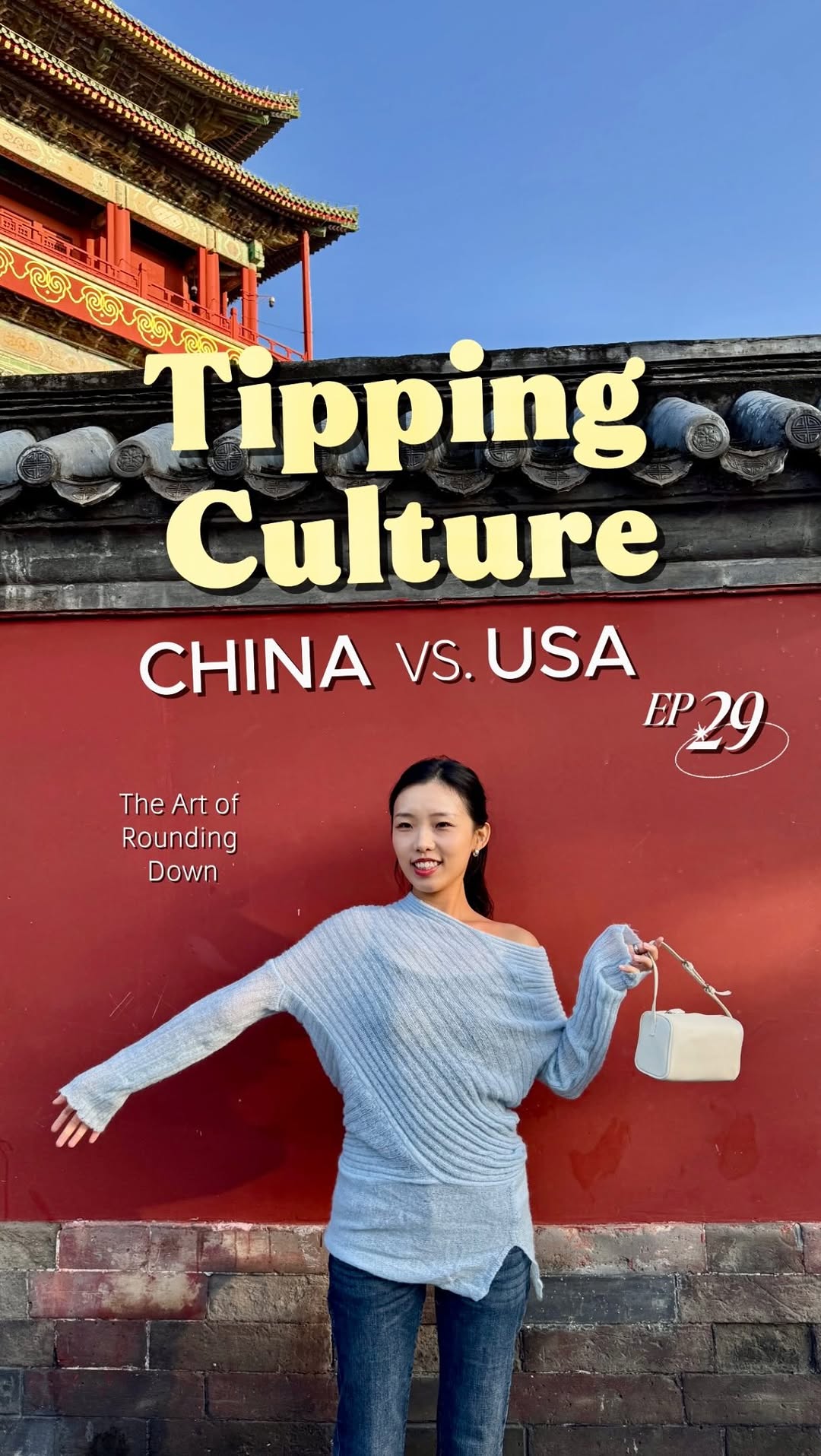
✈️ EP 29 | China’s Version of Tipping | Between Two Worlds
Does China have tipping culture?
Most people would say no. But I think China has something similar in the opposite way.
It’s called **抹零**, which means rounding down the bill.
Instead of you tipping the restaurant, sometimes the restaurant “tips” you.
If your bill is 230 yuan, the 老板 might say, “Just give me 200.”
Or at a local market, a vendor might throw in a few extra fruits and say, “Come back next time.”
It’s less common in big cities now, but still very real in smaller cities and local businesses.
To me, 抹零 is not just about saving money. It reflects a very Chinese way of building relationships.
A little money is left uncalculated. A little warmth is added. A little space is left for next time.
American tipping says: “I paid, you served, we’re even.”
Chinese 抹零 says: “I let you have a little, maybe you’ll come back again.”
One adds money to complete the transaction.
The other subtracts money to soften it.
Which do you prefer, U.S. tipping culture, China’s 抹零 culture, or both? Why?
#tippingculture #cultralcomparison #chineseculture #betweentwoworlds #history
Transcript
In America, tipping adds money to the bill. In China, we sometimes round down the bill to add more. What is China's tipping culture and why are they so different? Welcome back to Dream two Worlds. If you're trying to understand China beyond the headlines or you live between cultures like I do, this series is for you. Many people think China doesn't have a tipping culture, but I'd argue that we do have something similar. It's called muling, rounding down. Instead of the customer adding 20% to the bill, the restaurant owner might subtract the bill for you. Let's say you eat at a small restaurant in China, and the bill is Tier. When you go pay, the lawman says, just give me 200. So that R30 that got erased, that's basically the restaurant owner tipping you, not because you served them, but because you chose their little shop and they appreciate your business. So why does one culture add money to complete a transaction while another subtracts money to soften it? Because tipping did not start as an innocent thank you. It started as an aristocratic European habit where wealthy people reward servants. But in America, after the civil war, it became something better, when employers used tips as a way to pay service workers less. So today, American tipping is not just gratitude. It's also a wage system disguised as etiquette. That's why tipping can feel so complicated. On one hand, it feels clean. You receive service, you tipped, now we're even. But on the other hand, it can also feel unequal because the service income depends on the customer's mood, judgment, and approval that day. Better try