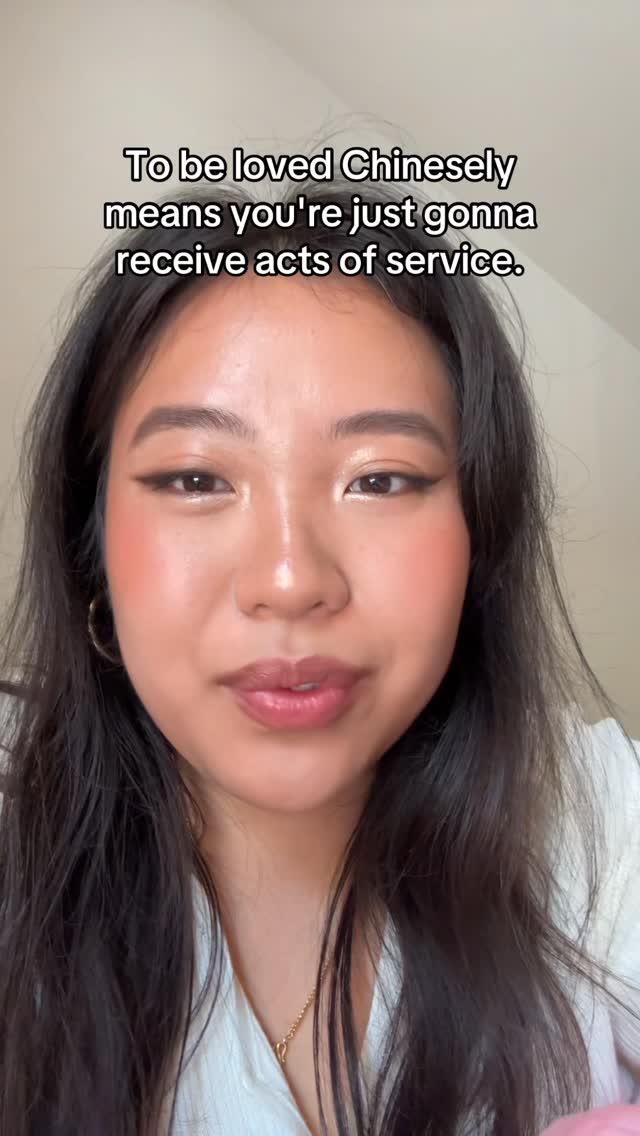
The creator poses a historical question about why China did not produce scientific figures like Newton or Einstein, despite its long history. She then breaks down the differing educational philosophies of the East and West by comparing Confucius, who emphasized the transmission of wisdom and respect for authority, with Socrates, who championed questioning and the interrogation of truth. The video uses a mix of direct address, B-roll from her travels in China, and graphic overlays to illustrate these contrasting cultural foundations.
Post caption
Follow @imyoyoyue for more cultural stories with warmth ❤️🌎🇨🇳
✈️ EP 17 | Education: China vs. the West | Between Two Worlds
The difference between Eastern and Western education is something I experienced firsthand.
I went to public school in China 🇨🇳 and later private school in the U.S. 🇺🇸 — and the culture shock was real.
In China, I was a top student.
When I came to the U.S., I was still doing well in STEM 📐
But I struggled so much in ESL and humanities 📚
I was having such a hard time adjusting to the fact that there were no “right answers.” 🤯
In China, even literature often has standard interpretations. Learning is structured, clear, and built on mastery and memorization.
But in the U.S., many things was open-ended.
Two systems.
Two ways of thinking.
Which style do you prefer — Socrates or Confucius? And why? 👇
See you in the next episode ✨
#chinalife #education #culturalanalysis #confucius #socrates
Transcript
Why did the Best produce Newton and Einstein, while China, with five thousand years of civilization, rarely produced figures who revolutionized science in the same way? This isn't totally a coincidence, and the reason behind it is not what most people think. Welcome back to Better Two Worlds. If you're trying to understand China beyond the headlines, or you live between cultures like I do, this series is for you. Around the fifth century BCE, two great teachers emerged. In the West, Socrates. In the East, Confucius. Both are remembered as foundational educators, but their teaching philosophies could not have been more different. Confucius believed in moral cultivation, hierarchy, social harmony. If you open the Analect, see it everywhere. The better said, knowledge flows downward. In Confucius tradition, the teacher represents authority, not because of ego, but because of moral responsibility. Confucius' favorite student was Liang Hui, who is humble, disciplined, and receptive. Not rebellious, not argumentative at all. Whenever Confucius says something, will copy tier sentence down repeatedly, sometimes hundreds of tier, to internalize it. In this model, education preserves order. It maintains civilization. And to be fair, this system built one of the most stable bureaucratic civilizations in human history for over two thousand years. Now better look at Socrates. He famously said, I know that I know nothing. Imagine a teacher publicly declaring his own ignorance. In many traditional Eastern cultures, that would be shocking. Socrates didn't give