@sensei.nick
Instagram · Yap
@sensei.nick Everybody wants the benefits of a high trust society. Few people want the obligations that create one.

@sensei.nick
Instagram · Yap
@sensei.nick Everybody wants the benefits of a high trust society. Few people want the obligations that create one.
Performance
Video #33537 · Yap
[01]
The speaker presents a philosophical argument about why people admire Japanese society. He begins by recounting an anecdote about a Japanese cashier's extreme kindness to a tourist, then pivots to his main thesis: people desire the benefits of a high-trust society (politeness, safety) but are unwilling to undertake the personal sacrifices and responsibilities required to create one. He uses analogies about fitness, wealth, and relationships to argue that positive outcomes are the result of collective effort and that what people truly admire in Japan is the culture of reciprocity.
[02]
[03]
 163.3K7.8×Philosophical travel vlog about identity@j.g.fall · Vulnerable Monologue
 71K4.8×Business advice over aesthetic B-roll@theryanexperience · Anecdotal Philosophy
 521.5K6.4×American vs Chinese emotional rules@imyoyoyue · Cultural Rant
 131.5K5×Podcast clip about respecting boundaries@reikoslivingroom · Cultural Rant
 115.9K5.1×Philosophical theory with modern examples@var.aunevik · Breakdown
 104.9K1.5×Cultural observation through personal anecdote@morganhoong · Cultural Rant
 893.9K9.5×Explaining value of unprompted affection@nycdivorcelawyer · Anecdotal Philosophy
 341K8×Explaining why human nature matters@kolbykirschner · Opportunity Explainer
 2.7M5.1×Philosophical monologue on modern gratitude@thediaryofaceopodcast · Anecdotal Philosophy
 63.3KCar monologue on friendship philosophy@higherupwellness · Vulnerable Monologue
 638.4K19.9×Controversial monologue on race relations@womp_tomp · Hot Take
 133.5KSpeaker explains workplace culture principle@entreleadership · Motivational Mantra
[04]
[05]
What stops the scroll in the first 3 seconds
Title hook · 65%
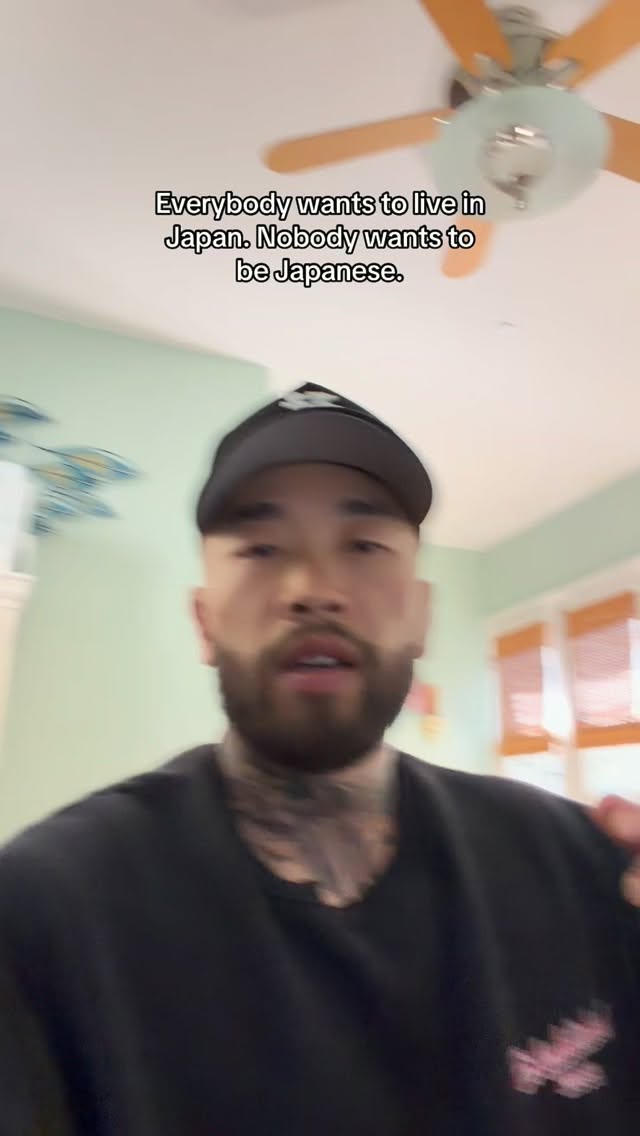
Everybody wants to live in Japan. Nobody wants to be Japanese.
Verbal hook · 35%
I think I figured out why everyone loves Japan, and it's not because Japanese people are nicer than everyone else.
Visual hook
A medium close-up shot of the speaker addressing the camera directly, creating a personal and conversational feel.
[06]
Steal this for your own video
Everybody wants . Nobody wants to .
[07]
The promise the opener makes, and how the video pays it back
Hook
Present a 'Want vs. Be' paradox. State that everyone desires the positive outcome associated with a group/place/concept, but no one wants to embody the traits required to produce that outcome.
Payoff
The Conceptual Upgrade. Conclude by giving the admired quality a new, more accurate, and profound name. Reframe it from a simple trait (e.g., 'kindness') to a systemic principle (e.g., 'reciprocity,' 'social contract'), providing the audience with a sophisticated takeaway.
[08]
The structural pattern this video runs on
Framework
The Reciprocity Principle
Deconstructing a widely admired outcome to reveal the unglamorous, collective responsibility required to create it. The argument is that people desire the result but shirk the necessary personal contribution.
The Exemplar Story
Provide a short, compelling anecdote that perfectly illustrates the admired outcome, grounding the abstract hook in a concrete example.
The Personal Anchor
Briefly validate the anecdote with personal experience to build credibility and rapport with the audience.
The Internal Pivot
Shift the focus from the external event to an internal realization about it. Frame this as the true, deeper insight, creating anticipation for the core thesis.
The Core Dichotomy
State the central thesis clearly: People want the benefits of a system but are unwilling to accept the obligations that create it.
The Reciprocity Challenge
Turn the thesis into a direct challenge to the viewer, stating that to receive the benefit, one must also become a contributor to the system.
The Sacrifice Equation
Reframe the 'obligation' not as a massive burden, but as the sum of small, consistent, selfless actions performed by many.
The Analogical Reinforcement
Use a rapid-fire sequence of 2-3 parallel analogies from different life domains (e.g., health, finance, relationships) to make the abstract principle feel universally true and easy to grasp.
Everybody wants the benefits of a high trust society. Few people want the obligations that create one.
title · throughout
Everybody wants to live in Japan. Nobody wants to be Japanese.
I think I figured out why everyone loves Japan, and it's not because Japanese people are nicer than everyone else. I came across a video from someone visiting Japan recently, and essentially, it was their last night there, and they went into a family march looking for their favorite ice cream. The store was sold out. And apparently, the cashier literally walked them to another store to help them find it, which doesn't surprise me. I just got back from Japan myself, and that level of kindness was everywhere. But the thing that stood out to me the most was not the video, It was my reaction to it. Because I realized something. Everybody wants to experience a society like that, but very few people want to contribute to creating one. Because if you want a society where strangers go out of their way to help you, you also have to become this stranger who goes out of their way to help other people. And I don't think people quite grasp this concept. Right? Everyone wants the clean streets, the low crime, the politeness, the respect, and the amazing customer service, but those things don't just magically appear. They are the results of millions of people making tiny sacrifices every single day, putting others first and thinking beyond themselves. So acting with consideration when no one's watching. And this this applies to much more than just Japan. So everyone wants the outcome, and very few people worst the responsibility required to create it. Right? Everyone wants the physique, but nobody wants the diet. Everyone wants the money, but no one wants the rank. And everyone wants a relationship, but no one wants the vulnerability. And I think that's what people are actually admiring when they visit Japan. It is not the kindness of the people. It is reciprocity. So a culture where enough people participate in the social contract that everybody gets to enjoy the benefits. Because culture isn't what people say they value. Culture is the behavior people repeat every single day, especially when no one's watching.