Viral Hooks
Trending short videosCase study on a brand's downfall
T

@the.ryanexperience

Instagram · Greenscreen Talking Head

@the.ryanexperience When corporations, shareholders get involved in hospitality, it typically doesn’t end well. It misses what the soul of hospitality is about. This is a case study on W Hotels, and what the industry can learn from it, specifically from the angle of guest experience, world building. Also shoutout to my turtleneck for being a paid actor and not cooperating. #hospitality #brand #hotels #hotel #bars

View original on Instagram

The edit1 shot · 8 text
Shots Text

Performance

Views
223.8K
Likes
5.8K
Comments
208
Engagement
2.7%
Outlier
35×

Video #16382 · Greenscreen Talking Head

Case study on a brand's downfallfrom @the.ryanexperience

[01]

Overview

The creator presents a historical case study on the W Hotels brand, starting with its innovative launch in the 1990s as a 'cool' disruptor to the bland hotel industry. He explains the brand's initial success in capturing the boutique hotel vibe with corporate backing, then details its decline due to aggressive scaling by Marriott, which diluted its core identity. The creator critiques specific failures in customer experience, such as poor lighting and inconsistent service, ultimately concluding that the attempt to mass-produce 'cool' led to an inauthentic brand that lost its target audience.

[02]

Simple outline

  1. 1Pose a brand mystery
  2. 2Detail the brand's rise
  3. 3Reveal the fatal flaw
  4. 4Show evidence of decline
  5. 5Deliver the final verdict

[03]

Related videos

[04]

Classification

Concepts
Case Study BreakdownOrigin StoryBreakdown
Elements
Picture-in-PictureB-Roll CutawayText Overlay

[05]

Hook analysis

What stops the scroll in the first 3 seconds

Title hook · 30%

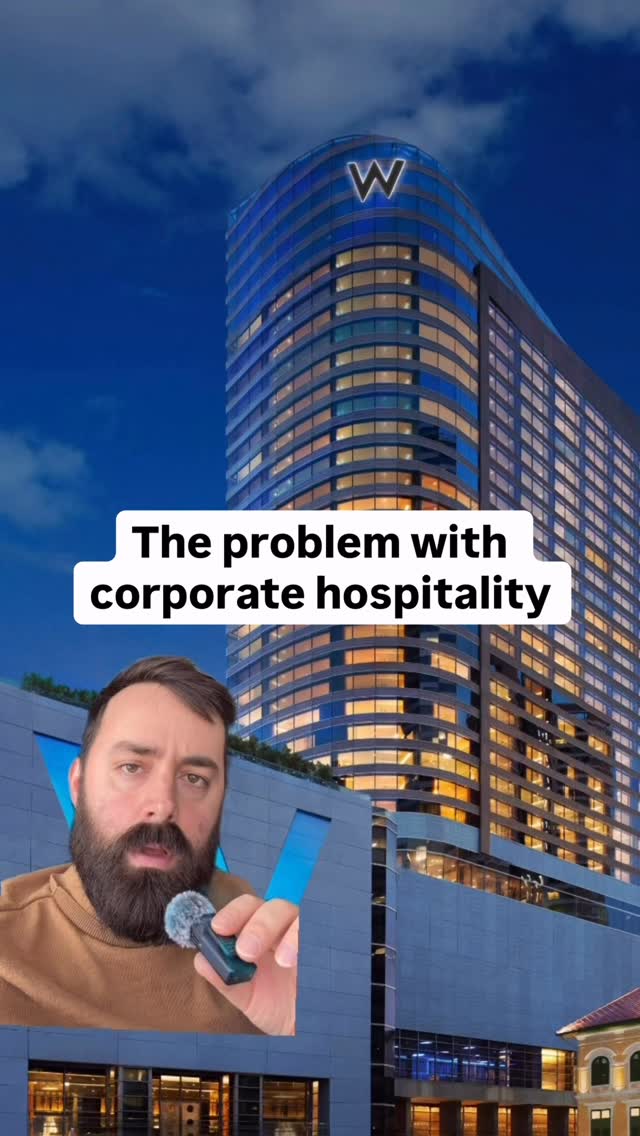
The problem with corporate hospitality

Verbal hook · 65%

This used to be one of the coolest hotel brands on Earth. So what the hell happened?

Visual hook · 5%

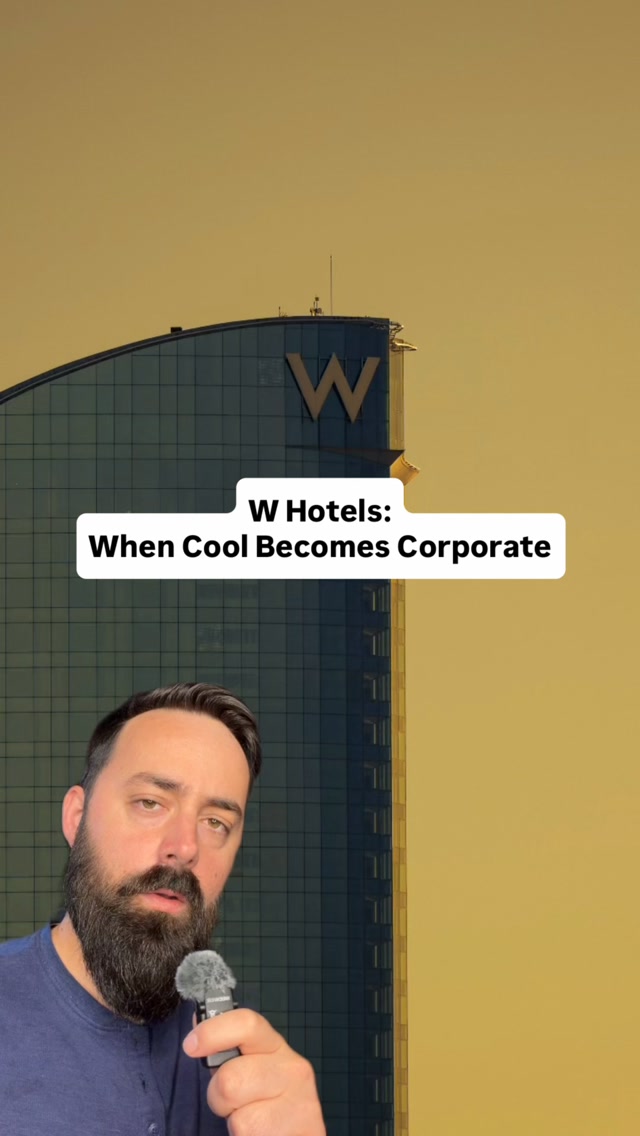
A speaker is overlaid in a picture-in-picture box in front of a sleek, modern hotel building at dusk, creating a contrast between a personal analysis and a large corporate subject.

[06]

Hook template

Steal this for your own video

This used to be one of the [most admired brands] in [industry]. So what the hell happened?

  • — This used to be one of the most admired brands in fashion. So what the hell happened?
  • — This used to be one of the most admired brands in streaming. So what the hell happened?
  • — This used to be one of the most admired brands in fast food. So what the hell happened?

[07]

Hook and payoff

The promise the opener makes, and how the video pays it back

Hook

Pose a provocative question about a once-dominant entity, creating an immediate mystery and promising a revelatory explanation for its decline.

Payoff

Provide intellectual satisfaction by delivering a clear, well-supported thesis that solves the initial mystery, reframing the viewer's understanding of a familiar subject and offering a cautionary tale.

[08]

Narrative framework

The structural pattern this video runs on

Framework

The Innovator's Downfall

A case-study narrative that chronicles the rise and fall of a disruptive brand, attributing its decline to a core philosophical conflict between its original identity and the pressures of corporate scaling.

  1. 1

    The Stagnant Old Guard

    Establish the context by describing the uninspired and homogenous landscape that the subject was born into, creating a clear problem that needed a solution.

  2. 2

    The Disruptor's Vision

    Introduce the innovator and their radical new concept, clearly defining their unique value proposition and how it challenged the status quo.

  3. 3

    The Golden Age

    Showcase the peak of the brand's success, highlighting its cultural impact and establishing it as a beloved and influential force.

  4. 4

    The Scalability Paradox

    Introduce the central conflict and turning point: the inherent contradiction in the brand's strategy (e.g., trying to mass-produce something that is inherently scarce or exclusive).

  5. 5

    The Experiential Cracks

    Provide concrete, relatable examples of how the user experience began to degrade, offering tangible proof of the central conflict's negative effects.

  6. 6

    The Broken Promise

    Focus on a core brand promise and demonstrate how corporate pressures or strategic shifts led to its systemic failure, creating a powerful sense of betrayal.

  7. 7

    The Corporate Autopsy

    Deliver the final diagnosis, explicitly stating the cause of the brand's fall and summarizing the core lesson learned from its failure.

  8. 8

    The Uncertain Future

    Conclude by examining the brand's current state and its attempts to recover, while reiterating the fundamental challenge it still faces, leaving the audience with a final, thought-provoking takeaway.

Themes

  • Corporate Dilution
  • Brand Authenticity
  • Customer Experience

Techniques

  • Picture-in-Picture
  • Historical Analysis
  • Case Study

Trends

  • Brand Teardown

Post caption

When corporations, shareholders get involved in hospitality, it typically doesn’t end well. It misses what the soul of hospitality is about. This is a case study on W Hotels, and what the industry can learn from it, specifically from the angle of guest experience, world building. Also shoutout to my turtleneck for being a paid actor and not cooperating. #hospitality #brand #hotels #hotel #bars

Text overlays

  • title · beginning

    The problem with corporate hospitality

  • title · beginning

    So what the hell happened

  • informational · beginning

    In nineteen ninety-eight the hospitality industry was a monolith of beige

  • informational · middle

    W Hotels was the first brand to industrialize lifestyle hotels

  • informational · middle

    Cool by definition is a scares resource

  • informational · middle

    They tried to mass produce something that defies mass production

  • informational · end

    W hotels prioritize vibe over visibility and form over function

  • informational · end

    A brand can be cool or corporate It's hard to be both

Transcript

This used to be one of the coolest hotel brands on Earth. So what the hell happened? In 1998, the hospitality industry was a monolith of beige. Brands like the Marriott, Sheridan, and the Hilton were very predictable. Luxury at the time was defined by a very stifling aesthetic. Heavy drapes, hushed voices, and zero pulse. The customer journey was frictionless, sure, but it was devoid of any emotional resonance. In other words, it was boring. Then came this man, Barry Sternlicht. He launched the first ever w hotels in New York on Lexington Avenue. The intent was radical. He wanted to capture the social cache, the aesthetic, and the energy of independent boutique hotels, but he wanted to back it with the distribution power and loyalty programs of a global corporation. W Hotels was the first brand to industrialize lifestyle hotels. They didn't just offer a room. They offered membership into the cultural zeitgeist. For a decade at work, w Hotels was the choice hotel for the young, the aspiring. However, the seeds of what I call hospitality hell were already planted in its very scalability. Cool by definition is a scarce resource. It relies on exclusivity, novelty, and the thrill of being avant garde. Starwood and later Marriott aggressively scaled to over 50 locations. They tried to mass produce something that defies mass production. By the mid twenty tens, the disruptor had become the establishment. From a customer experience perspective, one of their most visceral failures was their reliance on darkness. Guests would often describe the rooms as cave like and impossible to read or locate anything. W Hotels prioritize vibe over visibility and form over function. And let's not even talk about the bathrooms with no privacy. And then there's the service. The most audacious element of the w Hotels brand was tier whenever, whatever service policy. In theory, it meant that their staff could fulfill any legal request. But as the brand merged with the operational machinery of Marriott, that promise was met with the realities of corporate efficiency. But best reported routine failures in basic service requests. Requests for ice, maintenance, or housekeeping were often ignored multiple times. And as we know, a broken promise is far more damaging than a modest promise kept. Ultimately, w Hotels is another case study in destruction by corporatism. A brand can be cool or corporate. It's hard to be both. W hotels try to scale cool, and in doing no, manufactured a guest experience that felt inauthentic. The world felt fake and confusing to the market, and their core demographic grew up and moved on. Now they're pouring in millions to fix the mistakes of the past. But if we've learned anything about Marriott, it's that operational efficiency often trumps the nuances of experience. W Hotels isn't dead. It's just been in a coma the past decade. But renovations aren't enough. The customer journey has to evolve. They have to understand the new generation of luxury buyers. And if they don't, they'll just be another case study in a fallen brand due to corporatism.

Case study on a brand's downfall | Viral Hooks