The creator provides a historical case study of the W Hotels brand, explaining its initial success as a culturally relevant alternative to traditional business hotels. He details how the brand's focus on design, nightlife, and atmosphere created a premium experience. The creator then analyzes the brand's decline, attributing it to a failure to evolve with cultural trends, an aging demographic, and challenges following its acquisition by Marriott, which diluted its unique identity. He critiques the current 'luxury lifestyle' positioning and argues that despite a planned design refresh, the core problems of inconsistent service and experience remain, concluding with a call for the brand to return to its original, meaningful promise.
Post caption
W Hotels used to be cool. Then, due partially to their ideal demographic aging out, and promises starting to falter, they became uncool, corporatized and lost.
Will the rebrand and refresh change the direction of W Hotels?
Only time will tell but I hope so.
#hospitality #hotels #hotel #whotel
Transcript
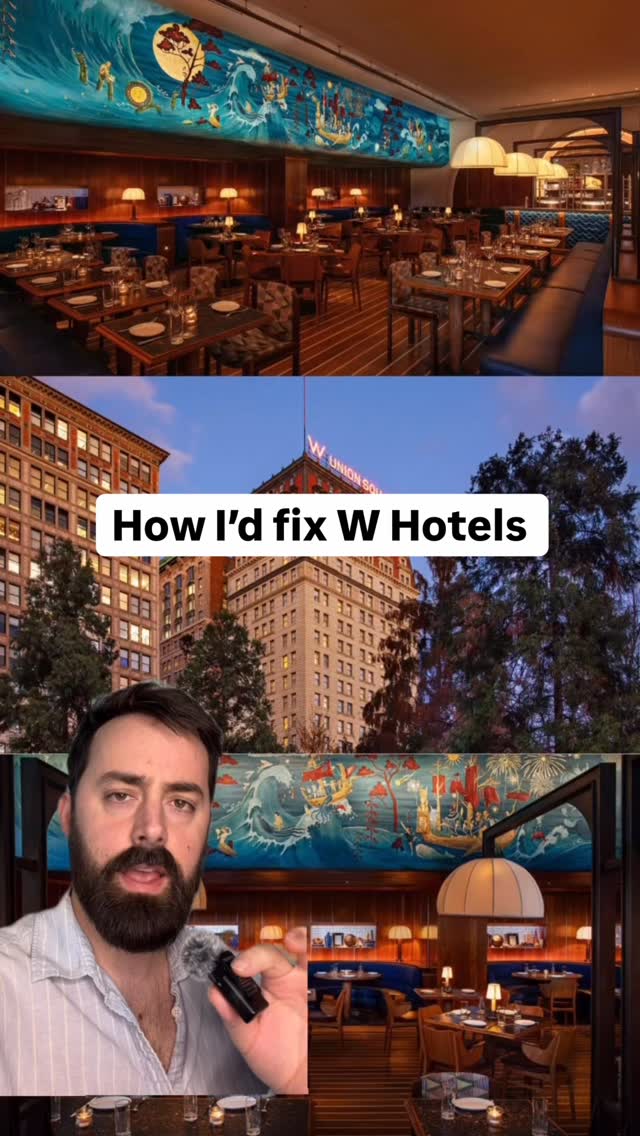
What happened to w Hotels? When w Hotels launched in New York in 1998, it offered a compelling alternative to the conventional business hotel. You could travel for work, but you still felt like you were somewhere with personality. Rank had soul, spirit, the music design, and nightlife were central to the experience. W understood something that few hotels understood at the time, that a hotel can be a cultural center. A hotel can say something about yourself, your identity, your taste. People were bored of beige hotels at the time, so they were willing to pay this identity premium where they bought a room, but what they were actually paying for is the environment, the atmosphere, and the experience. The challenge is that a brand built around staying culturally relevant has to keep earning the trust of their guests. And what felt exciting in 1998 doesn't automatically feel exciting twelve, twenty years later. And as the lifestyle category expanded and their best aged out, the category became kind of kitschy. Having good design was not enough anymore. The distinction between hotels had to come from how everything worked better. How the atmosphere, the room, the service, the food and drinks connected to the city outside, and whether or not you actually met the brand promises that you advertised. And then Marriott's acquisition of Starwood in 2016 presented another challenge. The w joined a portfolio already featuring Edition Hotel, though it needed a clear reason to exist alongside its corporate siblings. This doesn't mean that Marriott neglected w Hotels, but it makes the positioning question unavoidable. What does this brand actually stand for, or what should a guest expect? W Hotels brands themselves as luxury lifestyle, which really doesn't mean anything. It's just luxury pricing without luxury service. And, yes, I know that Marriott is currently refreshing w Hotels, planning to have over 80% of the portfolio done by 2028. But design was never the problem. It was the service and the experience. And even if people say they don't care about the service and experience, that only holds true until something happens where they need good service. I went to a newly renovated w hotels in Florence, and the design was tacky as ever and the experience itself was a complete yes. And their website is full of corpo slop with the word curated everywhere, which doesn't mean anything. It's just an easy way to avoid being specific. You have to define an experience worth protecting rank then make sure that staffing, training, maintenance, and programming can deliver it consistently. Every property can have its own character, but it has to have a dependable level of care. Anyways, I know this brand refresh does include service and anticipatory service, so my only hope is that they fulfill those promises and they go back to their roots because the whatever whenever promise actually used to mean something. So as usual, let me know where I'm right or brutally wrong in the comments.