Viral Hooks
Trending short videosBusiness history explainer video
T

@the.ryanexperience

Instagram · Greenscreen Talking Head

@the.ryanexperience Trying a new series. In part one today, I cover the origin of Fairmont Hotels, but more importantly — world building in hospitality as a fundamental principle of world class customer experiences, and luxury. #hospitality #brand #hotels #hotel #fairmonthotels

View original on Instagram

The edit1 shot · 6 text
Shots Text

Performance

Views
306.2K
Likes
12.8K
Comments
124
Engagement
4.2%
Outlier
8×

Video #14586 · Greenscreen Talking Head

Business history explainer videofrom @the.ryanexperience

[01]

Overview

The creator tells the origin story of Fairmont Hotels, focusing on the founder, William Van Horn. He explains how Van Horn, chairman of the Canadian Pacific Railway, broke from the traditional model of building hotels in cities and instead created 'destination hospitality' by building luxury 'fortresses' in the remote Canadian wilderness to attract wealthy tourists, effectively creating demand where none existed through a concept the creator calls 'luxury world building.' The video concludes by teasing a part two about the brand's downfall.

[02]

Simple outline

  1. 1Make a bold, transformative claim
  2. 2Establish the conventional wisdom
  3. 3Reveal the paradigm-shifting insight
  4. 4Codify the lesson learned
  5. 5Tease the story's next chapter

[03]

Related videos

[04]

Classification

Concepts
Origin StoryBreakdown
Elements
B-Roll CutawayPicture-in-PictureFollow / Subscribe CTAText Overlay

[05]

Hook analysis

What stops the scroll in the first 3 seconds

Title hook · 35%

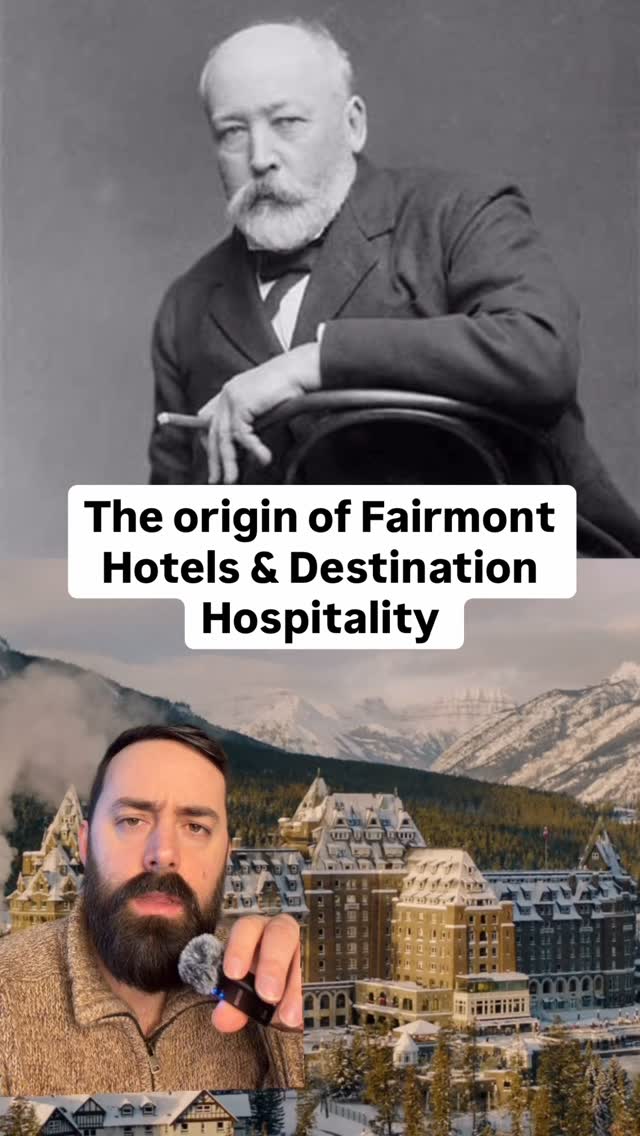
The origin of Fairmont Hotels & Destination Hospitality

Verbal hook · 40%

This man built a luxury hotel empire and changed hospitality forever.

Visual hook · 25%

A split-screen composition featuring a stark, black-and-white historical portrait of a man on top, and a vibrant, modern color shot of a grand, castle-like hotel in a snowy mountain landscape on the bottom.

[07]

Hook and payoff

The promise the opener makes, and how the video pays it back

Hook

A high-stakes declaration about a single figure or entity who fundamentally changed an entire field, creating immediate intrigue about their identity and methods.

Payoff

A cliffhanger that resolves the current narrative arc (the rise) while creating strong anticipation for the next installment (the fall), explicitly encouraging a follow or return visit.

[08]

Narrative framework

The structural pattern this video runs on

Framework

The Historical Innovator's Playbook

Deconstruct a historical innovation by establishing a conventional rule, presenting the innovator's unique problem, revealing their counterintuitive solution, and framing it as a replicable 'playbook' for modern times.

  1. 1

    The Old Playbook

    Clearly define the established norm or 'the way things were always done' in a specific industry. This sets a baseline for the disruption to come.

  2. 2

    The Innovator's Constraint

    Introduce the protagonist and the unique problem or constraint they faced that made the 'Old Playbook' unworkable for them, establishing the central conflict.

  3. 3

    The Counterintuitive Reframe

    Detail the 'aha!' moment where the innovator reframes their constraint not as a weakness, but as their greatest asset, leading to a completely new strategy. This is often summarized with a memorable quote.

  4. 4

    The World-Building Execution

    Provide concrete examples of how the new strategy was implemented, focusing on details that show the creation of a complete, immersive experience or 'world' for the customer.

  5. 5

    The Universal Principle

    Abstract the specific story into a broad, timeless lesson or 'blueprint' that explains the innovator's lasting impact and can be applied elsewhere, giving the viewer a valuable takeaway.

Themes

  • Innovation
  • Entrepreneurship
  • Business Strategy
  • History
  • World Building

Techniques

  • Historical narrative
  • B-roll integration
  • Picture-in-picture

Trends

  • Educational Content
  • Business Case Study

Post caption

Trying a new series. In part one today, I cover the origin of Fairmont Hotels, but more importantly — world building in hospitality as a fundamental principle of world class customer experiences, and luxury. #hospitality #brand #hotels #hotel #fairmonthotels

Text overlays

  • title · beginning

    The origin of Fairmont Hotels & Destination Hospitality

  • contextual · beginning

    William Van Horn

  • informational · middle

    His famous line was if we can't export the scenery let's import the tourists.

  • informational · middle

    Van Horn was one of the original pioneers of world building.

  • informational · end

    His playbook became the blueprint for modern hospitality.

  • call-to-action · end

    In part two tomorrow I'm gonna talk about the downfall of Fairmont Hotel and

Transcript

This man built a luxury hotel empire and changed hospitality forever. In the nineteenth century, hospitality followed a simple playbook. Build hotels in large population better, cities like New York, Paris, and London. William Van Horn, chairman of the Canadian Pacific Railway, broke that rule completely. At the time, the Canadian Pacific Railway had hundreds of kilometers of track running through uninhabited land. Van Horn realized that his most precious asset wasn't the railway, it was the uninhabited wilderness. His famous line was, if we can't export the scenery, let's import the tourists. There was no precedent for convincing wealthy Americans and Europeans to travel into the cold, the wilderness for pleasure. So he decided to build fortresses in the mountains, a place where wealthy guests could stare at these savage mountains through the comfort of the fortress. These buildings were designed to dominate their environment, not to fit in with it. Chateau style architecture, local stone, turrets, it felt permanent. Van Horne was one of the original pioneers of world building. To complete the castle in the mountain world, he brought in Swiss mountain guides. They wore traditional mountaineering clothing and taught the guests how to explore mountain trails safely. He even built the guides a Swiss style village they could live in. Ultimately, what Van Horne proved is that you can create demand through luxury world building. He proved that hospitality can be a demand creation machine, not just a demand servicing one. His playbook became the blueprint for modern hospitality. He showed that if you can create a world, a controllable sanctuary inside of a chaotic environment, that people will come. He didn't invent destination hotels necessarily, but he did industrialize destination hospitality. In part two tomorrow, I'm gonna talk about the downfall of Fairmont Hotels and what went wrong.

Business history explainer video | Viral Hooks