Viral Hooks
Trending short videosPhilosophical breakdown of personal taste
C

@curatingambiance

TikTok · Split screen

@curatingambiance Ep. V of the Taste File - the Art of Rejection Most of what you think you chose, you didn't. And that's the problem - there's no point of view without rejection. This one's about the difference between liking something and actually choosing it, and why saying no is the hardest part of having taste. Also read more on Substack!! link in bio #taste #curatingambiance

View original on TikTok

The edit1 shot · 6 text
Shots Text1:48

Performance

Views
209.7K
Likes
27.4K
Comments
45
Engagement
13.1%
Outlier
2.2×
Length · 26 Jun 2026
1:48

Video #34688 · Split screen

Philosophical breakdown of personal tastefrom @curatingambiance

[01]

Overview

The creator presents a philosophical essay on the nature of 'taste,' arguing it's defined not by what one likes, but by what one actively chooses and rejects. She differentiates passive 'liking' from active 'choosing,' explains how social pressures erode authentic taste, and provides a three-step guide to rebuilding it. The video concludes by connecting this personal concept to the technological challenge of building taste into AI and questions if individuality can be made scalable.

[02]

Simple outline

  1. 1State contrarian thesis
  2. 2Define core dichotomy
  3. 3Provide actionable framework
  4. 4Escalate stakes globally

[03]

Related videos

[04]

Classification

Concepts
Breakdown
Elements
Picture-in-PictureMontage EditingText OverlaySeries Title Card

[05]

Hook analysis

What stops the scroll in the first 3 seconds

Title hook · 45%

the thing that separates

Verbal hook · 50%

The thing that separates people with real taste from everyone else has nothing to do with what they like.

Visual hook · 5%

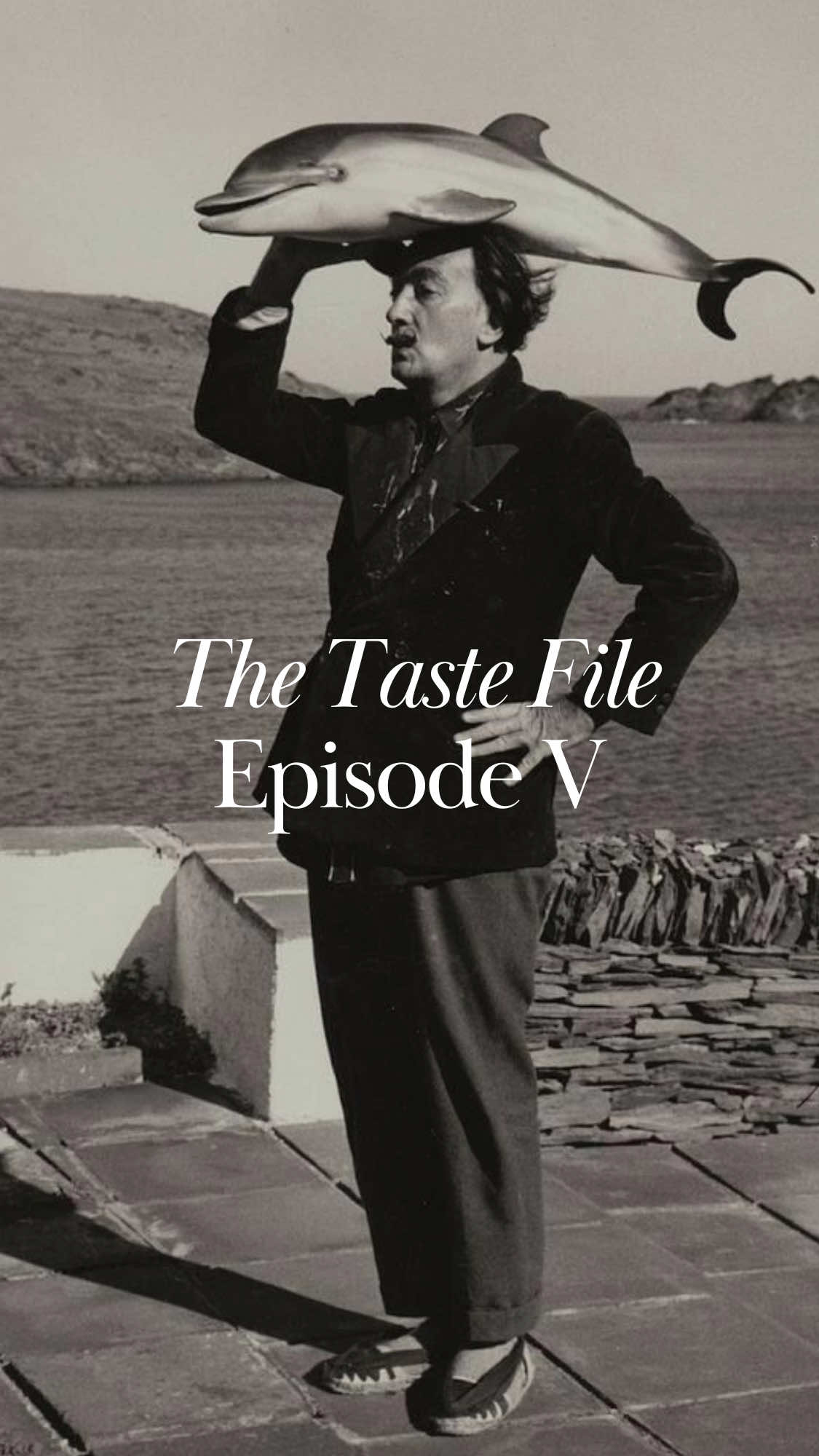
A four-panel grid of visually distinct and intriguing images: the Eye of Providence, Anthony Bourdain, the creator, and a surrealist photo of a man with a shoe for a head.

[06]

Hook template

Steal this for your own video

The thing that separates [people with desired identity] from everyone else has nothing to do with [what audience assumes is the reason].

  • — The thing that separates great investors from everyone else has nothing to do with how much money they started with.
  • — The thing that separates elite athletes from everyone else has nothing to do with how talented they are.
  • — The thing that separates truly happy people from everyone else has nothing to do with how good their life looks.

[07]

Hook and payoff

The promise the opener makes, and how the video pays it back

Hook

A bold, counter-intuitive statement that challenges a universal assumption about the topic, creating an immediate knowledge gap and compelling the viewer to learn the 'real' answer.

Payoff

Poses a final, profound, and unresolved question that elevates the discourse, followed by a direct content funnel that hooks the viewer for future content and off-platform resources.

[08]

Narrative framework

The structural pattern this video runs on

Framework

The Intellectual Thesis Unpacked

A narrative structure that deconstructs a commonly held belief by introducing a contrarian thesis, breaking it down into a core dichotomy, explaining the psychological barriers to adopting the new perspective, and then providing an actionable framework to overcome them, before finally escalating the stakes to show broader relevance.

  1. 1

    The Context Bridge

    Briefly recaps a foundational concept from previous content, grounding new viewers and rewarding returning ones, while setting the stage for the new argument.

  2. 2

    The Problem Introduction

    Introduces a flaw or limitation in the previously established concept, creating the central tension that the rest of the video will resolve.

  3. 3

    The Core Dichotomy

    Establishes a simple, memorable binary (e.g., passive vs. active, liking vs. choosing) that reframes the entire topic and serves as the main analytical tool for the argument.

  4. 4

    The Redefinition of the Subject

    Uses the new dichotomy to offer a new, more profound definition of the core subject, positioning the negative or difficult side of the binary as the true source of value.

  5. 5

    The Psychological Barrier

    Explains the common social or psychological reasons why people fail to adopt this more profound understanding, creating a moment of high relatability and validating the viewer's own struggles.

  6. 6

    The Consequence & Pivot to Solution

    Articulates the negative outcome of succumbing to the psychological barrier, then explicitly transitions from problem analysis to a practical solution, often signaled by a question like 'So how do you fix it?'

  7. 7

    The Prescriptive Framework

    Delivers the solution in a clear, numbered list of actionable steps. This provides tangible value and makes the abstract philosophy feel practical and applicable.

  8. 8

    The Synthesis & Empowerment

    Summarizes the framework's purpose, connecting it back to the core thesis and reframing the difficult action (e.g., rejection) as a sophisticated and empowering skill (e.g., discernment).

  9. 9

    The Escalation of Stakes

    Broadens the topic's relevance from the personal to the societal, technological, or cultural level, making the argument feel more important and urgent.

Themes

  • Authenticity
  • Individuality
  • Social Pressure
  • Discernment
  • Consumerism

Techniques

  • Visual essay
  • Philosophical argument
  • Montage

Trends

  • Video essay
  • Creator education

Post caption

Ep. V of the Taste File - the Art of Rejection Most of what you think you chose, you didn't. And that's the problem - there's no point of view without rejection. This one's about the difference between liking something and actually choosing it, and why saying no is the hardest part of having taste. Also read more on Substack!! link in bio #taste #curatingambiance

Text overlays

  • title · beginning

    The Taste File Ep. V

  • informational · middle

    everything you excluded in that process is where taste actually lives

  • informational · end

    rejection with knowledge is discernment

  • informational · end

    can individuality be made scalable?

  • title · end

    Your Taste Isn't Yours (Yet)

  • branding · end

    CHIEFTASTEOFFICER.SUBSTACK.COM

Transcript

Thing that separates people with real best from everyone else has nothing to do with what they like. This is part five of the taste file. Last episode we talked about building your reference library, absorbing as much as possible across domains, so your combinations are actually unique. But there's a problem with absorption. At some point you have to stop collecting and start deciding. Most people don't like taste. They lack the willingness to commit to it because there's a difference between liking something and choosing it. Liking is passive. It requires nothing from you. You can like a 100 things in a single scroll session and it costs you nothing. Choosing means you waited against something else and decided this one. Everything you excluded in that process is where taste actually lives. Here's what makes this hard. A lot of what we think we chose is actually absorbed from our environment, our circles, our feeds. And socially, rejection doesn't just feel rude. Taste is a way to signal belonging. So good choices no match the group, not necessarily because you agree, but because fitting in feels safer than standing apart. Over time, those small adjustments erode your better, so you can't tell the difference between what you chose and what you just accepted. So how do you rebuild it? Three things. First, pay attention to what irritates you. The brand everyone loves that leaves you cold. Aesthetic that looks right better feels wrong to you. Those reactions are data. Most people dismiss that as being picky. I think it's the first sign of a point of view. Second, ask yourself, would I choose this if no one else could see it? That question strips away the social social performance, gets you closer to an honest preference. And third, connect it back to your reference library. The deeper your reference is, the more precisely you can articulate what doesn't work and why. Rejection without that foundation is just reactivity. Rejection with knowledge is discernment. Once you know what you don't want, really know it in your gut, everything gets easier. Not because you added more, but because you started subtracting. And this better beyond the personal. Companies are now raising serious money trying to build taste into AI. Most of them are averaging what a panel of experts think is good, and consensus is the opposite of a point of view. So the question becomes, can individuality be made scalable? Nobody has fully answered that yes, but whoever does will have built something important. Best episode is on why the same piece can look like a masterpiece or a mistake and what decides which. Find a deeper dive on my substack. See you next time.

Philosophical breakdown of personal taste | Viral Hooks