@mike_sunday
Instagram · Talking Head Edit
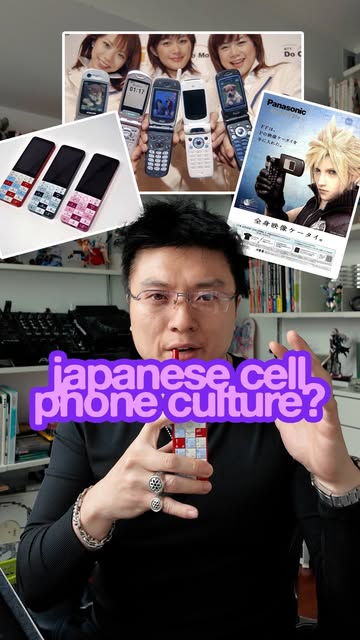
@mike_sunday THE WORLD OF JAPANESE CELL PHONES WERE SOMETHING I ADMIRED THROUGH ALL TYPES OF MEDIA I CONSUMED IN THE EARLY 00s 📞🤳 AND SRE EVEN SEEING A RESURGENCE IN POPULARITY • WOULD YOU USE GARAKEI?

@mike_sunday
Instagram · Talking Head Edit
@mike_sunday THE WORLD OF JAPANESE CELL PHONES WERE SOMETHING I ADMIRED THROUGH ALL TYPES OF MEDIA I CONSUMED IN THE EARLY 00s 📞🤳 AND SRE EVEN SEEING A RESURGENCE IN POPULARITY • WOULD YOU USE GARAKEI?
Performance
Video #35011 · Talking Head Edit
[01]
The creator explains the history and cultural significance of pre-smartphone Japanese cell phones, known as "Garakei." He details their advanced features for the era, their role as a tool for self-expression through customization and charms, and their prevalence in Japanese media. He contrasts this period of diverse phone styles with the modern, homogenized smartphone landscape, expresses nostalgia for the era, and concludes by asking the audience if they would use a Japanese flip phone.
[02]
[03]
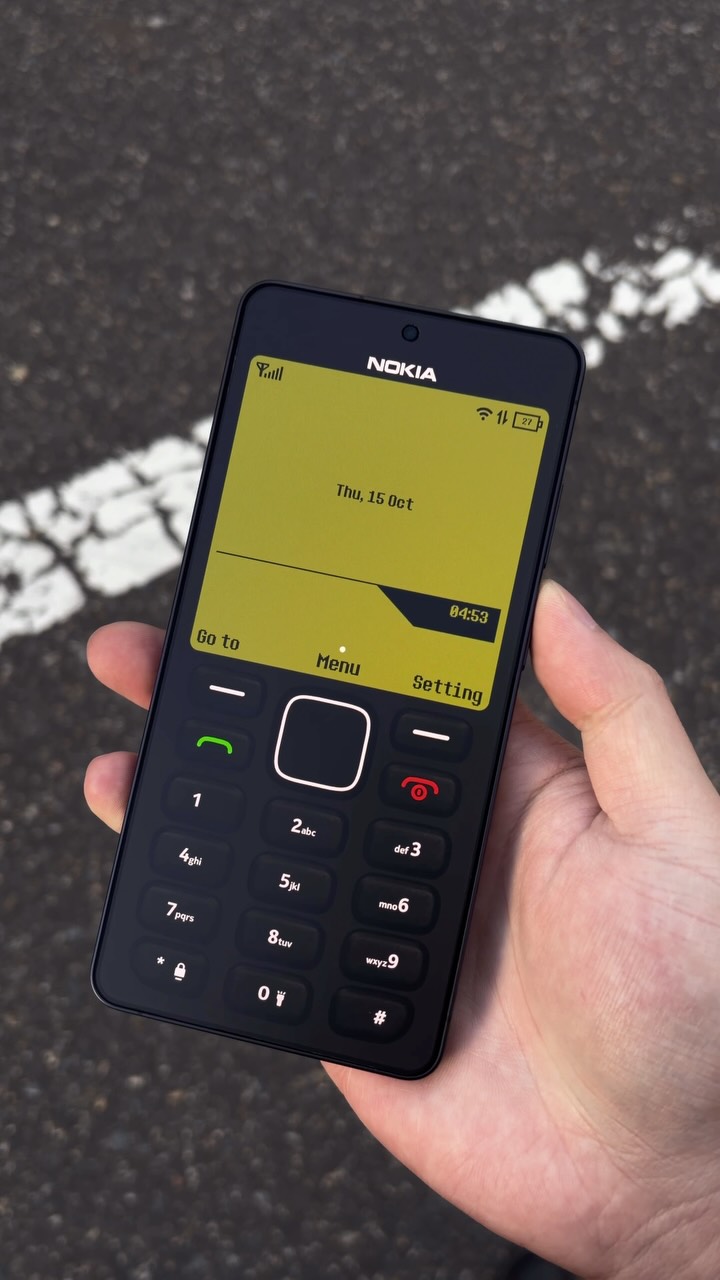 527.8KRetro phone skin on modern smartphone@itheme_design · Showcase
 1.3M13.9×Creator explains switching phone brands@alishamarie · Unboxing
 1.3M1×Unboxing strange vintage Nokia phone@imsteviesells · Review
 138.3K2.2×Car part origin story explainer@flock_mfg · Origin Story
 292.6K7.1×Tech failure origin story@planetmoney · Origin Story
 254.8K26.8×Relatable Y2K nostalgia commercial skit@clayxscott · Nostalgia Highlight
 2.3M68.8×Creator vlogs Google product launch@karl_shakur · Event Showcase
 481.1KExplaining a weird new tech product@custom_adventurist · Review
 9.6M7.1×Testing vintage Jeep survival gadget@imsteviesells · Showcase
 679K1.2×Showcasing custom iPhone home screen@itheme_design · Product Showcase
 223.3K7.8×Explaining the origin of cyberdecks@fdotinc · Origin Story
 727.1KExplains G-Shock prototype and design@imsteviesells · Origin Story
[04]
[05]
What stops the scroll in the first 3 seconds
Verbal hook · 45%
Before the world was unified by a smart device called the iPhone, Japan had its own vision for the future.
Visual hook · 55%
The speaker holds a vintage red and white bar-style cell phone up to his mouth as if speaking into it, an unusual and attention-grabbing action that immediately establishes the video's topic.
[07]
The promise the opener makes, and how the video pays it back
Hook
The Alternate History Hook: Frame the topic as a forgotten alternative that existed before a universally known modern standard, using a 'Before X, there was Y...' structure to create an immediate knowledge gap and intrigue.
Payoff
The Utopian Counterfactual: Conclude not with a summary, but with a speculative 'what if' scenario that imagines a world where the subject's path had prevailed. This solidifies its desirability and is immediately followed by a direct engagement question to the audience.
[08]
The structural pattern this video runs on
Framework
The Lost Golden Age
To evoke nostalgia and a sense of loss for a forgotten or overshadowed alternative to a modern standard, positioning it as a more authentic, creative, or superior path that was abandoned.
The Galapagos Effect
Introduce the subject as a unique entity that evolved independently from the mainstream, establishing its special, almost mythical status.
The Feature Superiority Claim
Provide a rapid succession of concrete examples and evidence proving the subject was more advanced, creative, or superior to its contemporaries, validating the initial hook.
The Self-Expression Engine
Broaden the argument from technical specifications to emotional and cultural significance, showing how the subject was a vehicle for personal identity and creativity.
The Lament for Lost Diversity
Explicitly contrast the subject's uniqueness with the 'homogenized' nature of the current standard, creating the central conflict and a sense of shared loss.
The Pop Culture Footprint
Reinforce the subject's cultural importance by showing its deep integration into popular media of its time, cementing its role in the zeitgeist.
The Legacy Revival
Offer a glimmer of hope by showing a modern subculture or community that still values and preserves the 'lost' subject, proving its enduring appeal.
THE WORLD OF JAPANESE CELL PHONES WERE SOMETHING I ADMIRED THROUGH ALL TYPES OF MEDIA I CONSUMED IN THE EARLY 00s 📞🤳 AND SRE EVEN SEEING A RESURGENCE IN POPULARITY • WOULD YOU USE GARAKEI?
contextual · beginning
the
contextual · beginning
unified
contextual · beginning
called
contextual · beginning
Japan
contextual · middle
GARAKEI
contextual · middle
smartphones
contextual · middle
charms.
contextual · end
2000s
Before the world was unified by a smart device called the iPhone, Japan had its own vision for the future. From the nineties to mid two thousands, they called these garake. Japanese cell phones evolved completely independently of the world. Japanese cell phones were so ahead of smartphones at the tier. You could text, email, watch television. They even invented emojis long before the days of iPhone. As someone who tried to absorb as much Japanese media and culture in their teenage years, Japanese cell phones were everywhere. And what I appreciate so much about Karaoke at the time was the ability it allowed you to have in self expression. Depending on the subculture you worse in or the style you wore, your cell phone could look different depending on the finish and of course the charms. It's a far cry from today's homogenized cell phone landscape. And when you look at anime, dramas, any media from the time, it was such a part of a character's identity. I'll probably make a full video about Japan's technological optimism in the early two thousands, where you might not have been as connected to the world with your cell phone, but it said so much more about your personal style. Smartphones in general sort of spelled the no for Garakei, where all the weird experimentation and uniqueness flattened into one shape. I don't think I'm the only one who feels this way. I've also seen videos of people fixing up old gara kei, even retrofitting them to work outside of Japan. So maybe in a parallel universe when the iPhone was never invented, our phones could become extensions of our own personal style. So what do you think? Would you use a Japanese flip phone?