Viral Hooks
Trending short videosTech failure origin story
P

@planetmoney

Instagram · Talking Head Edit

@planetmoney The smartphone was invented in the 90s. Why did it take so long to catch on? For more, listen at the link in our bio. Reported by: Emma Peaslee, Erika Beras Editor: Marianne McCune, Alex Goldmark Produced by: Sam Yellowhorse Kesler Archival footage from the documentary ‘General Magic,’ dir. Sarah Kerruish & Matt Maude

View original on Instagram

The edit1 shot · 6 text
Shots Text2:14

Performance

Views
292.6K
Likes
6.3K
Comments
87
Engagement
2.2%
Outlier
7.1×
Length · 9 Sept 2026
2:14

Video #42448 · Talking Head Edit

Tech failure origin storyfrom @planetmoney

[01]

Overview

The video tells the story of the Sony MagicLink, a smartphone developed in 1994 by the company General Magic. A narrator introduces the device and interviews Tony Fadell, an early employee, using archival footage to showcase the company's innovative but chaotic culture. The video then explains that the product was a commercial flop, attributing the failure to the company having too many resources and not enough constraints, which led them to lose sight of customer needs.

[02]

Simple outline

  1. 1Present surprising artifact
  2. 2Detail utopian conditions
  3. 3Reveal dramatic failure
  4. 4Provide counterintuitive explanation

[03]

Related videos

[04]

Classification

Concepts
Origin StoryCase Study Breakdown
Elements
Archival FootageLower ThirdJump Cut
Account

[05]

Hook analysis

What stops the scroll in the first 3 seconds

Verbal hook · 55%

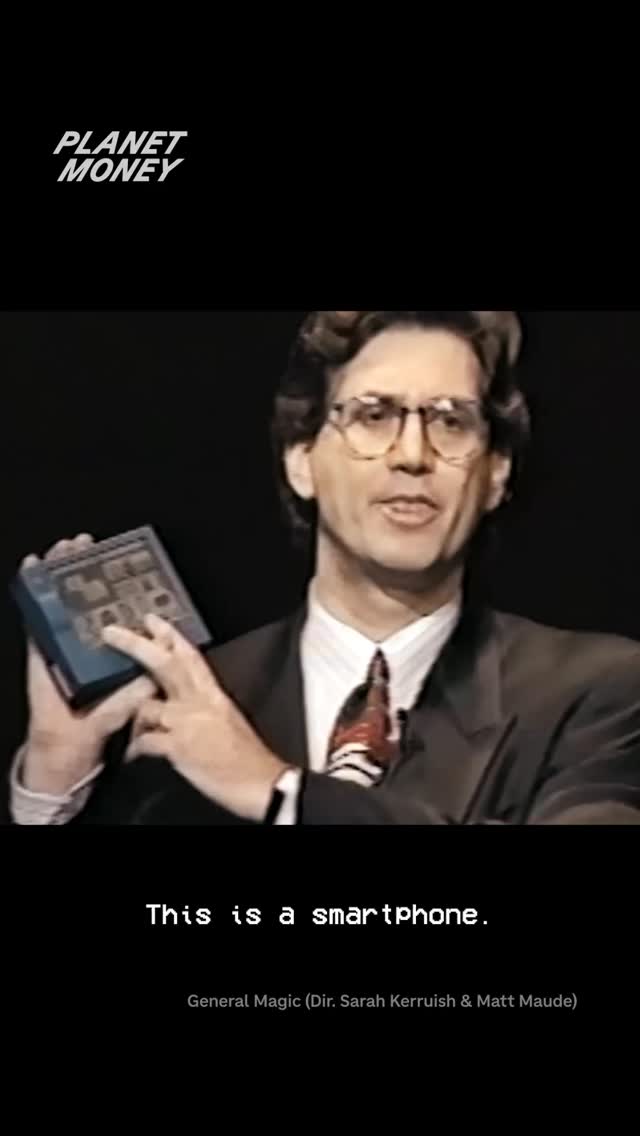
This is a smartphone.

Visual hook · 45%

A man in 1990s-style business attire holds up a clunky, retro-looking piece of technology, creating immediate visual curiosity due to its dated appearance.

[07]

Hook and payoff

The promise the opener makes, and how the video pays it back

Hook

Introduce a historical artifact or forgotten concept that seems ahead of its time, creating an immediate mystery about why it's not commonly known.

Payoff

Conclude by abstracting the specific story into a universal, memorable lesson or principle that the audience can apply elsewhere, often followed by a call to action for more in-depth content.

[08]

Narrative framework

The structural pattern this video runs on

Framework

The Icarus Paradox Blueprint

To tell the story of a promising idea that failed spectacularly, not due to a lack of resources, but because of an excess of them, leading to a counterintuitive lesson about the value of constraints.

  1. 1

    The 'What If' Artifact

    Showcase an object or idea from the past that challenges the audience's understanding of history, immediately posing the question 'Why didn't this succeed?'

  2. 2

    The Utopian Premise

    Build up the context by detailing the seemingly perfect conditions surrounding the project: immense talent, funding, and creative freedom. This sets high expectations for success.

  3. 3

    The Icarus Moment

    Abruptly and decisively state the project's total failure, creating a sharp contrast with the preceding setup to maximize dramatic impact.

  4. 4

    The Fatal Flaw Diagnosis

    Introduce the central thesis for the failure, focusing on a counterintuitive reason, such as an excess of freedom or a disconnect from the end-user.

  5. 5

    The Humanizing Proof

    Support the diagnosis with a simple, relatable anecdote from an insider that demonstrates the core problem in a non-technical, universally understandable way.

Themes

  • Innovation
  • Business Strategy
  • Failure
  • Tech History

Techniques

  • Archival Footage
  • Interview
  • Narration

Post caption

The smartphone was invented in the 90s. Why did it take so long to catch on? For more, listen at the link in our bio. Reported by: Emma Peaslee, Erika Beras Editor: Marianne McCune, Alex Goldmark Produced by: Sam Yellowhorse Kesler Archival footage from the documentary ‘General Magic,’ dir. Sarah Kerruish & Matt Maude

Text overlays

  • branding · throughout

    PLANET MONEY

  • contextual · throughout

    General Magic (Dir. Sarah Kerruish & Matt Maude)

  • contextual · middle

    Emma Peaslee Producer, Planet Money

  • contextual · middle

    Tony Fadell Entrepreneur & Author

  • contextual · middle

    Erika Beras Host, Planet Money

  • call-to-action · end

    PLANET MONEY LISTEN WHEREVER YOU GET YOUR PODCASTS

Transcript

This is a smartphone. It's called the Sony MagicLink. Its intent is to be with me all the time. It was invented in 1994, almost thirteen years before the iPhone. So why don't we all have one? To find out what happened to the Sony MagicLink, we talked to someone who was there when it was best, Tony Fadell. He was part of the team at General Magic, the makers of MagicLink. I was employee 29. It was the biggest sandbox playing with the smartest, coolest geeks. General Magic had a lot of big partners and all the best talent and a lot of money to do whatever they wanted, including hiring a film crew to document their rise to tech stardom. Oh, smile. You're on Candid Camera. They made an early version of the touchscreen. I I could figure out where you are, whether you're touching tier or whether you're touching a caps lock. How slow will it finally be, do you think? Someday? Didn't trace your wristwatch. Better You can see Tony working on an early version of the USB. Hooking up a demo so that we can see keyboards working with the device. Important. If you wanna hook up disk drives and things of that nature. Yeah. It's really important. Just people programming, whatever, at all times of the day and night doing things and say, come over here and check this out. You know, people would be sleeping there overnight. We were there so often the place smelled. Oh. You no, people would hang up their dirty clothes on the cubicle walls. It was like a huge dorm room. Smell like worse. But when the MagicLink came out, it was a total flop. And there are a bunch of explanations for this. But one that Tony talks about in his book, they had so much money and so much freedom that they sort of forgot to think about who their customers were and what they wanted. My mom was a user attester. She's like, I don't get it. What is this thing for? It didn't work. Was it me? Did I do something wrong? I don't understand why I even need this thing. I was like, wait a second. Moms always know. A bigger picture explanation that this company, General Magic, lacked constraints. No budget, no deadline, no rules. Maybe you can have too much of a good thing. For more on the failure of general magic and why constraints can be a good thing in business, listen to the Planet Money podcast on the NPR app or wherever you get your podcasts.