@nicolebehnam
Instagram · Clip

@nicolebehnam There are so many problems money won’t solve. Here’s a list. 🎙️: @beyondtheinterview

@nicolebehnam
Instagram · Clip
@nicolebehnam There are so many problems money won’t solve. Here’s a list. 🎙️: @beyondtheinterview
Performance
Video #36688 · Clip
[01]
An expert argues that money does not solve fundamental human problems, citing his experience with both billionaire and working-class clients who face similar issues like disconnection, feeling like inadequate parents, and lacking purpose. He lists common struggles such as addiction and mental health issues, asserting that happiness is found in meaning, not in the unwinnable game of amassing wealth.
[02]
[03]
 363.9K1.9×Creator reacts to money and depression@santacruzpaleo · Reaction
 189.9KExplaining the modern work crisis@yourbrain_onmoney · Breakdown
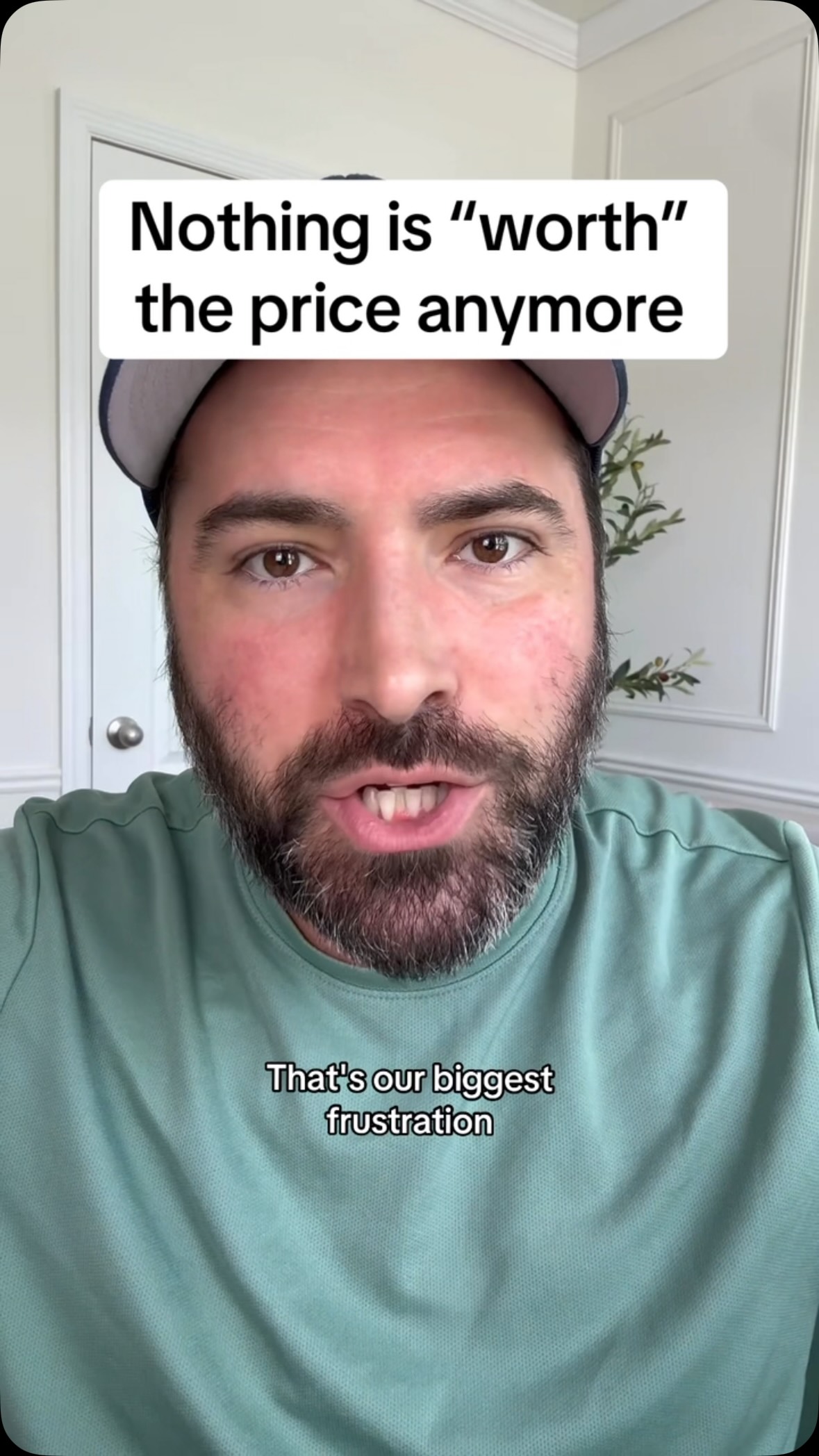 854.3KRant about why nothing is worth the price@fmsmith319 · Cultural Rant
 320.5K3.6×Podcast clip about money mindset@reikoslivingroom · Anecdotal Philosophy
 149.1K1.7×Anecdote explains a success mindset@benhbader · Anecdotal Philosophy
 808.6K146.4×Comparing hobbies across wealth stereotypes@avni · Stereotype Satire
 961.8K23.9×Satirical explainer on economic inequality@npr · Opportunity Explainer
 1.7MPhilosophical take on achieving goals@diewithoutregretss · Hot Take
 1.4M24.8×Three wealth archetypes compare careers@avnibarman_ · Stereotype Satire
 715.1K52.5×Personal story illustrates wealth concept@thejaunt_ · Anecdotal Philosophy
 581.4K9×Explaining a personal economic theory@fmsmith319 · Opportunity Explainer
 10.4M31.7×Overheard quote sparks social commentary@gstaadguy · Anecdotal Philosophy
[04]
[05]
What stops the scroll in the first 3 seconds
Title hook · 50%
The money does not solve the problems.
Verbal hook · 45%
The money does not solve the problems.
Visual hook · 5%
The video opens with a blurry, out-of-focus shot of the speaker's tie, which then quickly racks focus to his face, creating a pattern interrupt and drawing attention.
[06]
Steal this for your own video
doesn’t solve .
[07]
The promise the opener makes, and how the video pays it back
Hook
A bold, contrarian statement that challenges a widely accepted societal norm, immediately creating intrigue and a need for justification.
Payoff
A final, thought-provoking question is posed, which doesn't resolve the new problem but instead opens a new loop, prompting engagement and anticipation for a follow-up.
[08]
The structural pattern this video runs on
Framework
The Unwinnable Game
To deconstruct a commonly held belief by first equating two disparate groups, then listing universal truths that undermine the belief, and finally reframing the core concept to expose the original belief as a flawed pursuit.
The Great Equalizer
The speaker invalidates a key differentiator (e.g., wealth, status) by claiming two vastly different groups share the same fundamental problems, setting up the core argument.
The Interrogative Pivot
An external prompt (like a question from an interviewer) forces the speaker to move from assertion to evidence, mirroring the audience's own curiosity.
The Universal Problem Catalog
The speaker lists a series of deeply relatable, human-centric problems that transcend the previously invalidated differentiator, grounding the argument in shared experience.
The Core Principle Redefinition
The speaker introduces an alternative, more profound definition for a key concept (e.g., happiness, success), shifting the goalposts of the discussion.
The Materialist Fallacy
An analogy is used to illustrate the law of diminishing returns and the ultimate emptiness of pursuing the flawed, conventional goal.
The Unwinnable Game Proclamation
The speaker frames the conventional pursuit as a structurally unwinnable game, providing a powerful and definitive conclusion to the argument.
There are so many problems money won’t solve. Here’s a list. 🎙️: @beyondtheinterview
branding · throughout
be
The money does not solve the problems. Like, my billionaire clients have all the same problems that my w two wage earning clients bad twenty years ago. What are those problems? Disconnection from the person they love most or purported to love the worst. Feeling like tier not an adequate parent and, in fact, having trouble being a good parent, feeling like their life doesn't have a lot of meaning and purpose and taking that out on the people around them and themselves, dealing with addiction issues, mental health issues, anxiety, depression, like, all the same human problems anybody else has. Like, they're they're on a private jet having those problems Yeah. But there's they're best, you no, there's more happy people without private jets than there are happy people with private jets. Happiness is about having meaning and purpose. And money is not a very satisfying purpose after a while. Like, it just becomes numbers on a page that eventually people realize, like, you can have one really nice watch or 50 really nice watches, but you can only wear one at a time. If all of your time is spent trying to amass more and more wealth, a, there will always be someone richer, and b, there will always be someone better looking. Always. Worse. No if that's the game you're playing, you're playing a game you can't win. Yeah. What's what's a better game? And how do you play it?