Video #37802 · Talking Head Edit
AI solves marine research problemfrom @googleaustralia
The video explains the challenge marine biologists face in analyzing massive amounts of underwater audio to study whales, then presents Google AI as the solution. It showcases how AI technology can sift through years of audio in seconds to isolate whale songs, ultimately helping scientists better protect marine life and their habitats.
- 1Establish a compelling world
- 2Introduce an impossible problem
- 3Reveal the technological hero
- 4Showcase the greater purpose
ConceptsCase Study Breakdown
ElementsVoiceoverB-Roll CutawayMotion GraphicsUnderwater Footage
[05]
Hook analysis
What stops the scroll in the first 3 seconds
Verbal hook · 35%
This is the ocean, and it sounds like
Visual hook · 65%
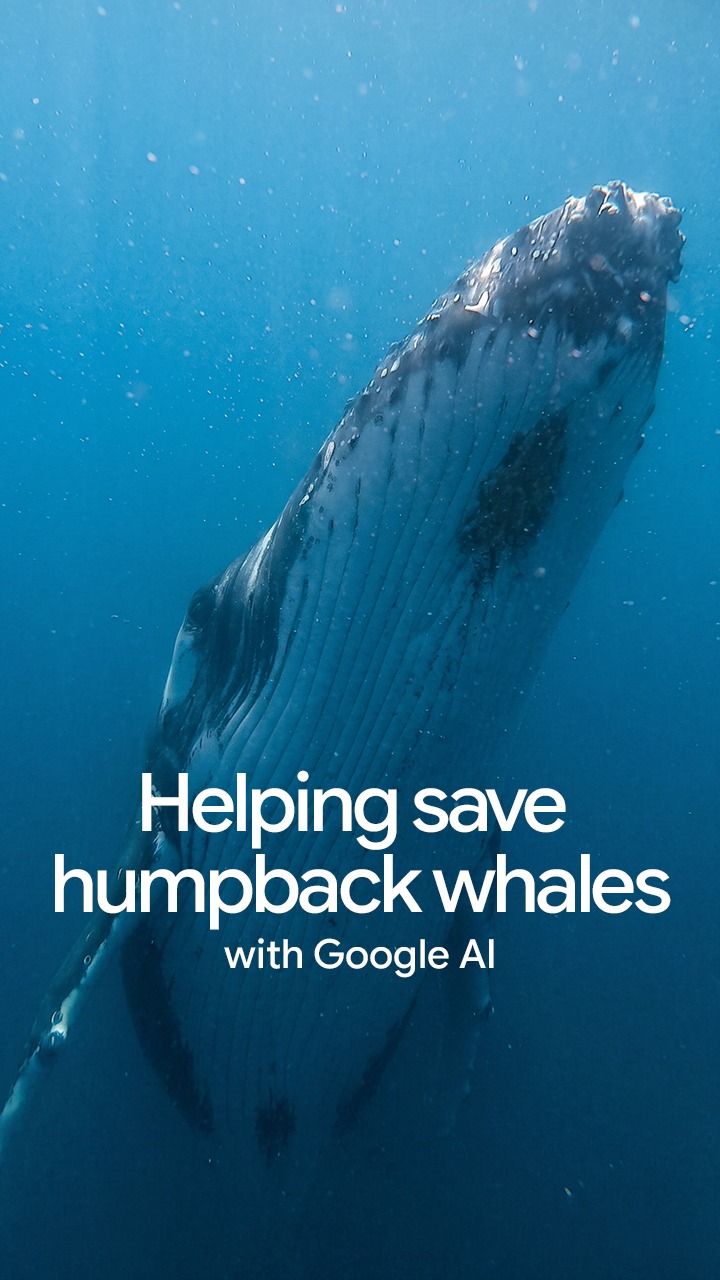
A rapid montage of high-quality underwater footage, including a large humpback whale and a dense school of fish, creating immediate visual interest and setting the scene.
[06]
Hook template
Steal this for your own video
Open on a rapid montage of [visually stunning environment] footage — from [large iconic subject] to [dense/overwhelming natural detail] — that immediately drops the viewer inside a world they've never seen up close.
- — Open on a rapid montage of deep jungle canopy footage — from a massive silverback gorilla to a dense swarm of bioluminescent insects — that immediately drops the viewer inside a world they've never seen up close.
- — Open on a rapid montage of high-altitude glacier footage — from a towering ice shelf calving into the sea to a dense field of blue crevasses — that immediately drops the viewer inside a world they've never seen up close.
- — Open on a rapid montage of active volcano footage — from a churning lava lake to a dense plume of sulfur cloud rolling across the crater rim — that immediately drops the viewer inside a world they've never seen up close.
[07]
Hook and payoff
The promise the opener makes, and how the video pays it back
Hook
Immerse the viewer in a novel sensory experience (sight and sound) to generate immediate curiosity about an unfamiliar world.
Payoff
Conclude with a concise, memorable slogan that synthesizes the collaboration between human effort and the technology, framing it as a partnership that unlocks new possibilities.
[08]
Narrative framework
The structural pattern this video runs on
Framework
The Problem-Amplification-Solution Framework
A narrative structure that introduces a problem, shows how an initial solution creates a much larger, more complex problem, and then presents a 'hero' technology as the ultimate solution, culminating in a purpose-driven outcome.
- 1
The Legacy Limitation
Establish the context by explaining the traditional, inefficient method for tackling a challenge and highlighting its core weakness.
- 2
The First-Level Solution
Introduce a logical, human-led attempt to overcome the limitation, which sets the stage for a new conflict.
- 3
The Consequence of Scale
Reveal that the first solution has created a new, exponentially larger problem of data or complexity that is beyond human capacity to manage. This is the central point of tension.
- 4
The Technological Intervention
Introduce the 'hero' technology or tool with a clear, declarative statement, positioning it as the specific answer to the newly amplified problem.
- 5
The Superhuman Demonstration
Visually and audibly demonstrate the technology's core capability, showing it performing the impossible task with incredible speed and precision.
- 6
The Purpose-Driven Impact
Broaden the scope from solving the technical problem to achieving a significant, positive, and often emotional outcome for a wider community or the world.
Themes
- Technology for Good
- Conservation
- Scientific Research
Techniques
- Voiceover
- B-Roll
- Motion Graphics
Post caption
The ocean has a 24/7 soundtrack, which scientists are now recording, but finding a single whale song in months of noise is almost impossible 🎧🌊
See how researchers here at Google and @griffithuniversity are using Google AI to sift through thousands of hours of audio to map humpback songs and help protect their future 🐋
Text overlays
Transcript
This is the ocean, and it sounds like Researchers spent decades tracking whales by sight during the day, but a complex conversation is happening twenty four seven in the dark. That's why researchers all over the world, including at Griffith Uni and us here at Google, are dropping mics into the ocean to record it all. But the sea sounds overwhelming. Sifting through months of noise to a single whale song is a task no human can manage alone. That's where Google AI comes in. It scans years of audio in seconds, filtering the chaos to pinpoint every song. Google AI is opening up uncharted territories of research to help scientists better protect marine life and their habitats for generations to come. When research joins forces with Google AI, more is possible.