Viral Hooks
Trending short videosExplaining contradictory fitness science studies
J

@jeffnippard

Instagram · Speaker address

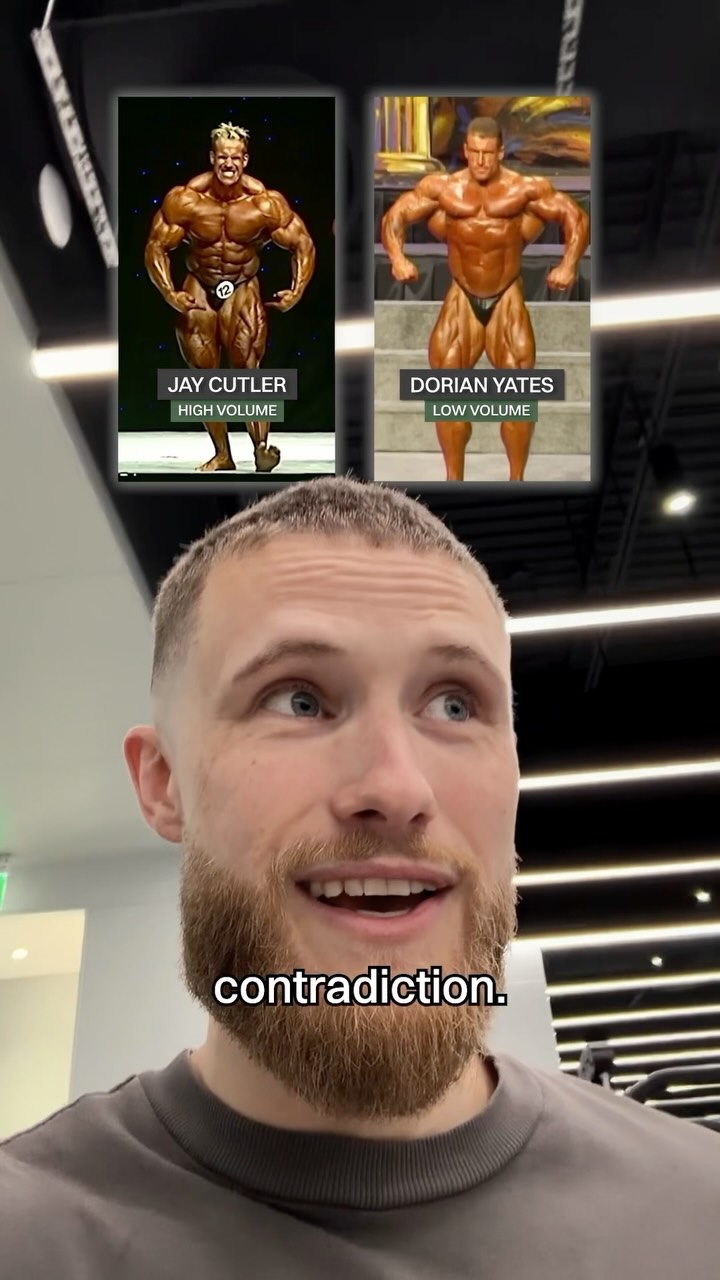
@jeffnippard This is one of the better objections to science-based lifting, in my opinion. If one study says “more volume is better” and another says “it doesn’t matter,” how are you supposed to know what to believe? I think the answer isn’t to put the research aside and fall back on anecdotes, because they can contradict each other too. Instead, I think the answer is to look at the entire body of evidence, not single studies, and then combine that with in-field results and your own personal experience. Anything else you’d add when addressing this question?

View original on Instagram

The edit1 shot · 9 text
Shots Text1:34

Performance

Views
2.6M
Likes
112K
Comments
742
Engagement
4.4%
Outlier
1.4×
Length · 3 Aug 2026
1:34

Video #38296 · Speaker address

Explaining contradictory fitness science studiesfrom @jeffnippard

[01]

Overview

The creator addresses a user's question about why scientific studies contradict each other. He presents two conflicting studies on training volume and muscle growth, then shows two successful bodybuilders with opposing training philosophies as contradictory anecdotes. He concludes that relying on single data points is flawed and advises viewers to look at the entire body of evidence (meta-analyses) to find general patterns, while also considering nuances like individual training intensity and personal experience.

[02]

Simple outline

  1. 1Acknowledge a valid contradiction
  2. 2Demonstrate failure of simple answers
  3. 3Diagnose the core flawed method
  4. 4Reveal a synthesized, nuanced truth
  5. 5State the new mental model

[03]

Related videos

[04]

Classification

Concepts
Q&A ResponseBreakdown
Elements
On-screen comment hookGraphic OverlayJump Cut

[05]

Hook analysis

What stops the scroll in the first 3 seconds

Title hook · 55%

Serious question: Why should you fully trust studies when results vary and studies can contradict each other ?

Verbal hook · 40%

Why should you fully trust studies when studies can contradict each other?

Visual hook · 5%

A direct-to-camera shot of the speaker with a prominent text overlay of a user's question appearing immediately, setting the video's premise.

[06]

Hook template

Steal this for your own video

Serious question: Why should you fully trust [information source] when [conflicting evidence]?

  • — Serious question: Why should you fully trust nutrition labels when studies on the same food contradict each other?
  • — Serious question: Why should you fully trust financial advisors when their strategies produce opposite results?
  • — Serious question: Why should you fully trust skincare reviews when the same product breaks some people out and clears others up?

[07]

Hook and payoff

The promise the opener makes, and how the video pays it back

Hook

The video opens by validating a common viewer objection, presented as a direct question from the audience. This immediately establishes relatability and promises to address a genuine point of confusion.

Payoff

The video concludes by reframing the viewer's entire approach to the topic. The payoff is not a simple answer but a feeling of intellectual empowerment and clarity, having been guided from a state of confusion to a higher level of understanding.

[08]

Narrative framework

The structural pattern this video runs on

Framework

The Synthesis Solution

To resolve a common objection or apparent contradiction by demonstrating the failure of simplistic, binary thinking and then revealing a more sophisticated, synthesized solution that reconciles the conflicting data.

  1. 1

    The First Contradiction

    Presents two pieces of seemingly authoritative evidence (e.g., scientific studies) that directly contradict each other, proving the validity of the initial objection and establishing the core problem.

  2. 2

    The False Pivot

    Proposes a seemingly logical alternative source of truth (e.g., expert anecdotes) as a way to escape the initial contradiction, creating a temporary sense of a potential solution.

  3. 3

    The Second Contradiction

    Reveals that the alternative source of truth is also filled with contradictions, demonstrating that this path also leads to a dead end and reinforcing the complexity of the problem.

  4. 4

    The Impasse

    Explicitly states that both simplistic approaches have failed, bringing the viewer back to the original state of confusion and heightening the need for a real, functional answer.

  5. 5

    The Methodological Diagnosis

    Identifies the fundamental error in the previous approaches: the reliance on isolated, single data points rather than a holistic view. This shifts the focus from the 'what' to the 'how' of thinking.

  6. 6

    The Synthesis Mandate

    Introduces the correct methodology: looking at the entire body of evidence to find overarching patterns instead of focusing on individual, conflicting examples.

  7. 7

    The Meta-Analysis Payoff

    Presents the nuanced conclusion that emerges from the synthesized view, often visualized with a graph or model that shows a more complex relationship (e.g., diminishing returns) than a simple yes/no answer.

  8. 8

    The Reconciling Hypothesis

    Uses the new, nuanced understanding to logically explain the initial contradictions, demonstrating the power of the synthesized model by showing how it can make sense of all the previously conflicting data.

  9. 9

    The New Paradigm

    Delivers the final, actionable takeaway, which is not a simple rule but a new, more sophisticated mental model for approaching the topic. It empowers the viewer to think critically by combining broad evidence with personal context.

Themes

  • Critical thinking
  • Scientific literacy
  • Evidence-based practice
  • Fitness myths

Techniques

  • Presenting contradictory evidence
  • Synthesis
  • Anecdotal evidence vs. scientific consensus

Trends

  • Science-based fitness content
  • Addressing audience questions

Post caption

This is one of the better objections to science-based lifting, in my opinion. If one study says “more volume is better” and another says “it doesn’t matter,” how are you supposed to know what to believe? I think the answer isn’t to put the research aside and fall back on anecdotes, because they can contradict each other too. Instead, I think the answer is to look at the entire body of evidence, not single studies, and then combine that with in-field results and your own personal experience. Anything else you’d add when addressing this question?

Text overlays

  • contextual · beginning

    spence 1h Serious question: Why should you fully trust studies when results vary and studies can contradict each other ?

  • title · beginning

    STUDY 1

  • informational · beginning

    Resistance Training Volume Enhances Muscle Hypertrophy but Not Strength in Trained Men

  • title · middle

    STUDY 2

  • informational · middle

    A test of higher and lower fractional volumes of resistance training upon arm and thigh muscle area: A multi-site randomised trial

  • informational · middle

    MUSCLE HYPERTROPHY 9 sets ≈ 36 sets

  • contextual · middle

    JAY CUTLER HIGH VOLUME

  • contextual · middle

    DORIAN YATES LOW VOLUME

  • informational · end

    The Resistance Training Dose-Response: Meta-Regressions Exploring the Effects of Weekly Volume and Frequency on Muscle Hypertrophy and Strength Gain

Transcript

Should you fully trust studies when studies can contradict each other? It's a good question because it's kind of true. Studies can contradict each other. For example, this study found that high volume training led to more muscle growth. The more sets you do, the more gains you make. However, this study found that high volume training was basically a waste of time. There was no difference in gains between nine sets a week and 36 sets a week. That's a contradiction. So maybe we should just look at what the best bodybuilders do instead. Jay Cutler was mister Olympia four tier, and he did very high volume training, long workouts with loads of sets. But Dorian Yates was mister Olympia six times, and he did very low volume just one or two all out sets. That's another contradiction, and now we're back to where we started. And that's the problem you'll run into anytime you put too much weight into single studies or single anecdotes. No. Instead, you need to look at the entire body of evidence. When you do that, you do see that, yeah, higher volumes generally do produce more muscle growth, but there's nuance because those extra gains are vastly diminishing rank the longer workouts that come from higher volume training might not be worth it for most people. Plus, if you do too much for too long, that can hinder recovery, and I think that the amount of volume that you need might depend on how hard you train. Like, Dorian might have needed less volume because he took every set to failure, whereas Jay Cutler may have needed higher volumes because he didn't train to failure as much. That's closer to how science based thinking is supposed to work. It's not about finding certainty in the perfect single study. It's about finding patterns across many studies, many athletes, and combining that with your own personal experience.