Post caption
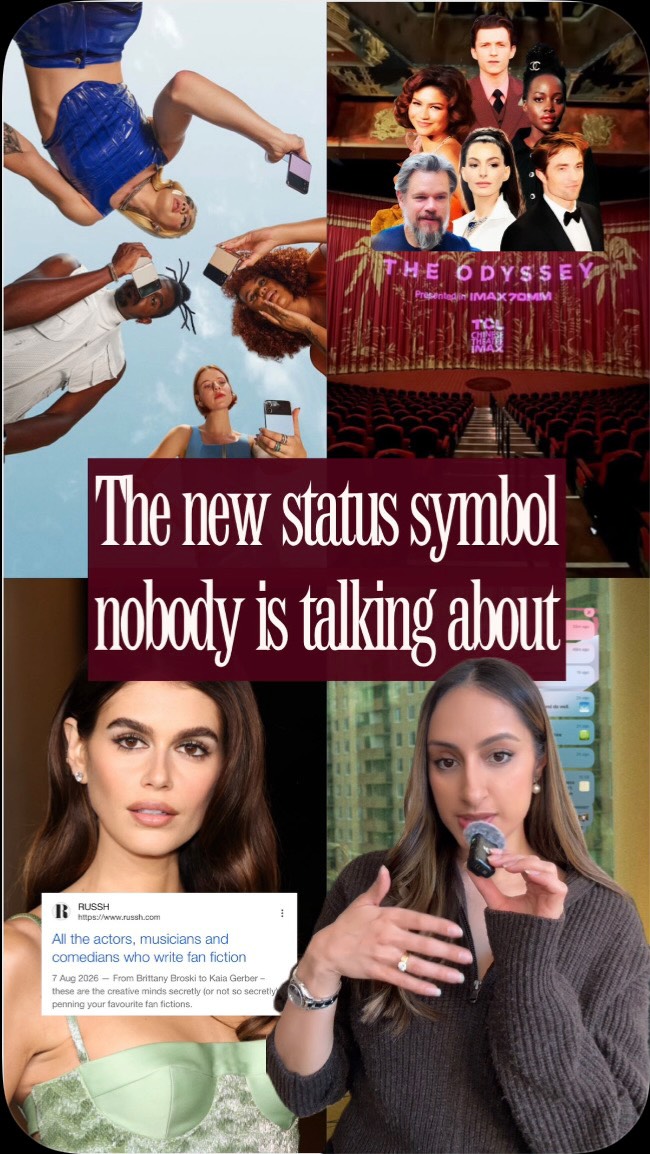
Today, our attention spans are a bigger class marker than anything else and it’s increasingly being determined by your income. The wealthy are investing in recovering their attention spans, while everyone else is losing it. Watching a three-hour film in theatre is now considered a luxury good - not because of ticket prices, but the uninterrupted focus it requires. The Atlantic called it the “Attention Span Class Divide”.
And it’s having an interesting impact on culture: On one end, micro-dramas are exploding on social media. Screen Time, which has one-minute episodes following a soap-drama plot amassed 75 million views in its first week, watched primarily by women and people of colour who don’t have the finances, time or mental bandwidth for long-form media and Procter & Gamble is now advertising their products inside them. These have been referred to as “films for the working class”.
On the other end, we’re seeing a resurgence of complex, long-form content online: 900-page Substack novels, multi-hour Youtube documentaries.
And like everything rare, the ability to hold your own attention, to commit to long, complex tasks, without reaching for your phone is becoming a status symbol, in a world where everything is built to fracture it.
Transcript
Our shrinking attention spans aren't a personal problem. They're a class issue. Think about it. The wealthy are paying to protect their time, luxury digital detox retreats, celebrities writing fan fiction, and expensive dumb phones that limit your screen time. And watching a three hour film in theater is now considered a luxury good, not because of ticket prices, but the uninterrupted focus it requires. Atlantic called it the attention span class divide. Between gig work, constant notifications, and the pressure to be always reachable, sustained focus is now economically inaccessible for the majority of people. How many times did you check your phone today? On average, it's 200. As a result of this, we're seeing something really interesting culture. On the one end, micro dramas are exploding on social media. Screen Tier, which has one minute episodes and follows a soap drama plot, amassed 75,000,000 views in its first week, watched primarily by women and people of color who don't have the finances, time, or mental bandwidth for long form media. And Procter and Gamble are now advertising products in these. On the other end, we're seeing the resurgence of complex long form content online, 900 page substack stack novels, multi hour YouTube documentaries. And it's all because the human attention span is getting increasingly k shaped, splitting into two distinct paths in which end you live on is determined by your income. Like everything rank, the ability to hold your attention, to commit to long complex tasks without reaching for your phone is becoming a status symbol in a world where everything is built to fracture it.