Viral Hooks
Trending short videosExplainer on hybrid creator income
O

@orenmeetsworld

Instagram · Talking Head Edit

@orenmeetsworld How do people afford these luxury lives pt 2 - the creator economy. In a previous video we discussed LARPing, now we discuss the 2 million hybrid earning content creators who you see far more of because they’re the ones making content online. This number includes direct content earnings and using it to sell digital products or side consulting. To be safe we used citable figures below but many of those are older reports my personal guess is this number is doubled if not tripled now globally... just my hunch👀 The four reports cited were: 1. Creator Economy: Framing Market Opportunity, Drivers of Content Creation/Distribution & Ads/Commerce Monetization⁠ — Goldman Sachs Global Investment Research, 2025. 2. The 2022 Creator Report⁠ — Linktree, 2022. 3. Creator Economy Trends Report 2023⁠ — MBO Partners, based on its 2023 State of Independence in America study. 4. Future of Creativity: Creators in the Creator Economy⁠ — Adobe, 2022.

View original on Instagram

The edit1 shot · 13 text
Shots Text1:11

Performance

Views
154.6K
Likes
3.9K
Comments
85
Engagement
2.6%
Length · 15 Aug 2026
1:11

Video #39744 · Talking Head Edit

Explainer on hybrid creator incomefrom @orenmeetsworld

[01]

Overview

The narrator explains the phenomenon of 'hybrid earners' in the creator economy who use supplemental income from content creation to fund luxury lifestyles. He uses a fictional case study of a woman named Alicia to break down her potential earnings and spending habits, then zooms out to provide statistics on the scale of this economy and discusses how this extra income is often reinvested into content-related experiences, benefiting various brands and industries.

[02]

Simple outline

  1. 1Pose relatable mystery
  2. 2Debunk common theory
  3. 3Reveal insider mechanism
  4. 4Quantify the scale
  5. 5Explain the ripple effect

[03]

Related videos

[04]

Classification

Concepts
Opportunity ExplainerCase Study Breakdown
Elements
B-Roll CutawayText OverlayPodcast SetupMontage EditingJump CutImage OverlayVoiceoverTitle Text Hook

[05]

Hook analysis

What stops the scroll in the first 3 seconds

Title hook · 25%

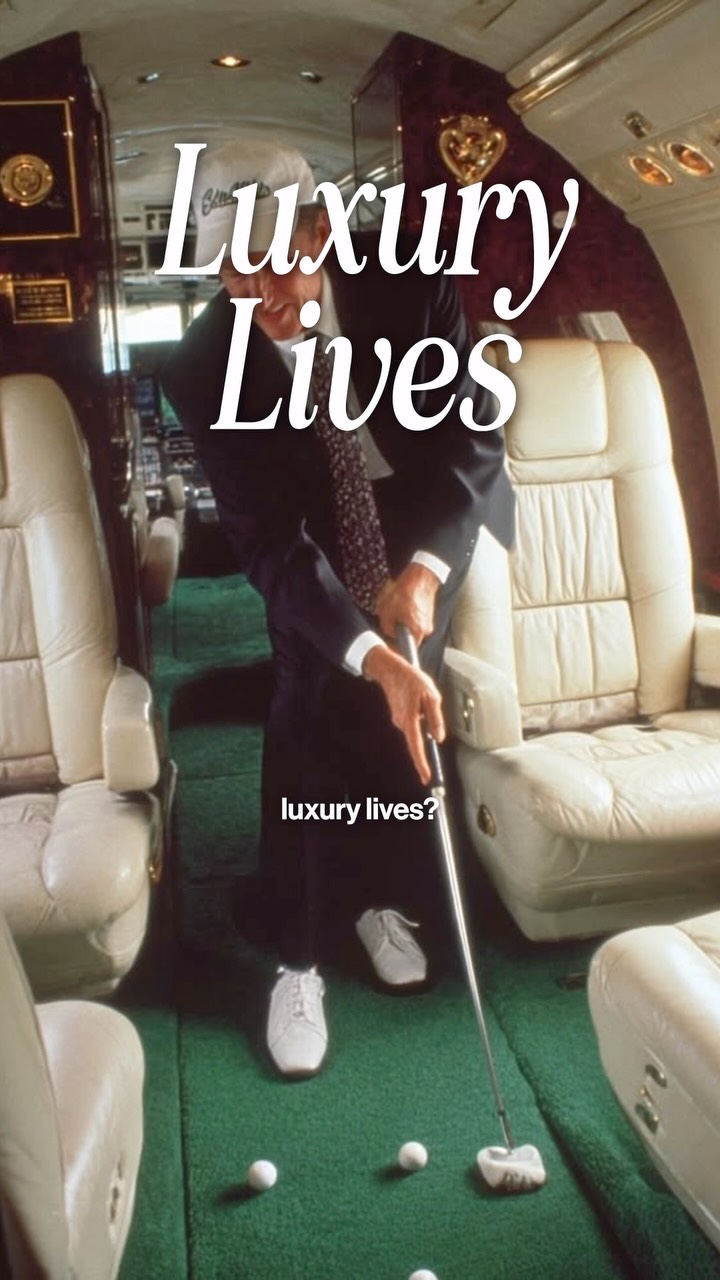
Luxury Lives

Verbal hook · 45%

How do people afford these crazy expensive luxury lives?

Visual hook · 30%

The video opens on a well-composed shot of the speaker in an aesthetically pleasing room, then immediately cuts to high-energy B-roll of a man relaxing on a moving yacht, creating a strong visual contrast and pattern interrupt.

[06]

Hook template

Steal this for your own video

How do people actually afford [aspirational lifestyle or expensive thing]?

  • — How do people actually afford these luxury vacations every single month?
  • — How do people actually afford brand new cars on an average salary?
  • — How do people actually afford living in Manhattan in their twenties?

[07]

Hook and payoff

The promise the opener makes, and how the video pays it back

Hook

Pose a widely held but unanswered question about a visible, often aspirational, phenomenon.

Payoff

The viewer feels intellectually satisfied, armed with a new, more sophisticated understanding of a part of their world, as if they've been given 'insider knowledge'.

[08]

Narrative framework

The structural pattern this video runs on

Framework

The Investigative Thesis

To deconstruct a common, misunderstood phenomenon by first presenting a relatable mystery, debunking the popular explanation, and then revealing the true underlying system with data and analysis of its broader impact.

  1. 1

    The Archetypal Case Study

    Personify the abstract question with a specific, vivid example that the audience can immediately recognize.

  2. 2

    The Common Misconception

    Voice the audience's default, simplistic, or cynical explanation for the phenomenon, building rapport and setting up a strawman argument.

  3. 3

    The Counter-Narrative Reveal

    Directly refute the common misconception and introduce the core of the true explanation, supported by specific, credible-sounding micro-data points.

  4. 4

    The Aspirational Investment Loop

    Illustrate how the resources gained from the 'true explanation' are reinvested back into the lifestyle that perpetuates the cycle, often using a memorable mnemonic or list.

  5. 5

    The Macro-Level Pivot

    Transition from the specific example to the larger system or economy it represents, establishing the broader context for the argument.

  6. 6

    The Core Thesis & Data Drop

    State the central argument clearly and back it up with a significant, surprising statistic that quantifies the scale of the phenomenon.

  7. 7

    The Systemic Flywheel Explained

    Describe the feedback loop or self-perpetuating cycle that the phenomenon creates, explaining how it sustains and grows itself.

  8. 8

    The Beneficiary Roll Call

    Broaden the analysis by identifying the secondary entities (companies, institutions, industries) that benefit from this system, demonstrating its far-reaching impact.

  9. 9

    The Concluding Context

    Frame the phenomenon in a larger historical or societal context, emphasizing its novelty or significance, and end with a thought-provoking or forward-looking statement.

Themes

  • Creator Economy
  • Wealth Perception
  • Digital Nomadism
  • Consumerism

Techniques

  • Storytelling
  • Data-driven analysis
  • Case study example

Trends

  • Hybrid Earner
  • Creator Economy Breakdown

Post caption

How do people afford these luxury lives pt 2 - the creator economy. In a previous video we discussed LARPing, now we discuss the 2 million hybrid earning content creators who you see far more of because they’re the ones making content online. This number includes direct content earnings and using it to sell digital products or side consulting. To be safe we used citable figures below but many of those are older reports my personal guess is this number is doubled if not tripled now globally... just my hunch👀 The four reports cited were: 1. Creator Economy: Framing Market Opportunity, Drivers of Content Creation/Distribution & Ads/Commerce Monetization⁠ — Goldman Sachs Global Investment Research, 2025. 2. The 2022 Creator Report⁠ — Linktree, 2022. 3. Creator Economy Trends Report 2023⁠ — MBO Partners, based on its 2023 State of Independence in America study. 4. Future of Creativity: Creators in the Creator Economy⁠ — Adobe, 2022.

Text overlays

  • title · beginning

    Luxury Lives

  • title · beginning

    A STREAM OF PHOTO DUMPS

  • title · beginning

    YOU MUST HAVE

  • title · middle

    SHE'S A POSTER NOT AN INFLUENCER

  • title · middle

    $48,000 A YEAR AFTER HER EMAIL JOB

  • title · middle

    THE THREE C'S

  • title · middle

    COACHELLA CHANEL CAPRI

  • title · middle

    REALITY CHECK

  • title · middle

    1.8 - 2.3 MILLION PEOPLE ARE HYBRID EARNERS

  • title · end

    EXTRA THINGS RELATED TO CONTENT

  • title · end

    WHO BENEFITS?

  • title · end

    FOR PEOPLE JUST GETTING EXTRA MONEY

  • title · end

    THEY DON'T REALIZE

Transcript

Do people afford these crazy expensive luxury lives? Alicia is in Capri with Xander, and they are doing it. A stream of photo dumps. Cacho de Pepe. Are they on a boat? Her high school friends put them in a group chat. Who must have family money? Well, she's a poster, not an influencer. But she drops content daily, gets her about $2,300 a month from the creator fund, another 1,700 in UGC, 48 k a year after her email job, and she is relentlessly focused on investing that money in the three C's. Ka chah, Chanel, Capri. Reality check. The scale of the creator economy is lost on those who do not participate in it. While there is a disproportionate amount of time spent on the full time creator, which I can tell you from experience isn't all that it's cracked up to be, 1.8 to 2,300,000 people are hybrid earners who bring in tier k plus from their digital channels in addition to other work. While some use that money for tier basics, people also disproportionately spend that on doing extra things related to content. Travel, experiences, unboxing this cursed goyard, cameras, hobbies. And it allows them a path to a more lucrative life and the less online. Who benefits? Erewhon, Amalfi, TGI, PARC, Somehow No, Cannes Lions. And there's absolutely no comparison history for people just getting extra money, and they're disproportionately young. And anyone who doesn't understand it thinks it's so rare. They don't realize how casual it is and how quick it spreads once anyone sees what someone else is getting. Perhaps ASU will fix this.

Explainer on hybrid creator income | Viral Hooks