Post caption
Phenoxyethanol is “toxic”? Some apps would have you believe so. But ingredient safety is about dose and exposure, not just whether a substance can cause harm at an extremely high dose.
Context matters when it comes to skincare ingredients, toxicology, and ingredient safety. Before tossing a product because an app gave it a scary rating, ask: What does the science actually say?
Transcript
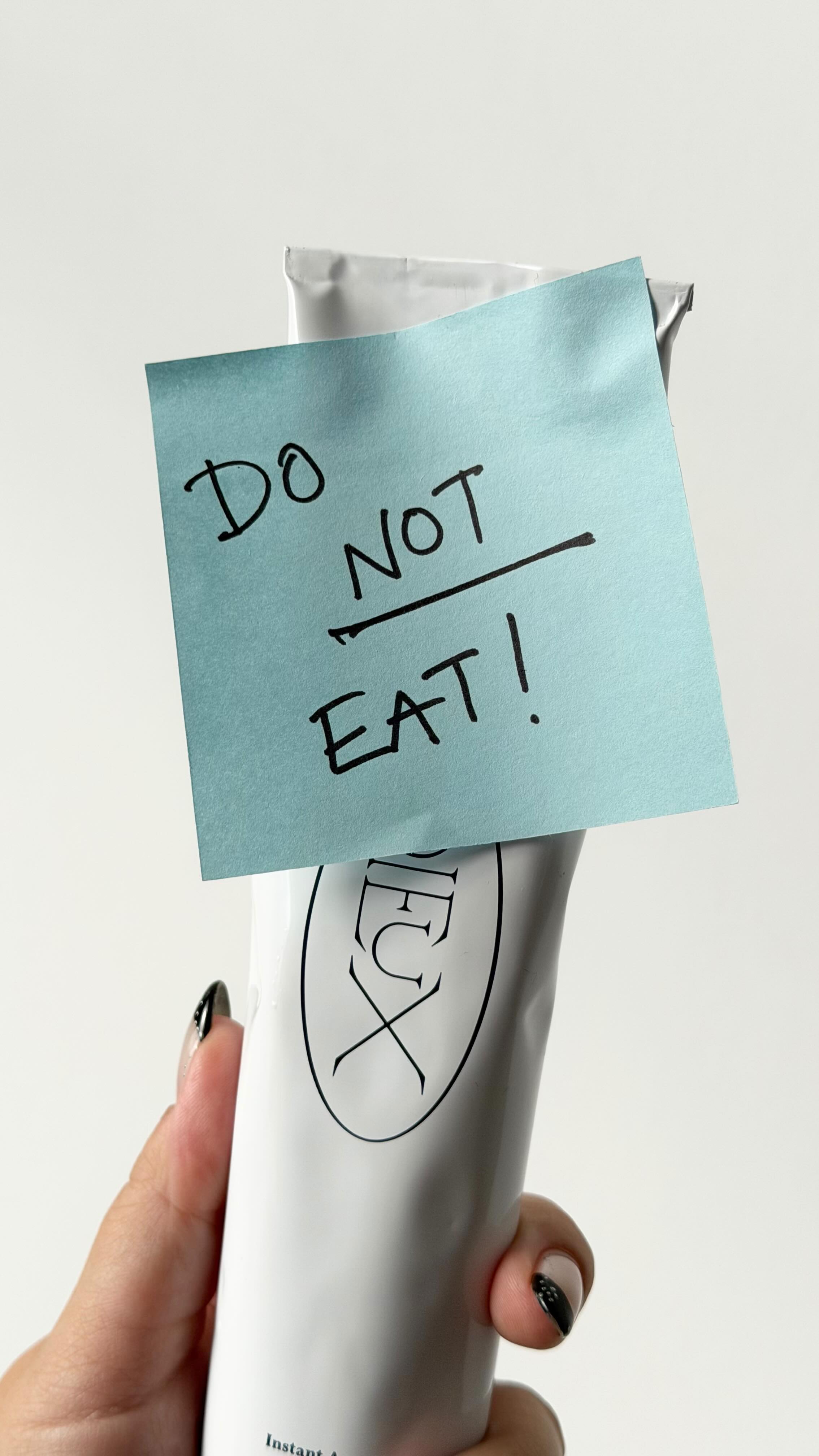
Would you ever eat 237 bottles of moisturizer? No. That would be insane. So why are we listening to apps that misread their own sources? Dew uses phenoxyethanol. It is a preservative. It keeps things like mold and bacteria out of your formulas because as we've recently learned, just because something is natural does not make it safe. But these apps, they're telling you that this preservative is toxic, implying that my cofounder and chief of product, Joyce Delamos, is knowingly putting in toxic ingredients into your skin care. So I asked Du's toxicology advisor what the data actually says. Here's the study that this app sites as proof that phenoxyethanol is not safe and that it is yucky. The study fed rats six hundred and eighty one milligrams per kilogram of 100% pure phenoxyethanol every single day. Now as a reminder, you apply instant angel to your face, you don't eat it. Now I want you to scale this to me, a woman, not a rank. I'd have to eat about 237 bottles of instant angel a day. You're telling me over 200 bottles of instant angel ingested has the same safety profile as applying a quarter size amount of this luxurious and never greasy moisturizer? Be so for real. Ultimately, these apps might make you feel safe, but in practice, one has misinformation ever protected anyone.