@var.aunevik Georges bataille thought every society builds up a surplus it eventually has to waste: gloriously, or catastrophically. Now, this is my reading of his idea of “the accursed share,” so if you want to read for yourself I would very much recommend doing so!
Also disclaimer not everything I say in my videos are my actual opinion. For this I am really not sure whether I agree with his idea, either way, I find it a really interesting and sort of refreshing view, and I will continue watching reality TV every evening, because I like it
Philosophical theory explains reality TVfrom @var.aunevik
[01]
Overview
The creator presents a numbered list of reasons why she watches reality TV every day without guilt. After two brief personal reasons, she dedicates the majority of the video to a detailed breakdown of philosopher Georges Bataille's theory of the 'accursed share,' arguing that society must expend its surplus energy either catastrophically (war, crisis) or gloriously (non-productive acts). She concludes that watching reality TV is a modern form of this 'glorious waste,' providing a taste of true freedom from the utilitarian demands of capitalism.
This is why I watch reality TV every day and don't feel bad about it.
Visual hook · 5%
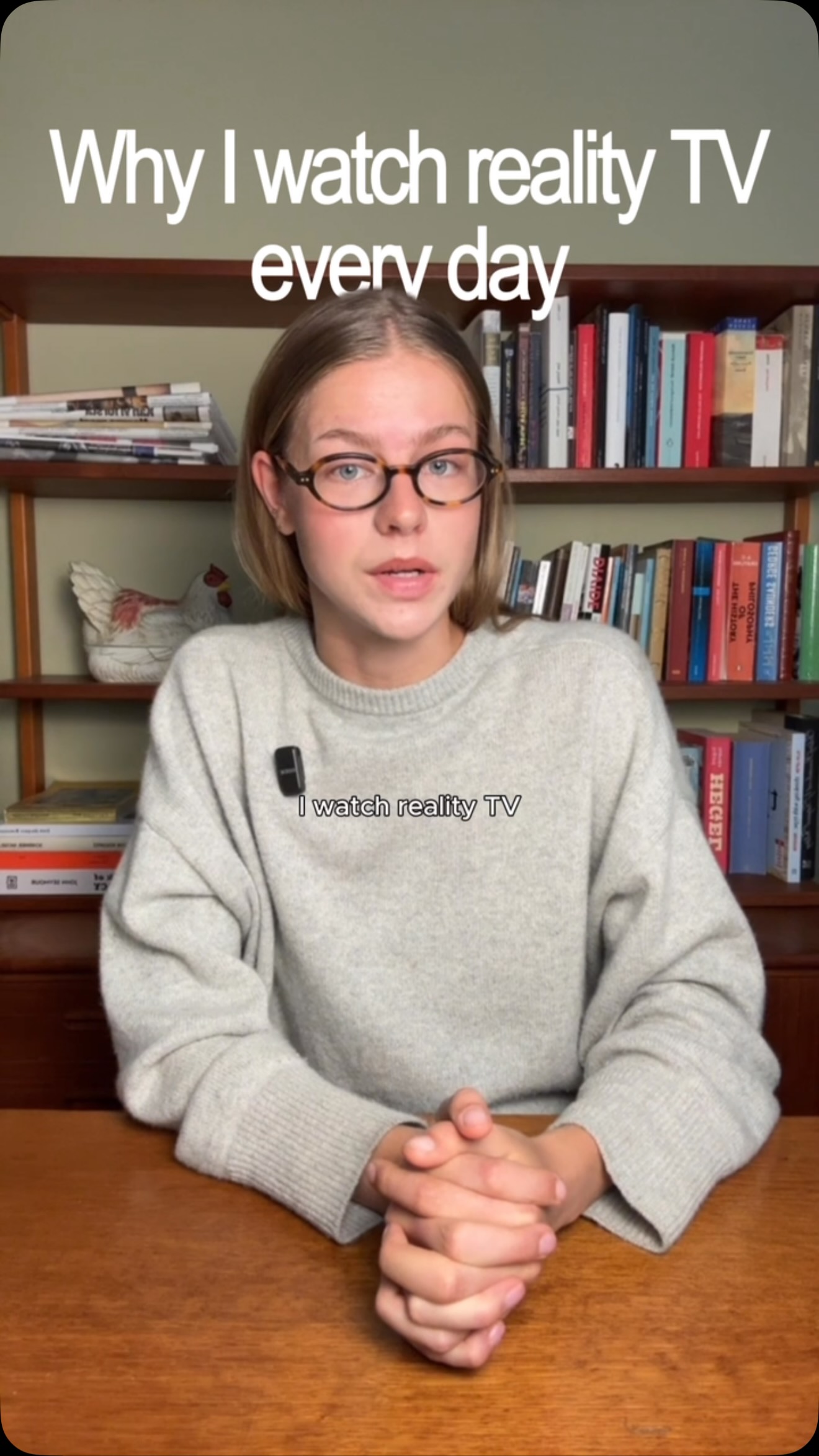
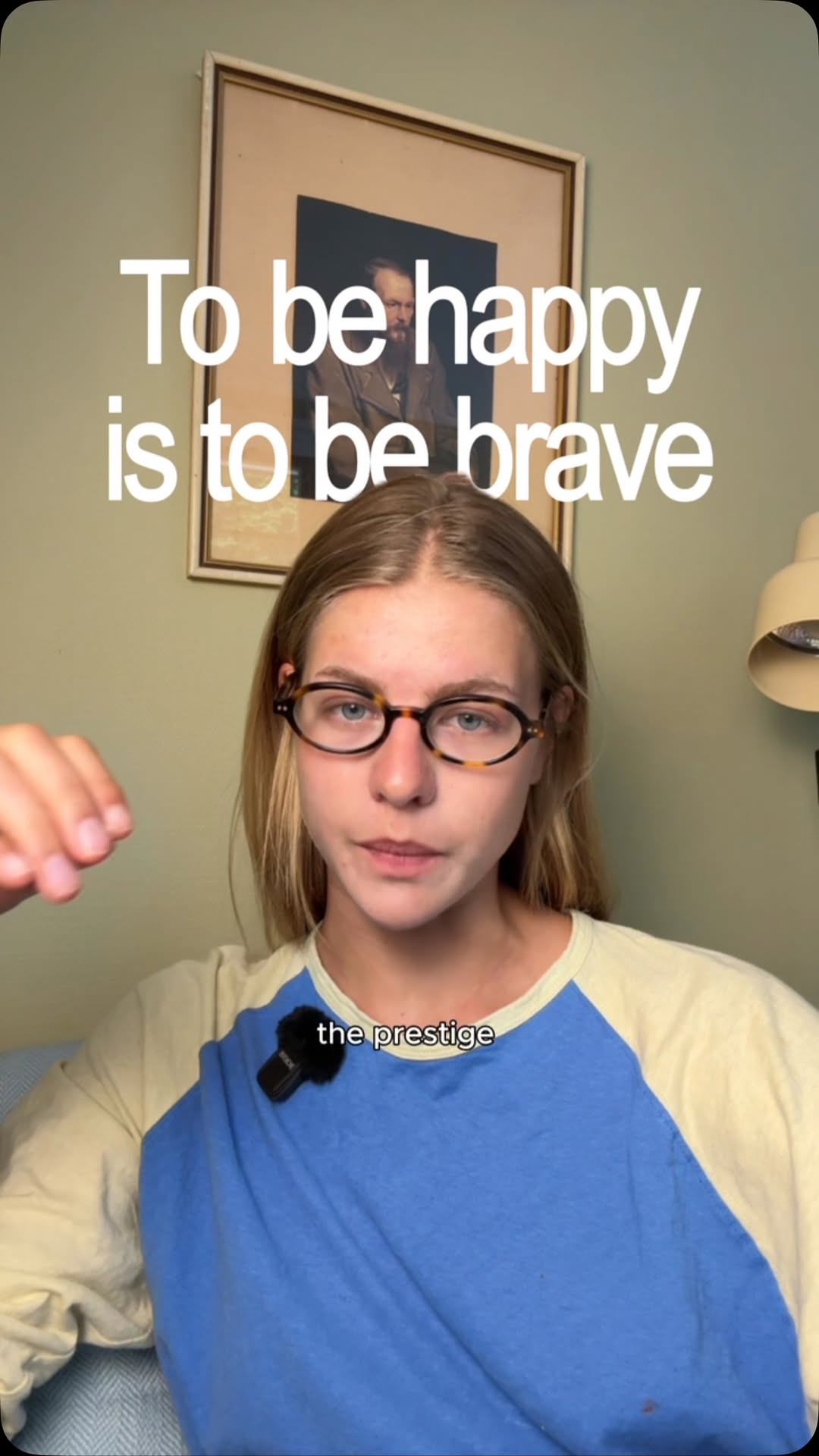
A speaker is positioned centrally in a stable, direct-to-camera shot, seated in front of a well-stocked bookshelf, creating an immediate impression of a scholarly or intellectual discussion.
[06]
Hook template
Steal this for your own video
This is why I [guilt-inducing habit] every day and don't feel bad about it.
— This is why I scroll social media every day and don't feel bad about it.
— This is why I take a two-hour lunch break every day and don't feel bad about it.
— This is why I play video games every day and don't feel bad about it.
[07]
Hook and payoff
The promise the opener makes, and how the video pays it back
Hook
A confessional statement about a common, slightly controversial daily habit, promising a guilt-free justification.
Payoff
The re-contextualization of a 'low-brow' activity as a 'high-brow' philosophical act, providing the audience with a novel and intelligent-sounding justification for their own similar habits.
[08]
Narrative framework
The structural pattern this video runs on
Framework
The High-Brow Defense
To justify a common, often-criticized behavior (a 'guilty pleasure') by sandwiching a complex, high-concept philosophical argument between simple, relatable reasons, thereby elevating the mundane and subverting audience expectations.
1
The Disarming Openers
Presents the first one or two reasons as overly simplistic and universally relatable. This lowers the audience's intellectual guard and establishes a casual, conversational tone.
2
The Intellectual Pivot
Abruptly shifts from simple personal reasons to a dense, academic concept from a named intellectual figure. This introduces the core problem or theory that will be used for the main justification.
3
The Thesis Explanation
Expands on the academic concept, defining its core principles and contrasting its key components (e.g., glorious vs. catastrophic outcomes, productive vs. non-productive waste).
4
The Modern Dilemma
Applies the academic concept to a modern societal problem, arguing that current behaviors fail to meet the ideal presented by the theory and instead trap individuals in a cycle of utility.
5
The Grand Unification
Connects the entire complex philosophical argument back to the initial mundane topic, reframing the 'guilty pleasure' as the profound solution to the modern dilemma.
6
The Comedic Coda
Presents the final reason as another simple, practical, and slightly humorous point. This releases the intellectual tension built up by the central argument and makes the creator appear more grounded and relatable.
Themes
Justification of guilty pleasures
Critique of capitalism
Productivity culture
The value of non-productive activities
Techniques
Philosophical analysis
Listicle structure
Visual aids
Post caption
Georges bataille thought every society builds up a surplus it eventually has to waste: gloriously, or catastrophically. Now, this is my reading of his idea of “the accursed share,” so if you want to read for yourself I would very much recommend doing so!
Also disclaimer not everything I say in my videos are my actual opinion. For this I am really not sure whether I agree with his idea, either way, I find it a really interesting and sort of refreshing view, and I will continue watching reality TV every evening, because I like it
Text overlays
title · beginning
Why I watch reality TV every day
contextual · middle
Reason #2
contextual · middle
Reason #3
contextual · middle
Georges Bataille
contextual · middle
reason #4
Transcript
This is why I watch reality TV every day and don't feel bad about it. Reason number one, I like it. Reason number two, it sometimes makes me laugh. Reason number three, Georges Bataille once wrote that every society builds up a surplus. This can be in the form of goods or money or energy or even time. Eventually the society has to spend the surplus gloriously or catastrophically. And catastrophically being through war or financial crisis or ecological disaster. The thing is capitalism can't actually waste anything. As weird as that sounds. Because even destruction in capitalism is designed to generate more growth. So in order to avoid the catastrophic version, Bataille says that a society needs to waste on purpose. Now this waste is not the buying rank investment piece kind of worst. It's also not self care because that's just really prepping you to be more productive tomorrow. Glorious waste gives you nothing back. Historically societies did this through lavish festivals or huge monuments and sacrifices. All ways of burning off excess that produced no return. Nothing maybe except prestige or awe or meaning. Today we still try to burn off excess, but it's framed as recharging no that you can be more productive tomorrow. And that's not worse. It's more like maintenance. No according to Bataille, the modern individual is not free. We're enslaved to utilitarianism, to taste what he calls the stubborn. That is actual freedom from having to be useful. You need something purely non productive. Games, best, or art that exists only for art's sake. And I think you know exactly where I'm going with this. Reality TV is extremely unproductive, I get nothing from it. But hey, I'm tasting the sovereign. Reason number four, I usually get nightmares if I watch something scary before bed and reality TV never does that.
Philosophical theory explains reality TV | Viral Hooks