@douggrindstaff
Instagram · Greenscreen Talking Head
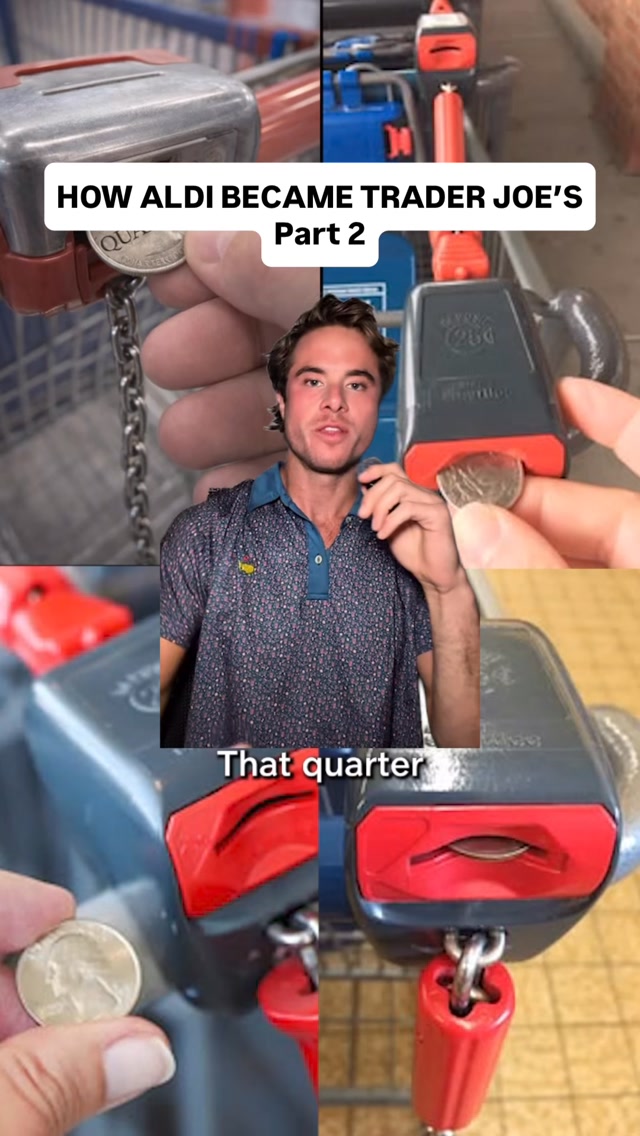
@douggrindstaff Part 2 of how Aldi bought Trader Joe’s.

@douggrindstaff
Instagram · Greenscreen Talking Head
@douggrindstaff Part 2 of how Aldi bought Trader Joe’s.
Performance
Video #41696 · Greenscreen Talking Head
[01]
The creator explains the historical connection between Aldi and Trader Joe's, starting with the Aldi shopping cart quarter as a hook. He details the split between the Albrecht brothers, Theo and Karl, and how Theo's company (Aldi Nord) acquired Trader Joe's in the US. The creator draws parallels between the post-war economic conditions that shaped both Aldi's efficiency-focused model in Germany and Trader Joe's 'overeducated, underpaid' target market in the US, highlighting their shared reliance on private labels and limited product selection despite their different branding, before teasing a future part of the story.
[02]
[03]
 439.2K39.9×Greenscreen expose on grocery sourcing@zephzoid · Anti-Recommendation List
 718.6K203.3×Explaining local business news impact@realkylepetitt · Headlines
 137.7K6.8×Explaining Whole Foods' quality decline@zephzoid · Breakdown
 187.1K7.8×Exposing brand's deceptive sourcing practices@zephzoid · Breakdown
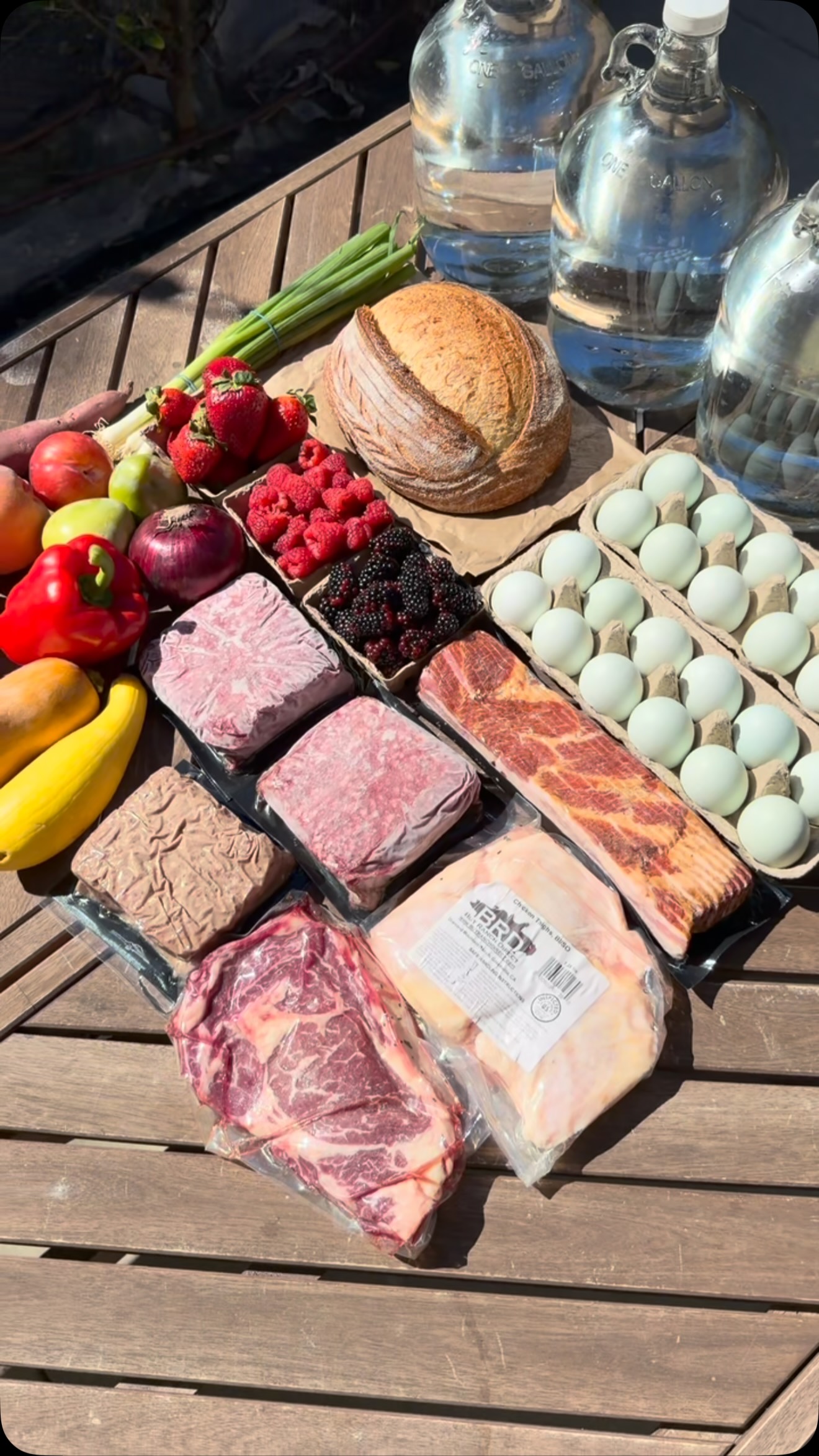 1.8M54.5×Price comparison farmers market grocery@jared1s · This or That
 1.6MCommentary on consumer brand hype@daadisnacks · Headlines
 941.1K7.7×Reacts to video, compares products@denny_dure · Breakdown
 165.3K11.7×Greenscreen brand supply chain exposé@zephzoid · Breakdown
 365.3K47.5×Grocery store food ingredient rant@holistic.grenade · Breakdown
 1.5M82.9×Appreciating niche product packaging design@clayton.chambrs · Cultural Rant
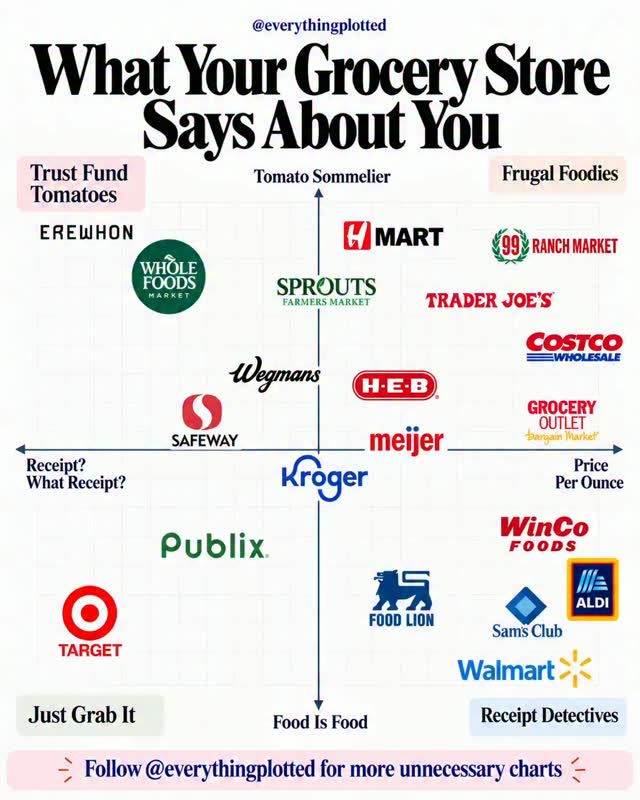 1.1M32.6×Grocery store personality chart graphic@everythingplotted · What Your X Says About You
 67.9KTool brand tribalism business breakdown@maxxrosenblum · Case Study Breakdown
[04]
[05]
What stops the scroll in the first 3 seconds
Title hook · 35%
HOW ALDI BECAME TRADER JOE'S Part 2
Verbal hook · 50%
That quarter you put in Aldi's shopping cart explains everything about why its owners bought Trader Joe's
Visual hook · 15%
A multi-panel collage showing close-ups of a quarter being inserted into an Aldi shopping cart, with the creator's face in the center, creating a visually dense and intriguing opening.
[06]
Steal this for your own video
The you use at explains everything about .
[07]
The promise the opener makes, and how the video pays it back
Hook
Present a common, everyday object and claim it's the key to understanding a much larger, counter-intuitive relationship between two well-known subjects, creating a strong curiosity gap.
Payoff
The initial mystery is solved by revealing the mundane object is a physical manifestation of a deep, shared business philosophy, delivering an intellectually satisfying conclusion.
[08]
The structural pattern this video runs on
Framework
The Parallel Convergence
Explaining a surprising relationship between two seemingly different entities by revealing their shared, hidden origin story or philosophy, often symbolized by a mundane object.
The Origin Schism
Detail the historical event or decision that created the two separate entities being discussed, establishing the core backstory.
The Divergent Paths
Trace the independent development of each entity, highlighting a key intersection or acquisition that seems puzzling on the surface.
The Counterpart's Chronicle
Introduce the origin story of the second entity, presenting it as a standalone narrative to build context and empathy.
The Philosophical Convergence
Reveal the 'aha!' moment where the underlying motivations, principles, or historical circumstances of both entities are shown to be remarkably similar.
The 'Form vs. Function' Analysis
Contrast the superficial, aesthetic differences between the two subjects with their deep, operational similarities to reinforce the core thesis.
The Symbolic Payoff
Circle back to the object from the hook, re-contextualizing it as a perfect symbol of the shared philosophy just revealed, providing a satisfying resolution.
The Next Chapter Cliffhanger
Introduce a new, unresolved piece of information or a future conflict to compel viewers to follow and watch the next installment.
Part 2 of how Aldi bought Trader Joe’s.
title · beginning
HOW ALDI BECAME TRADER JOE'S Part 2
contextual · middle
ALDI NORD VS ALDI SÜD
contextual · middle
DEPOSIT 25¢
contextual · middle
My Aldi Quarter
contextual · middle
Joe Cullum
contextual · middle
ALDI Big Bag
contextual · end
TEAM?!
call-to-action · end
Follow so you don't miss
That quarter you put in Aldi's shopping cart explains everything about why its owners bought Trader Joe's, which sounds bizarre because these two stores good nothing alike, but by the end of this the quarter will make perfect sense to you. This is part two on the Aldi brothers. After Theo and Carl split over cigarettes, both sides sides eventually made their way to America. Carl's side opened Aldi, but in 1979, Theo's side bought a little California grocery chain called Trader Joe's. Its founder, Joe Colombe, had an interesting parallel to the Albrecht brothers. After serving in the Tier Force, Colombe noticed the GI Bill created this growing population college educated Americans with increasingly sophisticated better, but not necessarily a sophisticated income. He referred to them as over educated and underpaid. So he built Trader Joe's specifically for that person. Now, here's the fascinating parallel. The Albrecht brothers also came home from war to a very changed economy, except it was in a devastated Germany where the people had very little money. So they built Aldi around extreme efficiencies and low prices. Both built grocery stores for price conscious customers following the same war. And a few decades later, one bought the other's company. But you'll notice today, the stores feel very different. Aldi is bare better. They leave their products in their original shipping boxes, and they make you bag your own groceries. Trader Joe's has Hawaiian shirts, cookie butter, and frozen orange chicken with seed oils. But underneath, they're remarkably similar businesses. Both carry far fewer products than a traditional supermarket, and they both rely heavily on private label. This gives them a profit margin that most grocery stores operating at 1% couldn't dream of, which brings us back to that quarter. You return your own car no Aldi needs fewer employees collecting them. The quarter is yet another way they reduce the need for labor, and it's indicative of the Aldi philosophy. Eliminate worst the customer doesn't value. Trader Joe's uses similar economics, but rank them in a completely different customer experience, targeting a completely different customer. And as someone who sells businesses for a living, that's what I love about Theo buying it. You should always look to buy buy businesses where your existing knowledge gives you an unfair advantage. In part three, the grandkids sue each better, and that lawsuit is the reason Aldi might become one company again for the first time since 1961. Follow so you don't miss