@douggrindstaff
Instagram · Greenscreen Talking Head
@douggrindstaff Tag the person you’re calling

@douggrindstaff
Instagram · Greenscreen Talking Head
@douggrindstaff Tag the person you’re calling
Performance
Video #41734 · Greenscreen Talking Head
[01]
The creator defines the concept of a 'high agency person' by first posing a hypothetical scenario about being in a foreign jail. He then lists the key characteristics of these individuals, such as being aggressively resourceful and seeing impossibility as a starting point, using B-roll from movies to illustrate his points. He provides a real-world example of Charlie Munger's resilient mindset after a failed eye surgery and concludes by summarizing high agency as a form of unreasonable confidence in one's ability to figure things out.
[02]
[03]
 441.9KExplains a rare personality archetype@diewithoutregretss · Opportunity Explainer
 4.9M413.6×Explaining the high-leverage career mindset@thejaunt_ · Opportunity Explainer
 715.1K52.5×Personal story illustrates wealth concept@thejaunt_ · Anecdotal Philosophy
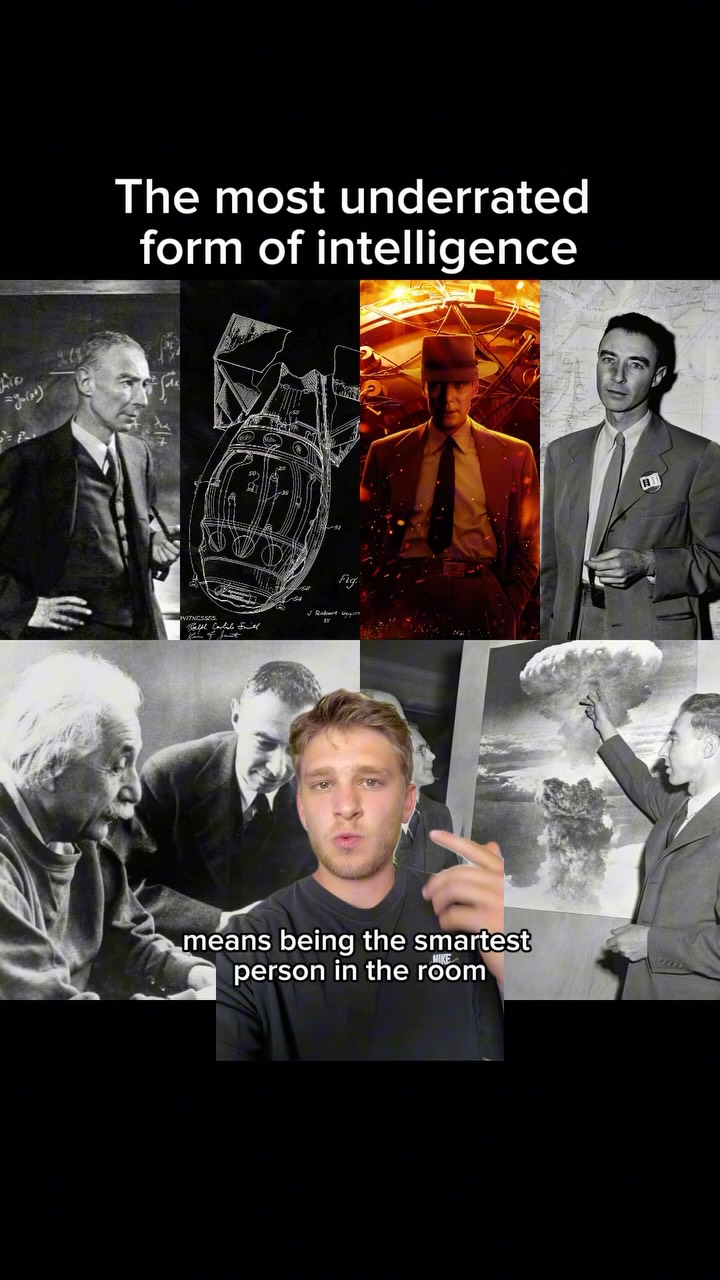 132.5K60×Historical figures' secret intelligence skill@kolbykirschner · Opportunity Explainer
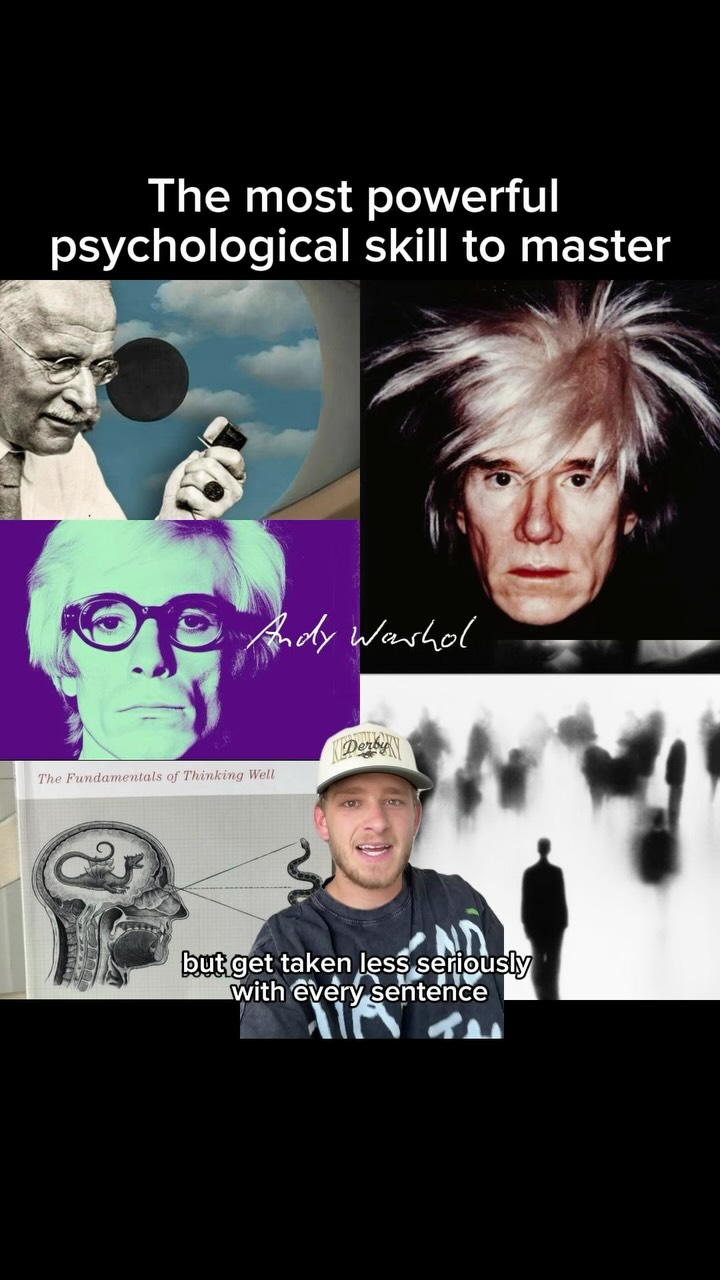 215K77.8×Explaining power of ambiguity with examples.@kolbykirschner · Case Study Breakdown
 808.6K146.4×Comparing hobbies across wealth stereotypes@avni · Stereotype Satire
 126K15.8×Direct talking head mindset advice@sensei.nick · Hot Take
 354.8K3.2×Car monologue motivational speech@champwroteit · Motivational Mantra
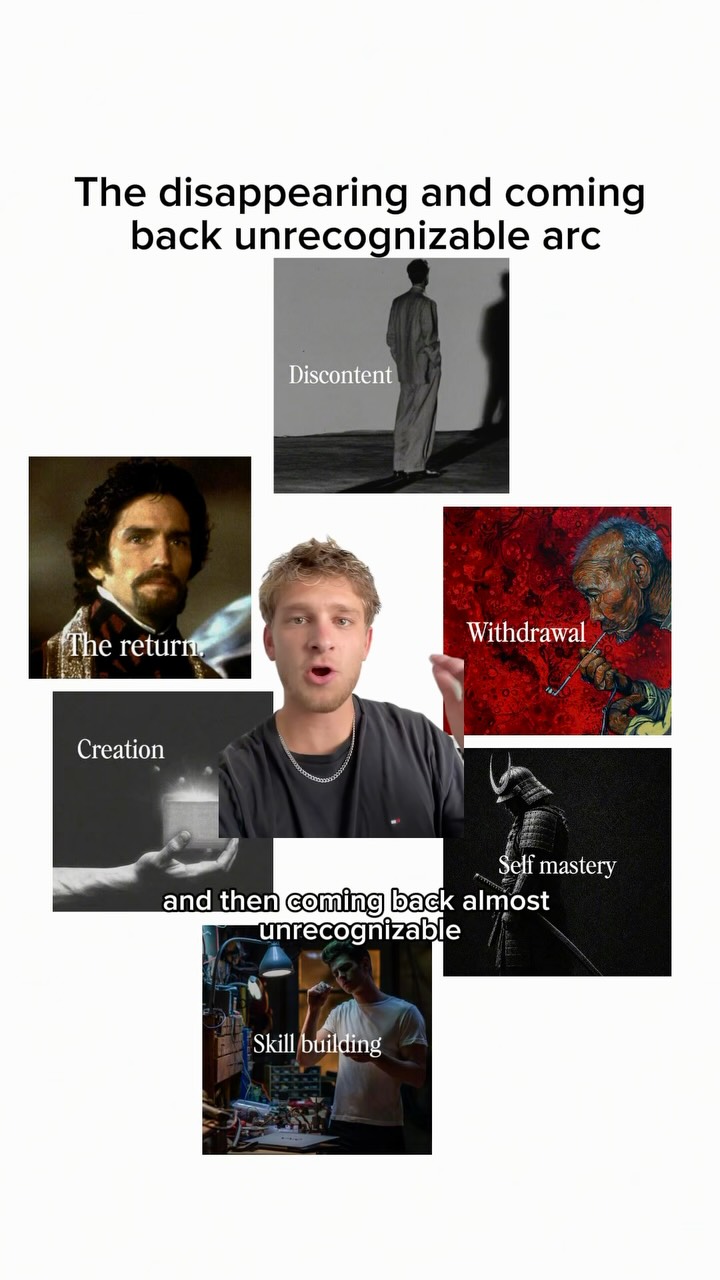 795K287.6×Explaining the hero's transformation arc@kolbykirschner · Breakdown
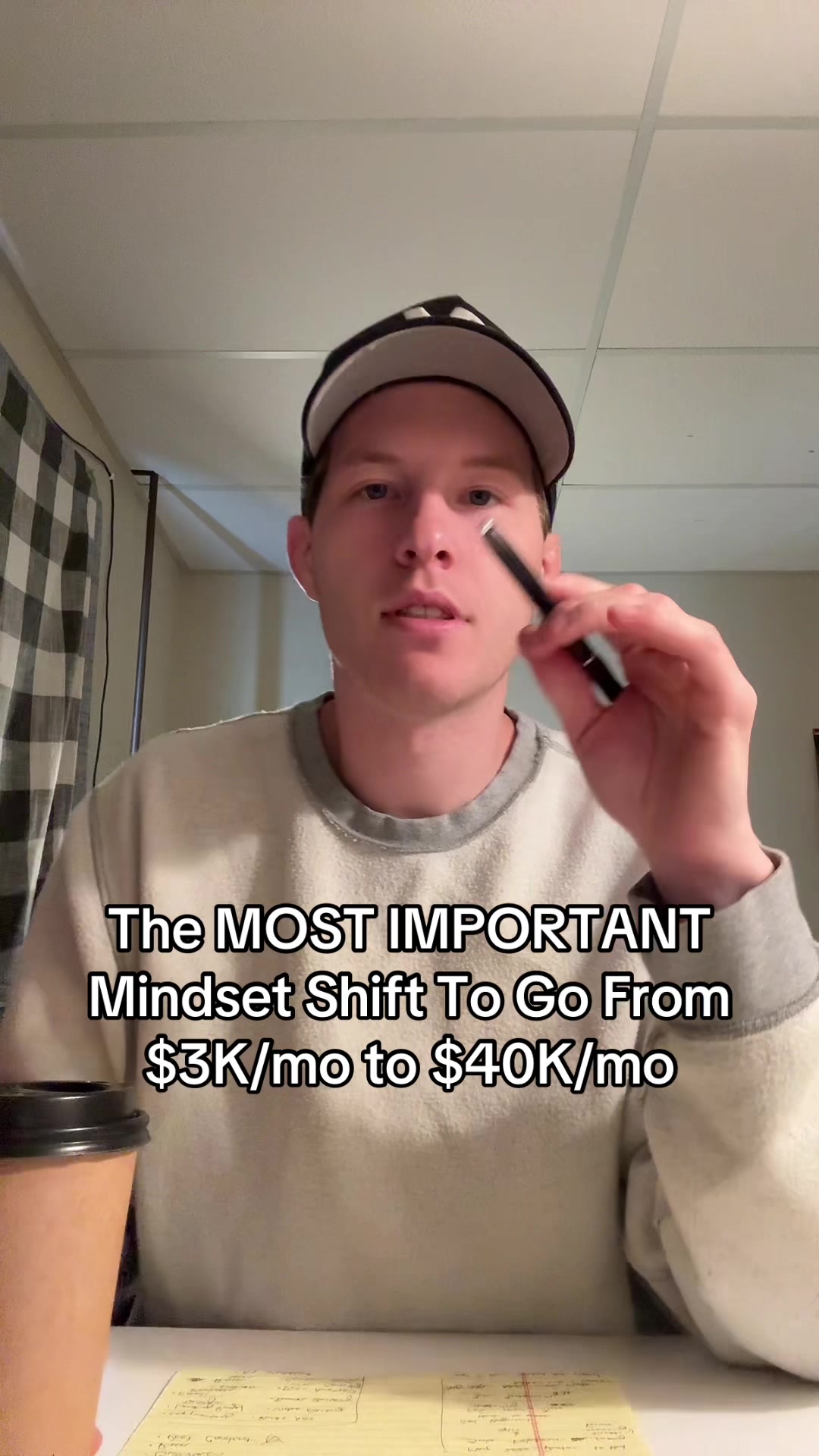 263.8K3.7×Creator breaks down the work-to-reward mindset shift needed to scale income dramatically@briarcochran · Anecdotal Philosophy
 119.6K1.5×Mindset breakdown with actionable steps@kolbykirschner · Breakdown
 497.2K12.8×Assertive monologue on winning mindset@austingeorgas · Hot Take
[04]
[05]
What stops the scroll in the first 3 seconds
Title hook · 25%
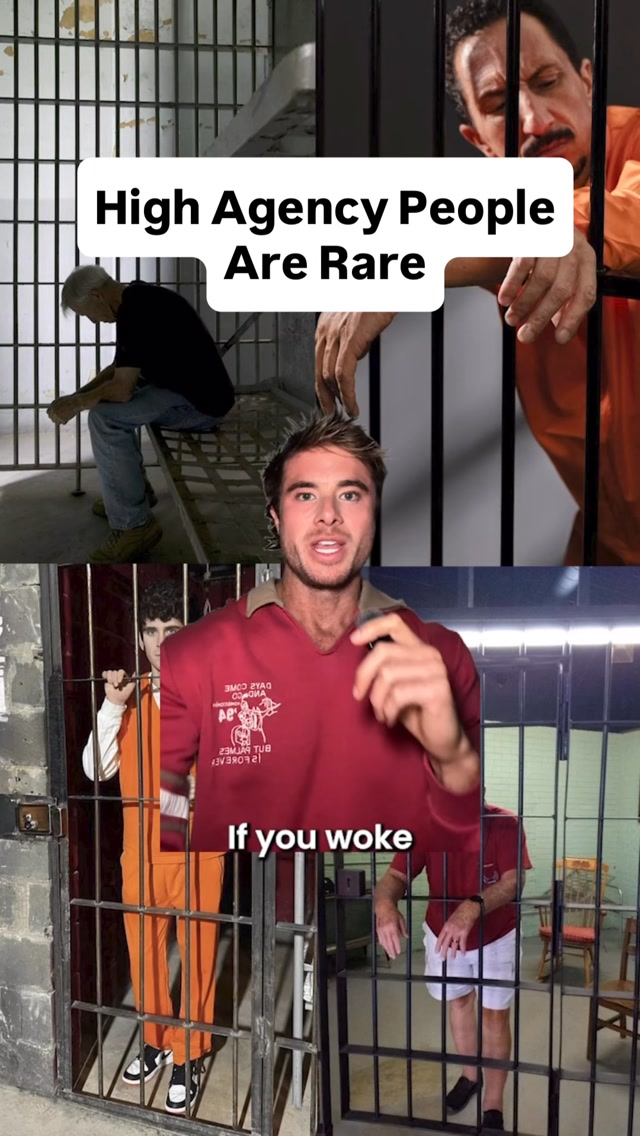
High Agency People Are Rare
Verbal hook · 60%
If you woke up tomorrow in a jail cell in a foreign country, who is the first person you would call?
Visual hook · 15%
A three-panel split screen showing two different men in jail cells and the creator speaking in front of a jail cell background, creating immediate visual intrigue and setting the theme.
[06]
Steal this for your own video
If you woke up tomorrow , who is the first person you would call?
[07]
The promise the opener makes, and how the video pays it back
Hook
A high-stakes, personal hypothetical scenario that forces the viewer to immediately identify a specific person in their own life, creating an instant emotional and cognitive investment.
Payoff
A direct call to action that loops back to the initial hook, instructing the viewer to share the video with the specific person they first thought of. This transforms the video into a tool for social validation and connection.
[08]
The structural pattern this video runs on
Framework
The Archetype Definition
To introduce, define, and validate a compelling human archetype, making an abstract concept tangible and aspirational through a structured progression of definitions, tests, and proofs.
The Concept Coinage
Assigns a specific, memorable name to the type of person identified in the hook. This creates a knowledge gap and establishes the video's core subject.
The Abstract Superpower
Defines the archetype by its extraordinary capabilities and outcomes in a challenging, unfamiliar environment. It describes *what* they can achieve.
The Mirror Test
Shifts the focus directly to the viewer with a self-reflective question. This transforms passive consumption into active participation and personal evaluation.
The Field Spotter's Guide
Provides a list of concrete, observable traits and behaviors. This makes the abstract archetype identifiable in the real world, adding layers of depth and credibility.
The Philosophical Core
Distills all the listed traits into a single, powerful core mindset or belief system that drives the archetype's actions.
The Legendary Proof
Presents a compelling, real-world anecdote featuring a well-known figure who perfectly embodies the archetype. This serves as the ultimate validation and makes the concept unforgettable.
The Grand Synthesis
Provides a final, refined definition of the archetype, informed by the preceding traits and the illustrative story. It summarizes the core lesson.
Tag the person you’re calling
title · beginning
High Agency People Are Rare
You woke up tomorrow in a jail cell in a foreign country, who is the first person you would call? There's actually a name for that type of person. You could drop them in a city where they don't know anyone, give them a problem they've never dealt with before, and somehow by the end of the day they found the one person that can help them. That's a high agency person. And if you're wondering whether this could be you, ask yourself this question. How do you respond when you're told something is impossible? Is it the end of a conversation or is it the beginning of one? I've started noticing there are some very specific ways you can spot it in people. They're aggressively resourceful and they always seem to know someone who knows someone. If they don't know what to do, they figure it out. They're the epitome of you can just do things. They're also unusually hard to put in a box. No meet some rank dude and find out he's obsessed with French literature or some investment banker who spends every weekend restoring old sailboats, they have no problem walking away from a prestigious job that everyone else is impressed by because they realize they don't actually want the life that comes with it. They're also just great people to call when you're stuck. You can go into a conversation convinced your situation is totally hopeless, and thirty minutes later you're fired up again. Because one of the defining characteristics of high agency people is that they seem to think there's always another way. Another question, another approach, another person they can talk to. Charlie Munger had one of my favorite examples of this. After a failed eye surgery left him blind in one eye, he was stuck facing the possibility that he could eventually lose his eyesight completely. And for a man who spent the better part of his life an avid reader, that's about as bad as it gets. But when asked how he would potentially deal with not being able to read anymore, his response was basically, well, I've always want to learn braille, and I think that's the best way to understand high agency. It's having this near unreasonable confidence that whatever happens, you'll just figure out your next move. And if you immediately thought of someone while watching this, send it to tier. Because they're probably the person you're calling from that foreign jail cell anyway.